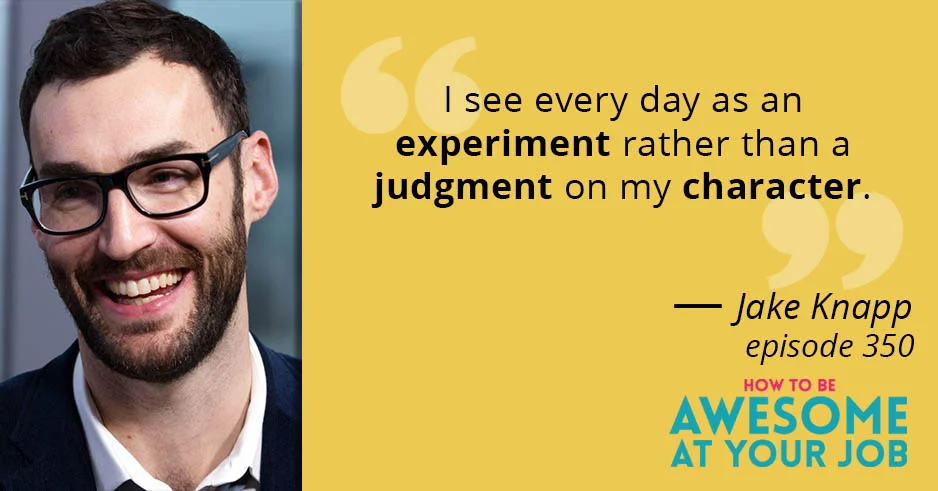
Jake Knapp Steps Back Into the Spotlight With a New Wave of Influence
In April 2026, Jake Knapp — the former Google Ventures design partner best known for inventing the Design Sprint methodology and co-authoring the productivity classic Make Time — is once again dominating conversations in the technology, design, and productivity communities. Whether through a newly announced project, a high-profile speaking engagement, or a surge of renewed public interest in his frameworks for focused work, Knapp's ideas are resonating with a workforce still grappling with the tension between constant connectivity and meaningful output.
Knapp's name has re-emerged across tech forums, design communities, and business media, with many citing his work as more relevant than ever in an era defined by AI-driven distraction, remote work fatigue, and the relentless pressure to do more with less. His methodology, once confined largely to Silicon Valley product teams, has quietly grown into a global framework referenced by startups, Fortune 500 companies, and individual knowledge workers alike.
What Is Driving the Renewed Attention?
The timing of Knapp's resurgence is not accidental. In early 2026, the conversation around human attention, digital minimalism, and sustainable productivity has intensified considerably. As artificial intelligence tools proliferate and reshape how people work — automating repetitive tasks while simultaneously flooding inboxes and calendars with new demands — many professionals are turning back to foundational frameworks that prioritize depth over speed. Knapp's work sits squarely at that intersection, offering structured, time-boxed approaches to solving problems and protecting creative energy.
Reports from within the design and product communities suggest that Knapp has been actively engaging with audiences through new content, workshops, or public appearances, sparking fresh debate about whether his methodologies need to evolve to address the AI-augmented workplace.
The Methodology That Made Him Famous — and Why It Still Matters
Jake Knapp created the Design Sprint while working at Google, initially as an internal tool for rapidly testing and validating ideas. The process — a five-day structured sprint designed to move a team from problem to tested prototype without the usual months of deliberation — was formalized and published in the 2016 book Sprint, co-authored with John Zeratsky and Braden Kowitz. It became one of the most widely adopted innovation frameworks of the past decade, used by companies ranging from early-stage startups to global enterprises.
His follow-up work, Make Time (co-authored with Zeratsky in 2018), extended his philosophy to the individual level, arguing that the default settings of modern technology — infinite scroll, notification alerts, always-on communication — are engineered to consume attention rather than enable it. The book offered a practical counter-program: identifying a single daily "highlight," laser-focusing energy on it, and auditing one's relationship with smartphones and social media.
A Framework Built for a Pre-AI World — Can It Adapt?
One of the central questions emerging from the current discussion around Knapp is whether methodologies conceived in the mid-2010s can hold up in a landscape transformed by generative AI. Critics and admirers alike are asking whether the Design Sprint's structured timelines and analog-first exercises need a fundamental rethink when AI can compress research, prototyping, and synthesis into a fraction of the time. Knapp himself has historically been thoughtful about the relationship between tools and human judgment, and observers expect his current work to address these questions directly.
The broader debate around attention and productivity tools is not unique to Knapp's world. Across industries, individuals and organizations are navigating the challenge of integrating powerful new technologies without surrendering the focused, intentional work that drives genuine innovation. In that sense, Knapp's renewed visibility feels less like nostalgia and more like a timely intervention.
Context: A Productivity Movement That Has Never Been More Necessary
The backdrop to Knapp's moment in April 2026 is a knowledge economy under enormous strain. Burnout rates remain stubbornly high despite — or perhaps because of — productivity tools that were supposed to make work easier. The promise of AI assistance has delivered real efficiencies in many domains, but it has also created new forms of cognitive overload: more options, more outputs to review, more decisions to make.
In this environment, the appeal of Knapp's philosophy — which is fundamentally about making deliberate choices rather than reacting to an endless stream of inputs — has grown considerably. His frameworks offer something rare: a human-centered counterweight to the acceleration of digital work. That is precisely why practitioners from product design to education to healthcare have adopted sprint-based thinking as a core part of their problem-solving toolkit.
The current wave of interest also speaks to a broader cultural moment. Much like Melissa McCarthy's bold career reinvention is dominating headlines in April 2026, Knapp's resurgence reflects a public appetite for stories about people and ideas that deliberately resist the pressure to simply follow the prevailing current.
Broader Implications: What Knapp's Moment Signals for the Future of Work
Jake Knapp's return to prominence is not merely a story about one designer or author. It is a signal that the market for intentional, structured approaches to creative and analytical work is expanding, not contracting. As organizations invest heavily in AI infrastructure, the human skills that AI cannot replicate — deep focus, empathetic problem framing, collaborative ideation under constraints — are becoming more valuable, not less.
Knapp's influence also raises important questions about the role of methodology in a world of accelerating change. The best frameworks, his work suggests, are not rigid scripts but adaptive mindsets: tools for making better decisions about where to direct finite human energy. In a landscape where breaking news travels faster than ever and accuracy is paying the price, the case for slowing down, focusing deliberately, and testing ideas before committing to them has never been stronger.
As April 2026 unfolds, Jake Knapp's ideas are once again at the center of a conversation that matters — not just for designers and product teams, but for anyone navigating the challenge of doing meaningful work in a world engineered to distract.
Comments