
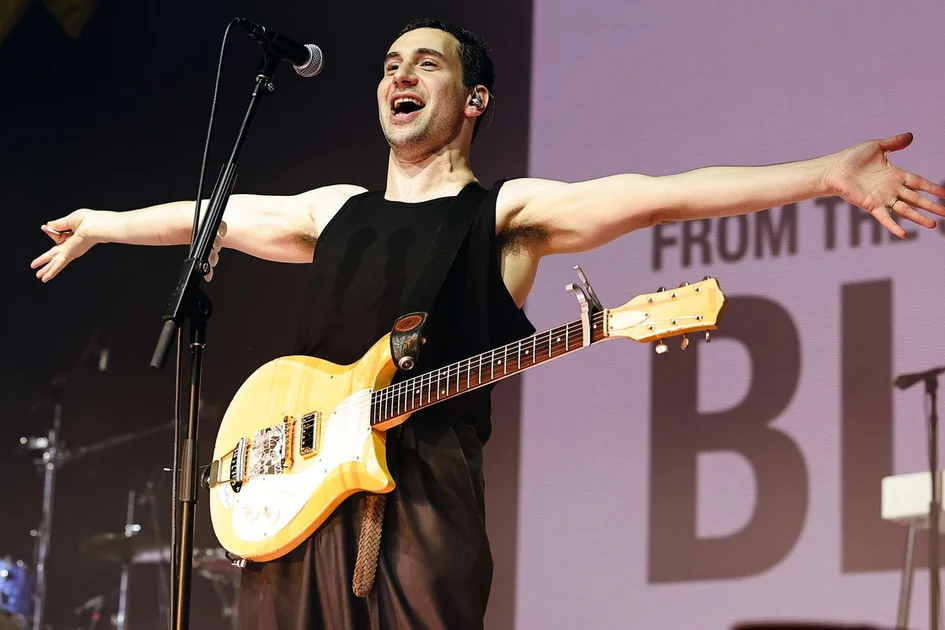
Jack Antonoff Slams AI and Phones, Drops Bleachers Album in Defense of 'Holy' Art
Jack Antonoff, the 13-time Grammy-winning producer and songwriter behind Taylor Swift, Lana Del Rey, and Lorde, is making headlines on May 22, 2026, not just for the release of his new Bleachers album, everyone for ten minutes, but for a blistering public attack on artificial intelligence in music and the corrosive effects of smartphones on human creativity.
The album, released today on Dirty Hit, arrives alongside a series of interviews in which Antonoff — a former member of fun. and Steel Train — unloads on two fronts: the tech billionaires who profit from phone addiction and the "bad actors" using AI to generate "slop." In an Instagram post published Thursday, he told people making AI art to "drive right off that cliff," calling them "godless whores" who are corrupting what he described as an "ancient ritual" of making music.
'The Phone Robbed Us of That Time'
In a wide-ranging interview with Rolling Stone conducted at Electric Lady Studios, Antonoff explained that the new album's title comes from the AirDrop setting that lets users briefly open their devices to the world. He said the title reflects his anxiety about how mobile phones have stolen the subconscious dreaming time that used to feed songwriting.
"The relationship to the phone has, only for the benefit of billionaires, robbed us of that time," Antonoff said. He described an era when people would wake up "humming on those weird feelings" from dreams, have coffee, walk, and let the collective unconscious bounce around. "Now, the second you look at your phone, all that disappears."
Antonoff said his own algorithm has been trained to feed him videos of "slicing of steaks, frying of fries, and cracking of eggs" because of his "very stressful relationship" with food. Even the predictive text on his Notes app reveals a repetitive pattern: "Missing, loving, and on my way. My life is about running, missing, and loving."
The artist said he has to finish his songwriting before checking his phone each morning to preserve creativity. He contrasted today's always-on culture with his youth, when images of the Gulf Wars and 9/11 appeared on TV but still left "space to take it in." Now, he argued, users "mainline atrocities daily" without time to process.
'Godless Whores' and the Battle Against AI Music
Antonoff's Instagram letter, which has since gone viral, does not mince words. He condemned companies developing AI tools to automate mastering, songwriting, or performance, arguing the process of writing, recording, and touring is "holy." He said he spoke for himself, his band, and "everyone I know" in calling out those who seek shortcuts.
"You don't have to write music anymore, you don't have to record it, and you don't have to bring the band out and play it," Antonoff wrote. "So to everyone who is gassed up about the new ways you can fake making art, by all means drive right off that cliff. We're genuinely happy to see you go."
His comments echo a growing backlash in the music industry against generative AI. Universal Music Group has fought to remove AI-generated songs that mimic its artists from streaming platforms, while Jason Derulo has said AI music "lacks soul." Antonoff's blunt language — he later referred to AI creators as "godless whores" — signals a new level of fury from a mainstream hitmaker whose work has shaped the sound of pop for a decade.
'Everyone for Ten Minutes': Grief, Hope, and Springsteen's Wisdom
The new Bleachers album, reviewed by RIFF Magazine as one of the band's "tightest, most infectious efforts to date," expands the genre-hopping style Antonoff has honed since Bleachers' 2014 debut. Songs like "sideways," with its driving saxophone and chamber pop wall, and "we should talk," which adds folk to the blend, showcase his kaleidoscopic vision.
In a podcast interview with Consequence, Antonoff revealed the album accidentally became an origin story. "The first two songs are very specifically about leaving," he said, explaining that they trace back to his teenage DIY years before spiraling into grief and fractured relationships. He noted that the album wrestles with generations shaped by survival rather than art. "The point of life for generations was just to live," he said. "This idea of dreams and passions were so dangerous."
But Antonoff insisted hope sneaks into his writing. "The act of writing is hopeful. You wouldn't do it if you didn't believe." That philosophy echoes advice he once received from Bruce Springsteen: "'If you spend your life touring and making albums, that's a great life.' Sounds silly, but you know, nowadays it's like you have to do all these things. I don't want to have a fucking clothing line."
The album's lyrics dwell on love — particularly given Antonoff's marriage to actress Margaret Qualley, who appears in the video for "you and forever." Critics have compared his poignant musing to The National's Matt Berninger, and the album's thematic cohesion across disparate genres is being praised as its greatest strength.
Broader Implications: What This Changes
Antonoff's dual attack on AI and phone addiction represents a significant moment in the ongoing cultural debate about technology's role in art. While many artists have quietly complained about streaming algorithms and AI impostors, few with Antonoff's commercial clout have spoken so explicitly. He is not a niche figure: his production credits include Taylor Swift's Folklore and 1989 (Taylor's Version), Lorde's Melodrama, and Lana Del Rey's Norman F***** Rockwell!*.
By framing songwriting and touring as a deliberate rejection of modern distractions, Antonoff is offering a template for younger musicians: prioritize craft over brand extension. His insistence that he wants nothing to do with acting or clothing lines — that he just wants to "make records and tour" — repositions ambition in an era when artists are expected to be entrepreneurs.
Whether his rhetoric changes industry behavior is unclear. AI tools for music production and distribution continue to proliferate, and the "attention economy" he criticizes shows no sign of slowing. But by using his platform to call out "godless whores" and declare live music "one of the last genuinely spiritual experiences," Antonoff has drawn a line in the sand. The new album, and his uncompromising defense of the creative process, may become a rallying point for artists who feel the same way.
As he told Kyle Meredith in the podcast, the hope embedded in everyone for ten minutes is deliberate: "The act of writing is hopeful."
Comments