The Roots of the Conflict: Decades of Hostility
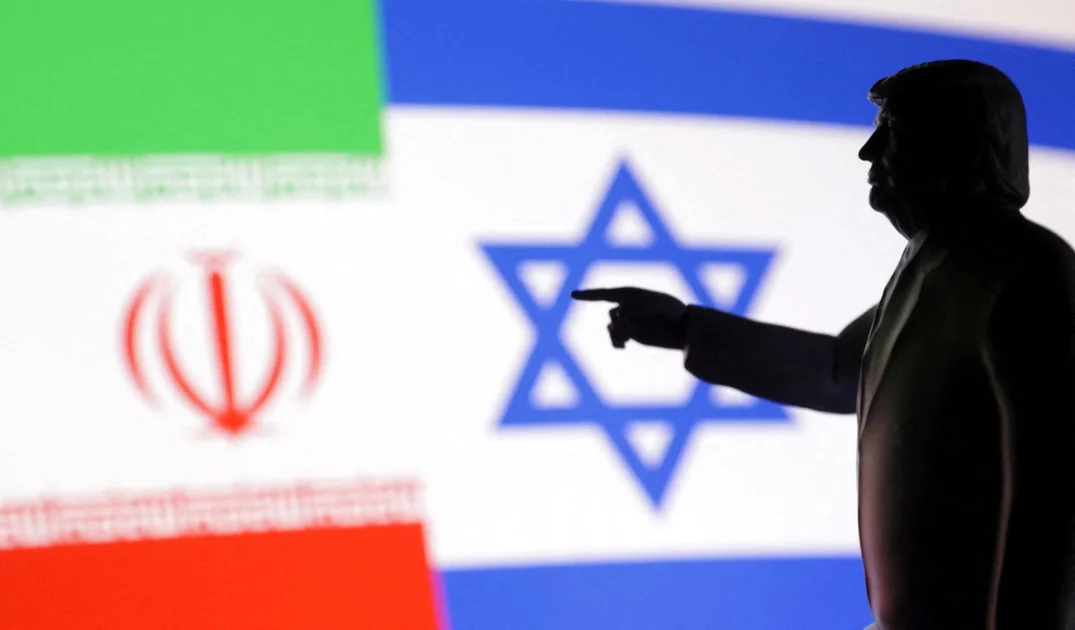
The confrontation between Iran on one side and Israel and the United States on the other did not emerge overnight. Its origins trace back to the 1979 Islamic Revolution, when Ayatollah Khomeini's new theocratic government severed diplomatic ties with both Washington and Tel Aviv, labeling them the "Great Satan" and the "Little Satan" respectively. Since then, the relationship has been defined by sanctions, covert operations, proxy warfare, and escalating military brinkmanship.
Iran's Nuclear Ambitions and Western Pressure
A central flashpoint has been Iran's nuclear program. Revealed publicly in 2002, Iran's uranium enrichment capabilities alarmed Israel and the West. The 2015 Joint Comprehensive Plan of Action (JCPOA), negotiated under President Obama, temporarily curbed Iran's nuclear activities in exchange for sanctions relief. However, when President Trump withdrew the US from the deal in 2018 and reimposed sweeping sanctions under a "maximum pressure" campaign, Iran responded by gradually exceeding uranium enrichment limits, eventually reaching levels close to weapons-grade purity.
The Shadow War: Covert Operations and Proxy Conflicts
Long before open military exchanges, both Israel and the United States waged a shadow war against Iran through intelligence operations, cyberattacks, and support for regional proxies.
Stuxnet and Targeted Assassinations
Around 2009–2010, the Stuxnet computer worm — widely attributed to a joint US-Israeli operation — sabotaged centrifuges at Iran's Natanz nuclear facility, setting back its program by years. Israel also conducted a series of assassinations targeting Iranian nuclear scientists throughout the 2010s, operations Tehran blamed on Mossad. In January 2020, a US drone strike near Baghdad airport killed General Qasem Soleimani, commander of Iran's elite Quds Force. The killing was a seismic moment: Soleimani had been the architect of Iran's regional influence network, coordinating Hezbollah in Lebanon, Houthi rebels in Yemen, and militias in Iraq and Syria.
Proxy Wars Across the Middle East
Iran's strategy of "forward defense" relied on a network of armed proxies — collectively known as the "Axis of Resistance" — to extend its influence and pressure Israel and US forces without direct confrontation. Hezbollah in Lebanon served as the most powerful of these groups, amassing a vast arsenal of rockets aimed at Israeli territory. Hamas in Gaza and Palestinian Islamic Jihad also received Iranian funding and weapons.
October 7, 2023: The Hamas Attack and Its Regional Consequences
The conflict entered a dramatically new phase on October 7, 2023, when Hamas launched an unprecedented large-scale attack from Gaza into southern Israel, killing approximately 1,200 people — mostly civilians — and taking over 250 hostages. Israel declared war, launched a massive military campaign in Gaza, and placed the strip under siege. The United States reaffirmed its unwavering support for Israel, deploying two aircraft carrier strike groups to the eastern Mediterranean as a deterrent signal to Iran and Hezbollah.
Iran's Response and Regional Escalation
In the months that followed, Hezbollah began exchanging fire with Israeli forces along the Lebanese border, displacing tens of thousands from both sides. Houthi rebels in Yemen started launching missiles and drones toward Israel and attacking commercial shipping in the Red Sea, prompting US and British military strikes on Houthi targets in Yemen beginning in January 2024. Iranian-backed militias in Iraq and Syria repeatedly struck US bases, killing American soldiers and triggering retaliatory US airstrikes across the region.
April 2024: The First Direct Iran-Israel Military Exchange
The conflict reached a historic threshold in April 2024 when, following an Israeli airstrike on the Iranian consulate in Damascus that killed senior Revolutionary Guard commanders, Iran launched a direct attack on Israeli soil for the first time in history. On the night of April 13–14, 2024, Iran fired over 300 drones, cruise missiles, and ballistic missiles at Israel. The attack was largely intercepted thanks to Israel's multi-layered air defense systems, backed by US, UK, Jordanian, and French assets. Israel subsequently carried out a limited retaliatory strike inside Iran, targeting an air defense radar near Isfahan — a calculated signal of capability without triggering all-out war.
Escalation Through Late 2024
Tensions remained high through the summer and autumn of 2024. Israel intensified its campaign against Hezbollah in Lebanon, assassinating its longtime leader Hassan Nasrallah in September 2024 in a Beirut airstrike. Iran responded with another ballistic missile barrage against Israel in October 2024, this time more targeted, though again largely intercepted. Israel struck back with strikes on Iranian military infrastructure, including air defense systems and missile production facilities — its most direct blow yet to Iranian territory.
Where Things Stand: A Conflict Without a Clear End
As of mid-2025, the conflict remains deeply unresolved. Gaza continues to face humanitarian catastrophe while ceasefire negotiations have repeatedly stalled. Hezbollah, though weakened, retains significant fighting capacity. Iran continues to enrich uranium and rebuild its regional influence, while the United States maintains a substantial military presence across the Middle East.
The confrontation between Israel, the US, and Iran has evolved from covert shadow warfare into periodic direct military exchanges — a transformation with profound consequences for regional stability and global security. Whether diplomacy can reassert itself or whether the cycle of escalation will continue remains one of the most pressing questions of our era.
Comments