
Israel Heads to Polls in High-Stakes Election
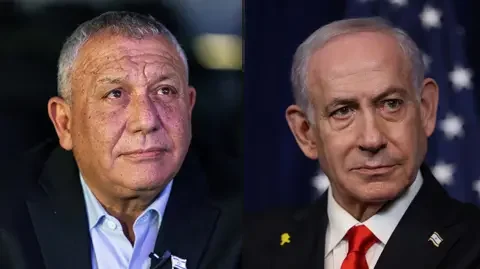
Israelis will vote on Tuesday in a general election that has become a referendum on Prime Minister Benjamin Netanyahu’s leadership, with final polls showing his Likud party and challenger Gadi Eisenkot’s centrist Yashar party in a dead heat. The campaign’s final days have been marked by escalating tensions: IDF brass fear Netanyahu may launch an offensive against Iran before the vote, President Isaac Herzog has vowed to resist pressure from Donald Trump over coalition-building, and the Supreme Court has barred polling stations from sharing voter turnout data with political parties.
On Sunday, the IDF announced a general closure for West Bank Palestinians on election day, while Netanyahu summoned the police chief after the latter rebuffed National Security Minister Itamar Ben-Gvir’s election readiness briefing. At a final rally, Eisenkot warned that Netanyahu “will stop at nothing to stay in power,” as vast crowds of opposition voters gathered in Tel Aviv on Saturday night demanding a change of government.
Final Polls Show Tight Race
Polls published Friday put the governing coalition and the main opposition bloc almost neck-and-neck. Half a million first-time voters are due to cast ballots, and some 70,000 Israelis are reportedly flying in from abroad specifically to vote. The campaign has been energized by new tactics, including AI videos, and by the emergence of Eisenkot, a former military chief of staff known for his calm demeanor and dubbed by some a “non-politician.” His Yashar party has regularly pipped Likud in recent surveys.
Stakes High as Regional Tensions Simmer
The election comes after three years of regional war and hangs over a deeply divided country. The IDF’s leadership fears Netanyahu may seek to strike Iran before Tuesday’s vote, leading to tensions with the military brass and prompting Trump to issue a statement saying there would be no attack overnight. Netanyahu visited Palmachim Air Force base on Sunday and threatened Israel’s enemies with “disproportionate blows, stronger than you can imagine.”
Meanwhile, the Supreme Court clarified that polling station committee members and party observers may not relay voter turnout data to political entities, an absolute prohibition welcomed by the Israeli Democracy Guard. The ruling aims to prevent manipulation of turnout information during the vote.
Herzog Vows Independence
In an exclusive interview with MS NOW, President Isaac Herzog said he will not bow to pressure from Trump, who endorsed Netanyahu last week. “I don’t think the president of the United States or anybody else can intervene in my discretion,” Herzog said. He noted the decision of which party gets the first chance to form a government will be “very delicate” and “an open game” if results are close. With neither bloc likely to win outright, coalition-building toward the 61-seat Knesset majority will be key. Eisenkot has ruled out including both Arab and ultra-Orthodox parties in any government he leads, complicating his path to a majority.
Coalition Math and Outside Influence
The election’s outcome will depend on complex coalition negotiations. Herzog said he would do everything in his power to avoid sending voters back to the polls, including pushing for a national unity government. The president’s role is mostly ceremonial, but in the coming days he will wield significant power in deciding who gets the first mandate.
Trump’s endorsement of Netanyahu has added a new dimension, with the U.S. president expressing surprise at Netanyahu’s recent remarks and issuing a statement on Iran. Herzog’s insistence on Israeli sovereignty in the process underscores the sensitivity of external involvement.
A Nation at a Crossroads
The election is one of the most important in Israel’s history, with voters facing a clear choice between continuity under Netanyahu and a change of direction under Eisenkot. The outcome will shape Israel’s approach to Iran, the Palestinians, and its relationship with the United States. As the campaign draws to a close, the country remains deeply divided, and the world watches to see which way it will go.
Comments