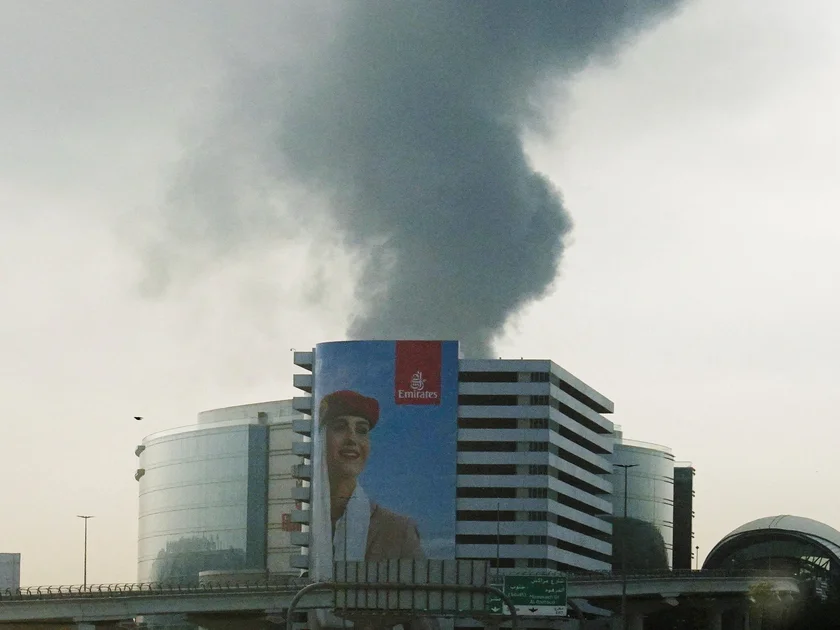
Direct Strikes and Open Warfare: The New Reality Between Israel and Iran
The long-running shadow war between Israel and Iran has entered a dramatically more overt and dangerous phase. What was once fought through proxies, cyber operations, and covert assassinations has now spilled into direct military exchanges, marking a historic shift in Middle Eastern geopolitics. Israel has carried out strikes on Iranian territory, while Iran has launched unprecedented ballistic missile and drone attacks targeting Israeli soil — a level of direct confrontation that would have seemed unthinkable just a few years ago.
The most significant recent escalation involved Iran launching large-scale missile and drone barrages toward Israel, with Israeli air defenses — bolstered by support from the United States, the United Kingdom, France, and Jordan — intercepting the vast majority of projectiles. Israel responded with precision strikes inside Iran, targeting military infrastructure, air defense systems, and in some instances, facilities linked to Iran's nuclear program. The cycle of retaliation has compressed timelines and raised alarm among international observers about the risk of a broader regional war.
For a detailed overview of how this exchange of strikes unfolded, see Iran Strikes Israel: A Comprehensive Overview of the Escalating Conflict.
Key Facts on the Ground
- Iran's Islamic Revolutionary Guard Corps (IRGC) has claimed responsibility for multiple large-scale attacks, framing them as retaliation for Israeli operations that killed senior IRGC commanders.
- Israel has struck targets deep inside Iranian territory, demonstrating a reach and intelligence capability that surprised many analysts.
- Iranian proxy networks — including Hezbollah in Lebanon, the Houthis in Yemen, and various Iraqi militias — have simultaneously intensified pressure on Israeli and U.S. interests across the region.
- Civilian casualties on both sides, though limited compared to other regional conflicts, have heightened domestic pressure on both governments.
Why This Conflict Matters: Stakes and Regional Consequences
The Israel-Iran confrontation is not simply a bilateral dispute. It sits at the center of a broader regional architecture involving nuclear proliferation, energy security, U.S. strategic interests, and the fragile stability of multiple Arab states. The stakes could scarcely be higher.
Iran's nuclear program remains the most acute long-term concern. Israeli officials have repeatedly stated that a nuclear-armed Iran represents an existential threat, and Israeli military doctrine has long held that preventing Iranian nuclear capability justifies preemptive military action. Recent strikes attributed to Israel appear designed, at least in part, to degrade Iran's air defense networks in ways that could facilitate a future, more decisive strike on nuclear infrastructure.
On the Iranian side, the leadership faces intense domestic pressure amid economic stagnation, crippling sanctions, and a restive population. Projecting military strength against Israel serves an important function in maintaining revolutionary legitimacy — even as the costs mount. The internal dynamics of Iran's leadership, including questions of succession and factional competition, add another layer of unpredictability to Tehran's decision-making. Mojtaba Khamenei and Iran's Succession Crisis: The Rise of the Supreme Leader's Son explores how these internal pressures are shaping Iran's posture.
The Regional Domino Effect
The conflict's ripple effects are already visible across the region. Gulf Arab states, quietly aligned with Israel on the Iranian threat, are nonetheless caught between their security interests and the optics of supporting Israeli military action amid ongoing violence in Gaza. Jordan's decision to help intercept Iranian drones illustrated just how dramatically regional alignments have shifted. Meanwhile, Lebanon, Iraq, Syria, and Yemen are all theaters where the Israel-Iran confrontation plays out through proxy actors, further destabilizing already fragile states.
Energy markets have responded nervously. Iran's oil export infrastructure, particularly the strategic Kharg Island terminal, has come under increased scrutiny as military tensions elevate the risk of disruption to global oil supplies.
Broader Implications: A Redefined Middle East Order
The open military exchanges between Israel and Iran mark a point of no return in regional dynamics. For decades, both countries maintained a degree of strategic ambiguity — each knowing the other was capable of devastating strikes, but neither willing to fully cross the threshold into direct warfare. That threshold has now been crossed, and the rules of engagement have fundamentally changed.
International diplomacy is struggling to keep pace. The United States, while providing military support to Israel's defenses, has also signaled a desire to avoid a full-scale war that could draw American forces into another prolonged Middle Eastern conflict. European governments have called for de-escalation, but their leverage over both parties remains limited. The United Nations Security Council has convened emergency sessions, yet structural divisions between permanent members have prevented any meaningful coordinated response.
Perhaps most significantly, the conflict is accelerating the collapse of the post-Cold War regional order and forcing every state in the Middle East to make stark choices about alignment, security guarantees, and strategic priorities. Whether this phase of confrontation stabilizes into a new deterrence equilibrium or continues to escalate toward a wider war may well define the shape of the Middle East for the coming generation.
For analysts and policymakers alike, one conclusion is increasingly difficult to avoid: the Israel-Iran rivalry has moved from the shadows into the open, and the international community's capacity — or willingness — to contain it is being tested as never before.
Comments