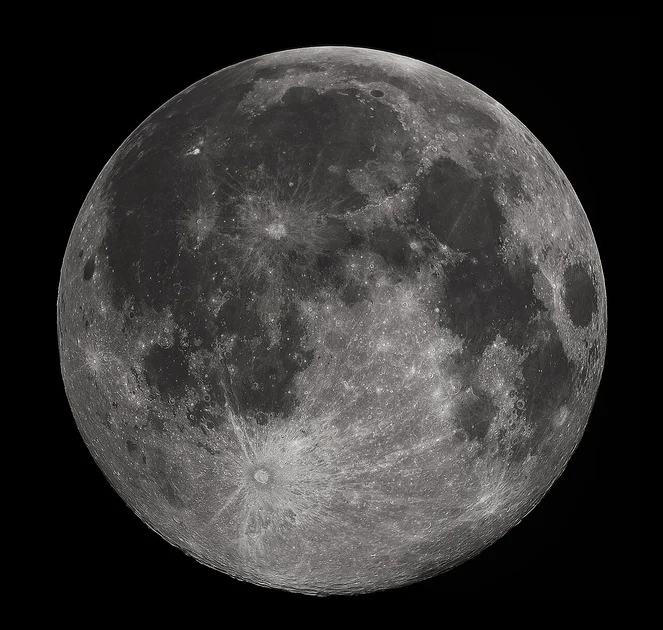
Many people look up at the night sky and ask: is it a full moon tonight? Whether you're a stargazer, a gardener planning by lunar cycles, or simply curious, knowing the current phase of the moon is easier than ever. This guide explains what a full moon is, how to find out if one is happening tonight, and what you can observe when it does.
What Is a Full Moon?
A full moon occurs when the Earth is positioned directly between the Sun and the Moon, allowing the entire illuminated side of the Moon to face Earth. This alignment causes the Moon to appear as a complete, bright circle in the night sky.
The Lunar Cycle Explained
The Moon completes one full orbit around Earth approximately every 29.5 days — a period known as the synodic month. During this cycle, the Moon passes through eight distinct phases:
- New Moon – the Moon is not visible from Earth
- Waxing Crescent – a small sliver becomes visible
- First Quarter – half the Moon is illuminated
- Waxing Gibbous – more than half is lit
- Full Moon – the entire face is illuminated
- Waning Gibbous – illumination begins to decrease
- Last Quarter – half the Moon is again visible
- Waning Crescent – a thin sliver before the new moon
Because a full moon lasts only a brief moment astronomically — though it appears full for about two to three days — checking a reliable lunar calendar is the most accurate way to confirm tonight's phase.
How Long Does a Full Moon Last?
Technically, the full moon is an instantaneous event — the exact moment when the Moon is 180 degrees opposite the Sun as seen from Earth. However, to the naked eye, the Moon appears full and nearly round for roughly 24 to 48 hours surrounding that peak moment.
How to Check If Tonight Is a Full Moon
There are several reliable ways to find out whether tonight features a full moon.
Use an Online Lunar Calendar
Websites such as TimeandDate.com, NASA's Moon Phase Calendar, and Almanac.com provide up-to-date information on the current moon phase for any location in the world. These tools show the exact time of each lunar event and are updated regularly for accuracy.
Smartphone Apps
Dedicated moon phase apps — such as Moon Calendar, My Moon Phase, and Star Walk — use your device's date, time, and location to display the current lunar phase in real time. Many also offer notifications ahead of upcoming full moons.
Simple Visual Check
If the sky is clear, you can estimate the moon phase by looking at its shape. A full moon appears as a complete circle, brightly lit and visible for most of the night. It typically rises around sunset and sets near sunrise. If the Moon appears slightly flattened on one side, it is likely a day or two before or after the full phase.
Full Moon Names and Dates
Each full moon of the year carries a traditional name, many of which originate from Native American, Colonial American, and European traditions. These names reflect seasonal changes and natural events.
Common Full Moon Names by Month
- January – Wolf Moon
- February – Snow Moon
- March – Worm Moon
- April – Pink Moon
- May – Flower Moon
- June – Strawberry Moon
- July – Buck Moon
- August – Sturgeon Moon
- September – Harvest Moon
- October – Hunter's Moon
- November – Beaver Moon
- December – Cold Moon
The Harvest Moon, which occurs closest to the autumnal equinox, is particularly notable because it rises shortly after sunset for several consecutive nights, historically providing extra light for farmers during harvest time.
Special Full Moon Events
Occasionally, a full moon coincides with other notable phenomena:
- Supermoon – when the full moon occurs near the Moon's closest point to Earth (perigee), making it appear slightly larger and brighter than average.
- Blue Moon – the second full moon within a single calendar month, which happens roughly every two to three years.
- Lunar Eclipse – when Earth's shadow falls on the full moon, sometimes giving it a reddish hue, often called a Blood Moon.
Why People Track the Full Moon
Beyond astronomy, the full moon holds cultural, agricultural, and scientific significance. Farmers have historically used lunar calendars to time planting and harvesting. Coastal communities rely on lunar cycles to predict tidal patterns, since the Moon's gravitational pull directly influences ocean tides. In many cultures, full moons mark the timing of festivals and religious observances — for example, Easter is calculated based on the first full moon after the spring equinox.
Scientific research continues to explore potential connections between lunar cycles and animal behavior, human sleep patterns, and biological rhythms, though conclusions remain mixed.
For anyone wanting a simple answer to whether it is a full moon tonight, a quick check of a lunar calendar or moon phase app will provide an accurate, location-specific result in seconds.
Comments