A Civilization Rooted in Ancient History
The Iranian people are heirs to one of the world's oldest continuous civilizations, with roots stretching back more than 7,000 years. Ancient Persia, the predecessor to modern-day Iran, gave rise to powerful empires including the Achaemenid Empire (550–330 BCE), which at its height spanned from the Balkans to the Indus Valley. This empire was remarkable for its administrative sophistication, tolerance of diverse cultures, and construction of magnificent cities like Persepolis.
The Persian Empires and Their Legacy
Following the Achaemenid period, successive dynasties including the Parthian and Sassanid empires continued to shape Iranian identity. The Sassanid Empire (224–651 CE) is particularly noted for its advances in art, architecture, and governance. These ancient empires left behind a profound legacy that continues to influence Iranian culture, language, and national identity to this day.
The Arab conquest in the 7th century CE introduced Islam to the region, which gradually became a defining element of Iranian society. Despite this transformation, Iranians maintained their distinct language, Farsi (Persian), and many pre-Islamic traditions, including the celebration of Nowruz, the Persian New Year.
Iranian Culture and the Arts
Iranian culture is extraordinarily rich and multifaceted, encompassing literature, poetry, music, visual arts, and architecture. Persian literature is among the most celebrated in the world, producing legendary poets such as Hafez, Rumi, Omar Khayyam, and Ferdowsi. Ferdowsi's epic masterpiece, the Shahnameh (Book of Kings), written in the 10th and 11th centuries, is considered a foundational text of Persian literature and a treasure of world heritage.
Persian Poetry and Philosophy
Persian poetry is renowned for its depth, metaphor, and exploration of themes such as love, spirituality, and the human condition. Rumi's Masnavi has been translated into dozens of languages and continues to be widely read globally. This poetic tradition reflects a broader Iranian intellectual culture that values philosophy, wisdom, and artistic expression.
Architecture and Visual Arts
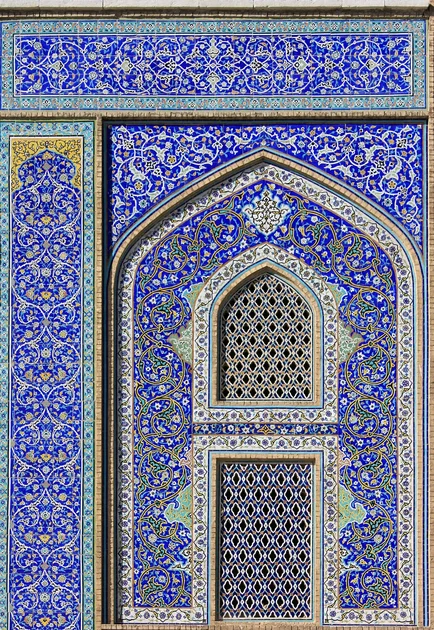
Iranian architecture is characterized by intricate tilework, grand domes, and geometric patterns. UNESCO World Heritage Sites such as the historic bazaar of Tabriz, the Sheikh Safi al-Din Shrine in Ardabil, and the ancient ruins of Persepolis highlight the architectural brilliance of Iranian civilization. Traditional arts such as Persian carpet weaving, miniature painting, and calligraphy remain living traditions practiced by skilled artisans across the country.
Iranian Society and Demographics
Iran is a diverse nation of approximately 87 million people, comprising multiple ethnic groups. While ethnic Persians form the majority, significant populations of Azerbaijanis, Kurds, Arabs, Baluchis, and Lors also call Iran home. This ethnic diversity contributes to a rich tapestry of regional customs, languages, and traditions within the broader Iranian national identity.
Language and Religion
Farsi, also known as Persian, is the official language and serves as a unifying tongue across the country. It belongs to the Indo-Iranian branch of the Indo-European language family and uses a modified Arabic script. Arabic, Azerbaijani Turkish, Kurdish, and several other languages are spoken by various communities throughout the country.
Islam, specifically Twelver Shia Islam, is the official state religion and is practiced by the vast majority of the population. Iran is one of the few countries in the world where Shia Islam forms the foundation of both religious life and governmental structure, particularly since the 1979 Islamic Revolution.
Education and Science
Iran has a long tradition of scholarship and intellectual achievement. The country boasts a high literacy rate and a large number of universities. Iranian scientists, mathematicians, and physicians have made significant contributions to world knowledge throughout history — figures such as Avicenna (Ibn Sina) and Al-Biruni are celebrated globally. Today, Iran continues to produce graduates in engineering, medicine, and the sciences, and the country maintains an active space program and advances in fields such as nanotechnology and biotechnology.
Iran's Global Influence and Diaspora
The Iranian diaspora is substantial, with millions of Iranians living in countries such as the United States, Germany, Canada, the United Kingdom, and across the Middle East. These communities have made notable contributions to arts, science, business, and academia in their adopted countries.
Iranian cuisine, cinema, and contemporary art have also gained international recognition. Iranian films, in particular, have earned numerous accolades at prestigious festivals such as Cannes and the Academy Awards, with directors like Abbas Kiarostami and Asghar Farhadi achieving global acclaim.
Understanding Iranian civilization — its history, culture, and people — provides essential context for engaging with one of the world's most historically significant and culturally vibrant nations.
Comments