Iran Puts Its Leaders on the Street While the U.S. Offers Millions for Information About Them
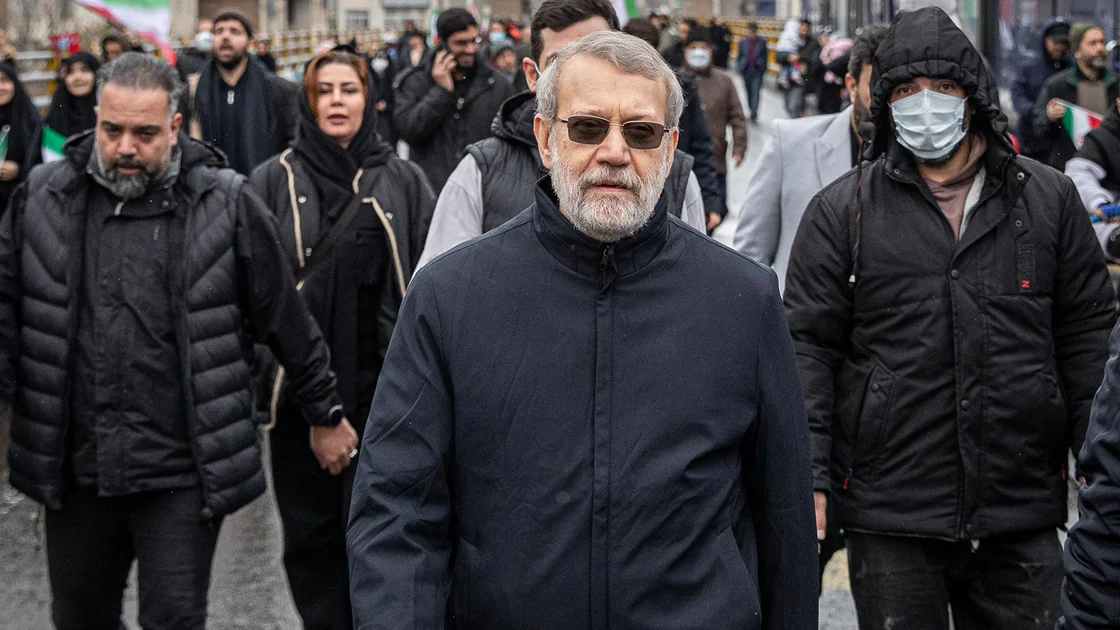
On Friday, March 14, 2026, some of Iran's most senior officials walked shoulder to shoulder with crowds in central Tehran during World Quds Day commemorations — a move that carried unmistakable political weight. President Masoud Pezeshkian, Foreign Minister Abbas Araghchi, and National Security Council Secretary-General Ali Larijani were all visible among demonstrators as anti-Israel chants echoed through the capital. The timing was anything but coincidental.
The public appearances came just as the U.S. State Department's Rewards for Justice program posted an offer of up to $10 million for anyone providing actionable information on Iranian leaders — along with the possibility of resettlement abroad. The juxtaposition of the two developments made the message from Tehran abundantly clear: Iran's leadership was not hiding.
A Deliberate Counter-Narrative
The symbolism was carefully constructed. Rather than retreating behind closed doors or reinforcing the impression of a government under siege, Iranian officials chose maximum visibility. Walking openly through public squares, engaging with citizens, and being photographed in the crowd amounted to a calculated rebuttal of the narrative that ongoing military pressure had succeeded in destabilizing or isolating the Islamic Republic's leadership.
This kind of image management matters in modern conflicts. As the situation around Iran's strategic assets continues to attract international scrutiny, the domestic political theater unfolding in Tehran signals that the government is equally focused on projecting internal cohesion.
The most pointed response came from Larijani himself, who took to social media platform X to deliver a sharp rebuke aimed at U.S. Defense Secretary Pete Hegseth, who had claimed that Iranian leaders were hiding underground while American military superiority grew.
"Our leaders were, and still are, among the people — while your leaders are on Epstein Island." — @AliLarijani_IR
The remark was barbed and deliberate, invoking one of the most politically toxic phrases in American public discourse to redirect attention and undermine the credibility of the U.S. narrative.
The Bounty Program: A War Fought With Money, Not Just Missiles
The Rewards for Justice initiative — long used by Washington to gather intelligence on terrorism suspects and sanctioned individuals — has now been explicitly turned toward Iranian political figures. The program's social media accounts solicited tips on "Iranian leaders," framing financial reward and safe relocation as incentives for those within the system to betray it.
This escalation from aerial bombardment to financial infiltration reveals a strategic pivot. When a major military power resorts to offering cash bounties to individuals with inside knowledge, it implicitly acknowledges the limits of kinetic force alone. Bombs can destroy infrastructure; they cannot easily dismantle loyalty networks or crack the social bonds that sustain a political system.
The logic behind the Rewards for Justice post is to convert proximity into liability — to make every aide, official, or associate a potential informant, thereby seeding distrust within Iran's power structure. It is a war fought not on battlefields but on the psychology of those nearest to power.
Who Is the Real Audience?
Both gestures — Iran's street presence and Washington's bounty offer — are performances aimed at multiple audiences simultaneously. Domestically, Tehran is signaling to its own population that the state is functioning, present, and unafraid. Internationally, it is challenging the claim that U.S.-Israeli military pressure has fractured the Islamic Republic's command structure.
Washington, for its part, is signaling to Iranian insiders that an exit ramp exists — that cooperation could mean safety and financial security. It is a message designed less for generals and more for the mid-level officials, advisors, and security personnel who surround them.
The fact that Larijani — the very man listed in the Rewards for Justice appeal — was photographed marching in Tehran's streets the same day the offer circulated online adds an almost theatrical quality to the confrontation. It is difficult to imagine a more direct rebuttal.
A Conflict of Competing Narratives
The broader Iran crisis is increasingly being fought on the terrain of perception. Who controls the story of what is happening inside Iran — a collapsing regime or a resilient state — may matter as much as the military balance of power. Iran is betting that images of cohesion and public presence can sustain domestic legitimacy even under sustained external pressure. The United States is betting that trust within Iranian institutions is more brittle than those images suggest.
For those following Iran's internal political dynamics, including the question of succession and power consolidation within the Islamic Republic's inner circles, the events of March 14 offer a revealing window into how Tehran manages its image under fire.
What remains clear is that this confrontation has moved well beyond the exchange of missiles and sanctions. It is now a contest over whose version of Iran — vulnerable or defiant — the world, and more critically Iranians themselves, choose to believe.
Comments