
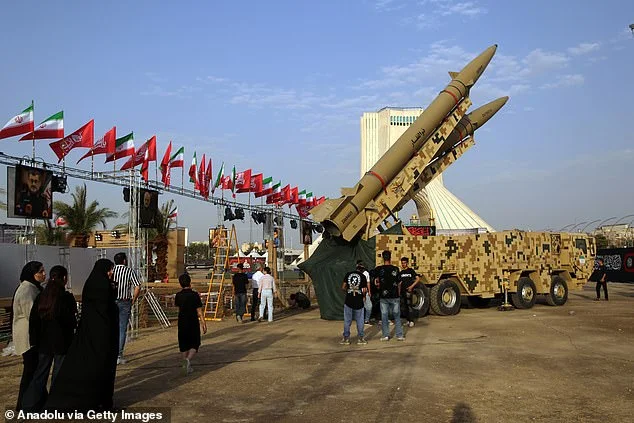
Iran Launches Surprise Ballistic Missile Attack on US Forces
Iran launched an attempted surprise attack against American forces in the Middle East on Tuesday, firing multiple ballistic missiles from its territory, the U.S. military said. All incoming missiles were successfully intercepted, according to U.S. Central Command (CENTCOM). The attack shattered a brief lull in hostilities that had been cultivated to allow diplomatic negotiations aimed at reopening the Strait of Hormuz.
The attack occurred at 5:45 p.m. Eastern Time on July 28, 2026, when the Islamic Revolutionary Guard Corps (IRGC) fired the missiles at U.S. forces stationed in the region. CENTCOM confirmed that the attempt was thwarted, with no damage or casualties reported on the American side. Simultaneously, Iran’s state-aligned Tasnim news agency reported that the IRGC had struck and halted three oil tankers in the Strait of Hormuz, a critical chokepoint for global energy supplies.
US and Saudi Arabia Strike Iranian Proxies in Iraq
In a swift and coordinated response, U.S. Central Command and the Saudi Arabian Armed Forces conducted precision strikes in eastern Iraq against what CENTCOM described as “Iran-aligned terrorists.” The joint operation targeted multiple logistics and weapons sites used by militias that the IRGC had directed to attack U.S. forces and Saudi energy infrastructure.
According to CENTCOM, the strikes were “a strong response to over 30 IRGC-directed aerial drone attacks in the last 72 hours.” The statement emphasized that the unwarranted attacks against U.S. forces “were not successful” and that the IRGC “and its terrorist proxies must cease these attacks to avoid further U.S. military response.”
At least ten members of an Iran-backed paramilitary alliance, the Hashed al-Shaabi (Popular Mobilisation Forces), were killed in the strikes across several provinces in Iraq, according to sources cited by AFP. The deadliest attack occurred in Nineveh province, with additional injuries reported elsewhere. The Iraqi government has not yet issued an official statement.
Jordan Intercepts Missiles; Strait of Hormuz Under Fire
Jordan’s military confirmed early Wednesday that its air defenses intercepted and destroyed five missiles launched from Iran. The Jordanian statement did not report any casualties. The interception suggests that the Iranian barrage may have been aimed broadly at regional targets rather than exclusively at American installations.
Meanwhile, the IRGC’s claim of striking three oil tankers in the Strait of Hormuz adds a dangerous new dimension to the conflict. The strait is a vital waterway through which about a fifth of the world’s oil passes. Any disruption there threatens global energy markets. The tanker strikes follow a recent pattern of escalating tensions: earlier in July, an oil tanker exploded after hitting a mine in the strait, an incident that further fueled US-Iran frictions. Analysts fear that Tehran may be attempting to weaponize the strait to pressure the international community.
Background: From Fragile Diplomacy to Renewed Hostilities
The latest escalation marks a dramatic reversal of the fragile calm that had been established over recent weeks. The lull was intended to bring negotiators back to the table to discuss reopening the Strait of Hormuz, which had been effectively closed by Iranian threats and attacks on commercial shipping. U.S. President Donald Trump had spoken of “very friendly” talks just a day before the attack, raising hopes of a diplomatic breakthrough.
Instead, the IRGC launched its largest barrage of ballistic missiles against American forces since the war began earlier this year. The attack also came just after Israeli Prime Minister Benjamin Netanyahu met with President Trump at the White House, the first such meeting since the U.S. and Israel launched their joint military campaign against Iran. Israel has not taken part in this latest round of hostilities, but its involvement in the broader conflict remains a key variable.
The U.S.-led war with Iran began earlier in 2026, triggered by a series of escalating incidents in the Persian Gulf. The conflict has seen extensive use of drones, missiles, and proxy forces, with Iraq and Yemen emerging as major battlegrounds. CENTCOM noted that from February through April 2026, there were more than 600 attempted attacks on U.S. citizens and facilities by Iran-aligned militias in Iraq.
Why It Matters: The Stakes of the Iran-US Escalation
The stakes of this renewed confrontation are extraordinarily high. Iran’s attempted surprise attack directly challenges the U.S. military’s deterrent posture in the Middle East. While all missiles were intercepted, the sheer scale of the barrage—ballistic missiles launched directly from Iranian soil rather than by proxies—represents a significant escalation in the conflict’s intensity.
For Saudi Arabia, the joint strikes mark a deeper involvement in the conflict. Riyadh has long been a target of Iranian-backed attacks, particularly on its oil infrastructure. By openly striking alongside the United States, Saudi Arabia signals that it is no longer willing to absorb such attacks without retaliation. This could draw the kingdom further into direct confrontation with Iran, with unpredictable consequences for regional stability.
For global energy markets, the situation is dire. The attacks on oil tankers in the Strait of Hormuz threaten to disrupt the flow of oil from the Persian Gulf, potentially driving up prices and triggering economic instability. The earlier explosion of an oil tanker after hitting a mine in July had already spooked markets and insurers, leading to higher shipping premiums.
Perspective: What This Changes in the Iran Conflict
This development fundamentally alters the trajectory of the Iran-U.S. war. The assumption that conflict could be contained to proxy battles and drone strikes has been shattered by Iran’s use of ballistic missiles against American forces directly. This is a red line that may compel the Trump administration to expand its military campaign, possibly targeting Iranian missile and nuclear facilities more aggressively.
It also complicates diplomatic efforts. The brief lull had raised hopes of a negotiated settlement, particularly regarding the Strait of Hormuz. Now, with both sides having struck directly at each other’s forces and allies, the path back to talks appears much narrower. Iran’s leadership may feel emboldened by its ability to launch a barrage without immediate catastrophic retaliation, while the U.S. and its allies may conclude that only overwhelming force will deter future attacks.
Experts have warned for months that a ground operation or a broader war could be in the offing. Podcast host and entrepreneur Steven Bartlett recently sounded an alarm about the possibility of a U.S. ground operation in Iran, arguing that such a move would have devastating consequences for all parties. His warning now appears prescient, as the conflict shows no signs of de-escalation.
For the people of Iraq, the renewed strikes are a painful reminder of their country’s role as a battlefield for external powers. Iranian-backed militias operate with impunity in parts of Iraq, and U.S.-Saudi strikes have now killed at least a dozen fighters. Iraqi civilians may again bear the brunt of a conflict not of their making.
What Comes Next: Ceasefire or Further Escalation?
The immediate question is whether the U.S. and Iran can pull back from the brink or whether this is the opening salvo of a more intense phase of the war. Iran has not yet officially commented on the American claims of an attempted surprise attack, but its state media has boasted of striking tankers and inflicting damage on what it calls “violating” vessels.
CENTCOM has made clear that the U.S. military remains “at a high state of readiness” and will respond to further provocations. The involvement of Saudi Arabia in joint strikes suggests that a broader coalition might be forming against Iran, potentially including other Gulf states that have long feared Tehran’s ambitions.
On the diplomatic front, Oman has previously served as a mediator, and talks were scheduled to resume in the coming days. Whether those talks can survive this outbreak of violence is uncertain. The Trump administration may now demand far more stringent concessions from Iran before agreeing to any ceasefire.
For now, the world watches as the Strait of Hormuz becomes a flashpoint, missiles fly over the Middle East, and a war that was supposed to be winding down suddenly intensifies. The next 24 to 48 hours will be critical in determining whether this is a temporary spike or the beginning of a far larger conflagration.
Comments