
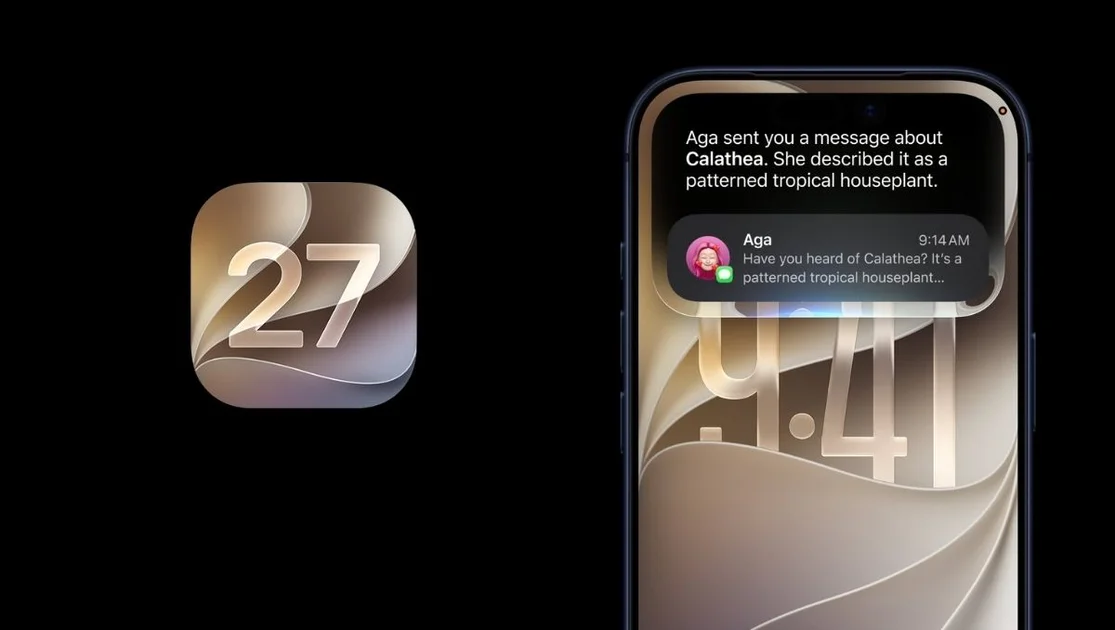
iOS 27 Now Available: Apple's Biggest Update of the Year Arrives
Apple is releasing iOS 27 today, Monday, September 14, 2026, marking the company's largest software update of the year. The over-the-air update is expected to begin rolling out at approximately 10:00 a.m. Pacific Time (1:00 p.m. Eastern), according to multiple reports. The release was confirmed at Apple's September 9 "Surprise and Shine" event, where the company also unveiled the iPhone 18 Pro lineup, a foldable iPhone Duo, new Apple Watches, and AirPods 5.
iOS 27 will not arrive alone. macOS Golden Gate, iPadOS 27, watchOS 27, and other OS 27 family releases are expected to drop around the same time. Apple's regional websites indicate a September 14 launch in most countries, while some Asia-Pacific regions list September 15 due to time zone differences. For users in the United States, the update will be available mid-morning on the West Coast and early afternoon on the East Coast.
Global Rollout Times
Apple's release schedule translates to a narrow global window. In Western Australia, iOS 27 arrives at 1:00 a.m. AWST on Tuesday, while Eastern Australia sees it at 3:00 a.m. AEST. In Europe, most countries will receive the update at 7:00 p.m. CEST, with the UK at 6:00 p.m. BST. India gets it at 10:30 p.m. IST, China and Hong Kong at 1:00 a.m. Tuesday, and Japan and South Korea at 2:00 a.m. Tuesday. New Zealand will see it at 5:00 a.m. Tuesday. Apple cautions that slight delays are possible as servers scale for the global rollout.
What iOS 27 Brings to iPhone
iOS 27 is headlined by a rebuilt Siri that now functions as a dedicated AI assistant powered by Google Gemini. Users can interact with Siri conversationally, similar to modern AI chatbots. The update also introduces new Apple Intelligence tools, including advanced photo-editing features such as spatial reframing, the ability to remove unwanted objects, and voice- or text-based editing commands. Apple is positioning these features as a catch-up to AI editing suites already available on Android devices from Google and Samsung.
Other changes include subtle customization options for the Liquid Glass interface, updates to Health, Photos, and Notes apps, and more than 250 changes across the operating system. The beta cycle began at WWDC on June 8 and ran through eight developer and public builds, giving developers roughly three months to test against new Siri APIs.
Device Compatibility and Feature Tiers
iOS 27 supports the iPhone SE (second generation or later), iPhone 11 series, and all subsequent models through the iPhone 18 lineup. However, the deepest Siri AI features are tied to chips no older than the A17 Pro. This creates three tiers: devices that receive iOS 27 but not the new Siri, those with a baseline Siri AI experience, and newer models like the iPhone 18 Pro with the A20 Pro chip that unlock the full assistant. Users can download the update via Settings > General > Software Update, or enable automatic updates.
Context: Why This Update Matters
iOS 27 represents Apple's most aggressive push into AI yet, following a period of criticism that the company lagged behind rivals in integrating generative AI. The update also reflects Apple's shift to year-based version numbers, a change made in 2025. iOS 26 shipped in September 2025 alongside the iPhone 17 line; iOS 27 is the 2026 fall release aligned to the 2027 model year. The longer beta cycle was a response to past delays in Apple Intelligence features, which slipped in 2024 and 2025.
The stakes extend beyond a routine refresh. By tying advanced Siri capabilities to newer hardware, Apple is incentivizing upgrades while managing performance expectations across its install base. The partnership with Google Gemini for Siri also signals a pragmatic approach to delivering competitive AI features, even as Apple continues to develop its own on-device models.
Perspective: A Defining Moment for Apple's AI Strategy
iOS 27 arrives as the smartphone AI race intensifies. Google and Samsung have offered full AI editing suites for a couple of years, and Apple's update is widely seen as a necessary catch-up. The success of Siri AI could influence how users perceive Apple's broader AI ambitions, from health to productivity. It also sets the stage for future hardware cycles, as Apple increasingly differentiates its premium devices through AI capabilities.
For developers, the longer beta period and new Siri APIs open opportunities for third-party integration. For consumers, the update is a test of whether Apple can deliver a cohesive, privacy-focused AI experience at scale. As iOS 27 rolls out today, all eyes will be on whether Apple's late but ambitious entry reshapes the conversation.
Comments