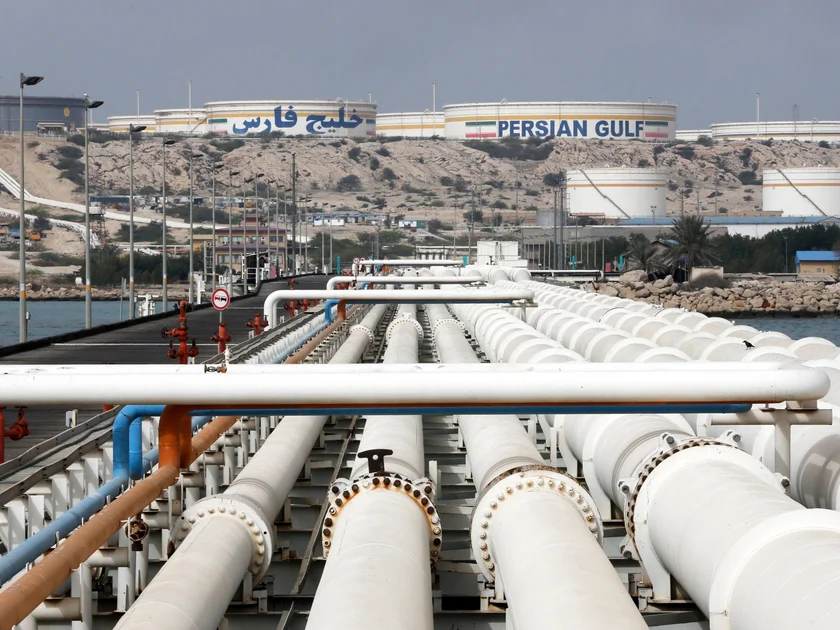
On March 11, 2026, the International Energy Agency coordinated the largest emergency oil release in its history, mobilizing 400 million barrels from the strategic reserves of its 32 member states. The decision followed a dramatic collapse in crude shipments through the Strait of Hormuz — down to less than 10% of pre-war levels — after the outbreak of the Israeli-American military campaign against Iran on February 28, 2026. Brent crude, which had briefly spiked to around $120 per barrel, settled at $103.14 by the end of last week's trading session. The numbers may suggest the intervention is working. But energy analysts warn the relief could be short-lived.
A Record Release That Still Falls Short
The 400-million-barrel injection represents the sixth coordinated reserve release in the IEA's history and dwarfs the previous record of roughly 182 million barrels deployed in 2022. Before the announcement, IEA member states held over 1.8 billion barrels in combined government and industry reserves, meaning this release draws down approximately 22% of the total emergency buffer.
Yet the scale becomes less impressive when stacked against global consumption. The U.S. Energy Information Administration estimates world oil demand in 2026 at around 105.17 million barrels per day. At that rate, the entire 400 million barrels covers only about four days of global supply. Measured against the Strait of Hormuz's normal daily throughput of roughly 20 million barrels, the release amounts to just 20 days of replacement flow.
"Using strategic reserves in this context looks like a small bandage on a large wound." — Naif Al-Dandani, energy strategy expert, speaking to Al Jazeera
Al-Dandani's assessment captures what many market observers are reluctant to state plainly: the release addresses symptoms, not causes. As long as tanker traffic through the Strait of Hormuz remains choked, the underlying supply disruption persists regardless of how many barrels are unlocked from government vaults.
The $40 Geopolitical Premium
Oil economist Dr. Nabil Al-Marsoumi adds another dimension to the analysis. In his view, the sharp price increase is not purely a function of reduced physical supply — it also reflects a roughly $40-per-barrel geopolitical risk premium that markets have baked in since the closure of the strait.
Strategic reserve releases are well-suited to calming panic and compressing this kind of fear-driven premium. They signal institutional resolve and inject short-term liquidity into a tight market. But they are poorly designed to substitute for reliable, continuous supply flows. The countries most exposed — energy-importing economies still battling inflation — cannot afford prices above $100 indefinitely, regardless of whether barrels technically exist in storage somewhere.
Notably, the EIA's current demand projections have not yet shown a material year-on-year decline attributable to the conflict. Consumption remains near 105 million barrels per day. The market's problem is not collapsing demand but the fear of delayed, rerouted, or inaccessible supply reaching refineries on time.
Kharg Island: Where the Crisis Could Escalate Further
The most destabilizing variable in the current situation is the potential shift from maritime disruption to direct infrastructure strikes. President Donald Trump stated that U.S. forces had already hit military targets on Iran's Kharg Island — the facility responsible for processing the vast majority of Iran's crude exports — and warned that oil infrastructure there could become a target if Iran continues to interfere with Hormuz navigation.
For context on the strategic weight of that threat, Kharg Island Under Pressure: Iran's Oil Lifeline Caught in the Crossfire of Sanctions and Regional Tensions offers important background on how central the island is to Iranian — and global — oil logistics.
Associated Press reporting confirmed that strikes had impacted military positions on the island, but the status of oil processing and export terminals remains a critical open question. If those facilities are damaged or taken offline, the current crisis would escalate to a level where 400 million barrels of strategic reserves would provide even less meaningful cover.
Markets Calmed, Crisis Unresolved
The IEA's intervention achieves one legitimate goal: it buys time. It prevents an immediate price spiral from becoming a full market breakdown, and it demonstrates that consuming nations retain the institutional capacity to act collectively under pressure. That matters for confidence.
But structural relief requires a different set of conditions — a ceasefire or negotiated agreement that restores freedom of navigation through the Strait of Hormuz, diplomatic progress that reduces the risk of further escalation around Iran's energy infrastructure, and a credible signal that the 20 million barrels a day that normally flow through one of the world's most critical chokepoints will resume on a predictable basis.
Until those conditions are met, the IEA's historic release functions as exactly what it was designed to be: an emergency stabilizer, not a solution. The deeper wound remains open, and the bandage, however large by historical standards, covers only a fraction of it.
With Iran's top officials already navigating an extraordinarily volatile domestic and international environment, the path toward any stabilization of Hormuz traffic remains highly uncertain — and with it, so does the outlook for global energy markets in the weeks ahead.
Comments