
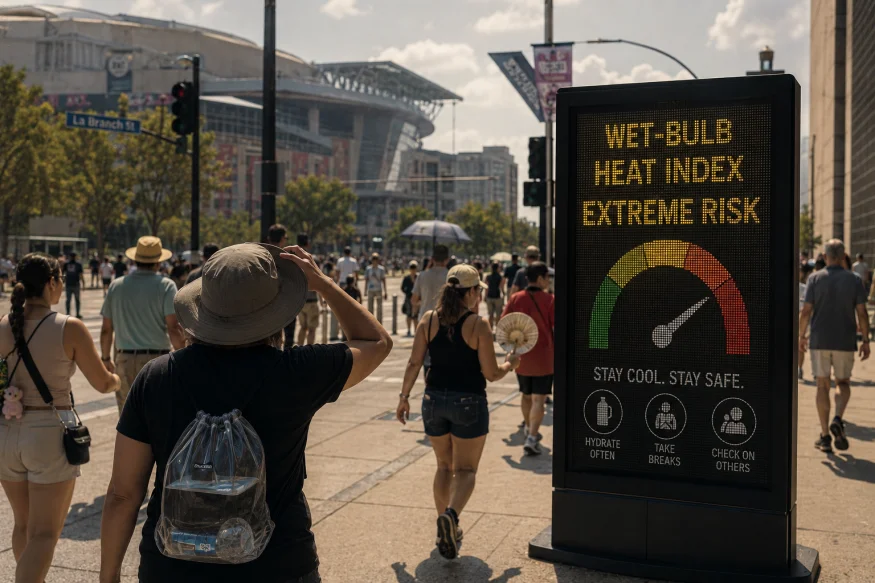
Oppressive Humidity and Heat Advisory Grip Houston
Houston is enduring a severe heat wave this weekend, with a Heat Advisory in effect across Southeast Texas until 10 p.m. Saturday, June 20, 2026. The region is still reeling from the remnants of Tropical Storm Arthur, which swept through earlier this week, leaving behind a blanket of tropical moisture that has pushed humidity levels to extreme — and potentially record-breaking — heights.
Meteorologists report that dew points have climbed into the upper 70s and even low 80s, making the air feel thick and suffocating. According to Space City Weather meteorologist Matt Lanza, "This is probably the worst humidity I have ever seen in Texas." Heat index values, which combine actual temperature with humidity to measure how hot it feels, are expected to range between 105 and 115 degrees Fahrenheit. The National Weather Service typically issues a Heat Advisory when the heat index surpasses 108 degrees.
Flash Flood Warnings Add to Weekend Woes
Adding to the dangerous conditions, a Flash Flood Warning is in effect for parts of Harris and Galveston counties until 2:45 p.m. Saturday. The National Weather Service detected 2 to 3 inches of rain already on the ground and expects another 1 to 2 inches. Scattered thunderstorms are possible through the afternoon, bringing heavy rain, frequent lightning, and localized street flooding, especially in areas already saturated from Arthur's earlier downpours.
World Cup Match Staged in Steam Bath Conditions
This dangerous weather arrives at a particularly inopportune moment for Houston, which is hosting a World Cup match this weekend. The Netherlands leads Sweden at halftime in a highly anticipated game, but fans and players alike must contend with a heat index that could reach 110 degrees or more on the field.
Local authorities and event organizers are urging attendees to take precautions: drink plenty of water, take frequent breaks in shaded or air-conditioned areas, and watch for signs of heat stress. The combination of high humidity and already warm soil temperatures, left saturated by Arthur, is limiting the body's ability to cool itself through sweating, raising the risk of heat exhaustion and heatstroke.
Heat Advisory Extended Through Weekend
The heat advisory, which began Thursday, has been extended through Saturday night. Overnight lows are expected to dip only to around 80 degrees, offering little relief. This pattern of oppressive heat and humidity is expected to persist into the coming week, with only spotty storm chances forecast for Father's Day.
The Aftermath of Tropical Storm Arthur
Tropical Storm Arthur made landfall on June 17 in Freeport, Texas, bringing heavy rain and gusty winds. The storm has since moved east, but its tropical moisture lingers. Combined with abundant sunshine and strengthening high pressure, that moisture is fueling the current humidity crisis.
Satellite and radar data show that the saturated ground is acting like a sauna, releasing moisture into the air as temperatures rise. This phenomenon is particularly acute in Houston, a city known for its humid subtropical climate but rarely experiencing dew points as high as 85 degrees. One local resident described stepping outside as "like breathing underwater."
Health Risks Climb with Humidity
For vulnerable populations — including older adults, young children, and those with respiratory conditions such as asthma — the air quality and heat pose significant risks. The high dew point makes it difficult for sweat to evaporate, which can lead to overheating even at moderately high temperatures. The National Weather Service warns that prolonged exposure could be dangerous.
Broader Climate Context and What This Means
This extreme humidity event is not an isolated phenomenon. It comes amid a summer that has already seen record-breaking heat waves across the United States and Europe. For Houston, the combination of post-tropical moisture and a stubborn high-pressure ridge is creating conditions that some meteorologists are calling unprecedented, even by local standards.
Lessons for Infrastructure and Event Planning
The situation highlights the growing challenge for cities hosting large outdoor events, especially during summer. While the World Cup match is proceeding, organizers are likely to revisit contingency plans for heat. Similarly, local emergency services are stretched between heat-related calls and flash flood responses.
A New Normal for Summer?
Climate scientists warn that such extreme humidity events may become more frequent as global temperatures rise and storm patterns shift. The Gulf of Mexico, a primary source of moisture for Texas, is warming, which can supercharge the humidity that follows tropical systems. For Houston, this could mean more summers of "feels like" temperatures approaching 115 degrees, testing the limits of urban infrastructure and public health systems.
As the region braces for more heat through the weekend and into next week, residents are advised to stay hydrated, limit outdoor activity during peak sun hours, and monitor local alerts. The Grandma's Marathon 2026 in Minnesota also faces a warm weekend, albeit under less extreme conditions, showing that summer heat is affecting outdoor events across the country this June.
The summer solstice arrives Sunday, June 21, marking the official start of summer. For Houston, it already feels like the season's most oppressive chapter has begun.
Comments