The Epstein Files: A Wave of Revelations and Rumors
The unsealing of documents related to Jeffrey Epstein's sex trafficking case has been one of the most consequential legal transparency events in recent American history. Beginning in earnest in late 2023 and continuing into 2024, federal courts in New York authorized the release of hundreds of pages of depositions, flight logs, and correspondence connected to Epstein's network of associates. These documents named numerous prominent individuals — politicians, businesspeople, entertainers, and royals — generating enormous public interest and, inevitably, a flood of misinformation.
Among the most frequently searched names in connection with these files is that of former Secretary of State and 2016 presidential candidate Hillary Clinton. Understanding what the documents actually say — and what has been fabricated or exaggerated — requires careful examination of verified facts versus viral claims circulating on social media platforms.
What the Unsealed Documents Actually Contain
The Epstein-related court documents released through 2024 include depositions from Epstein's former associate Ghislaine Maxwell, testimony from accusers, and communications that reference a wide range of public figures. The documents confirmed that many well-known individuals had social connections to Epstein, including former President Bill Clinton, whose name appeared in flight logs showing trips aboard Epstein's private aircraft in the early 2000s.
However, legal experts and journalists who reviewed the unsealed materials consistently noted that appearing in Epstein's social orbit — attending parties, flying on his plane, or being named in communications — does not constitute evidence of criminal wrongdoing. The documents confirmed Bill Clinton flew on Epstein's jet on multiple occasions, a fact that had been publicly reported for years prior to the unsealing.
Hillary Clinton's Name in the Epstein Sphere: What Is Verified
Hillary Clinton's direct connection to Jeffrey Epstein has been far less documented than her husband's. While Bill Clinton's name appears in flight logs and depositions, Hillary Clinton has not been prominently featured in the core unsealed Epstein court documents as a participant in Epstein's activities.
Her name has circulated in association with the case largely through social media posts, unverified allegations on fringe websites, and political commentary. No deposition testimony or court-verified document has placed Hillary Clinton at Epstein's properties or implicated her in any criminal conduct related to Epstein's network.
The "Leaked Photo" Claim: Viral Misinformation Examined
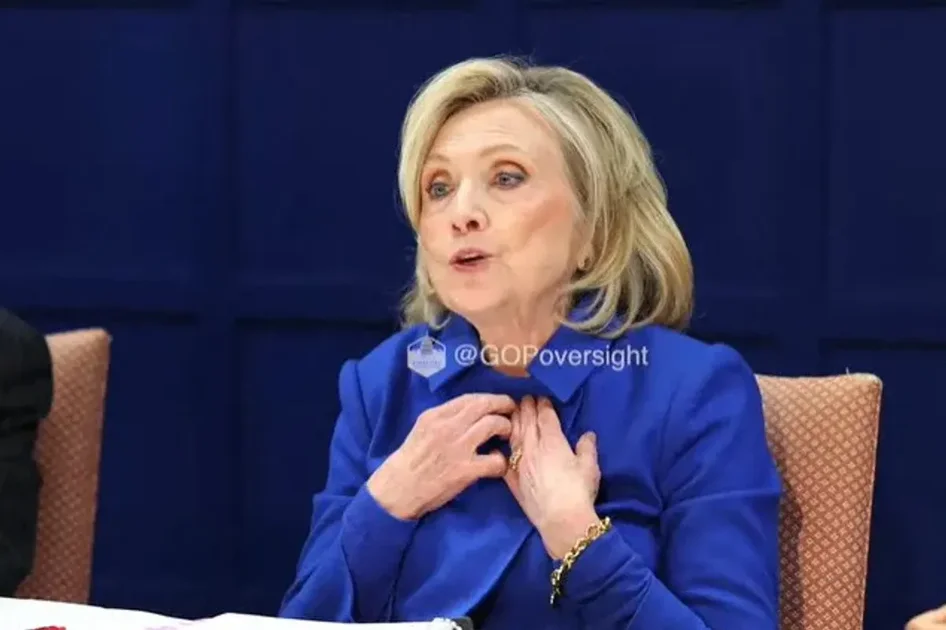
One persistent claim involves a purported "leaked photo" allegedly connecting Hillary Clinton to Epstein or his circle in a compromising or incriminating context. This claim has circulated across platforms including X (formerly Twitter), Telegram, and various right-leaning media outlets.
Fact-checkers and investigative journalists have consistently found these photo claims to be either fabricated, digitally altered, or wildly miscontextualized images repurposed for political purposes. Reverse image searches of the most widely shared photos have traced them to unrelated events, stock imagery, or known hoaxes. No credible news organization has authenticated any photo specifically depicting Hillary Clinton in a context that substantiates criminal involvement with Epstein.
This pattern is not unique to Clinton — numerous fabricated images and false claims have targeted other public figures named loosely in the Epstein discourse, including members of royal families, tech executives, and other politicians across the political spectrum.
The Broader Context: Why Misinformation Thrives Around the Epstein Case
The Epstein case is fertile ground for conspiracy theories for several reasons. The financier's death in August 2019, officially ruled a suicide while he was in federal custody awaiting trial, has never been fully accepted by a significant portion of the public. The involvement of genuinely prominent figures across elite social circles lends credibility to the idea that powerful people had something to hide — and by extension, that further hidden truths are waiting to be uncovered.
This environment makes it easy for bad actors to introduce fabricated evidence or misleading narratives. When a topic carries genuine intrigue and involves real wrongdoing, distinguishing real revelations from manufactured ones becomes exponentially harder for general audiences.
The Role of Political Motivation
Hillary Clinton remains one of the most politically polarizing figures in the United States. Her name is reliably used as a rallying point in partisan media ecosystems, meaning that any connection — however tenuous — to a scandal as significant as the Epstein case is quickly amplified. Research into online disinformation patterns has shown that false claims invoking Clinton's name spread significantly faster than corrections or debunking articles.
This dynamic underscores the importance of media literacy and source verification. The appearance of a "leaked document" or "leaked photo" on social media should prompt immediate skepticism, particularly when it concerns a high-profile political target and a case already surrounded by intense speculation.
What Responsible Journalism Requires
Reporting on the Epstein files demands a rigorous standard of verification. The legitimate documents, painstakingly unsealed through court proceedings, contain genuinely important information about how powerful people enabled or ignored systemic abuse. Mixing verified revelations with fabricated content dilutes accountability journalism and protects actual wrongdoers by muddying the evidentiary waters.
For Hillary Clinton specifically, the evidence available in public court records does not support claims of direct involvement in Epstein's criminal enterprise. Allegations to the contrary, particularly those accompanied by unverified photos or anonymous depositions, should be treated with extreme caution until authenticated by independent legal and journalistic review.
As more Epstein-related documents continue to be processed through the courts, the public's ability to demand transparency depends on a shared commitment to factual accuracy — distinguishing what the documents genuinely reveal from what political actors and misinformation campaigns want us to believe they contain.
Comments