
Richard Gadd’s ‘Half Man’ Finale Delivers a Brutal Conclusion as Emmys Campaign Takes Shape
The HBO limited series “Half Man,” created by and starring Richard Gadd, concluded its six-episode run on Thursday, May 28, 2026, with a finale that has left audiences and critics divided. The show, which follows the volatile relationship between two men who grew up as brothers, ended with a violent confrontation in a barn and a shocking revelation that recontextualized the entire series.
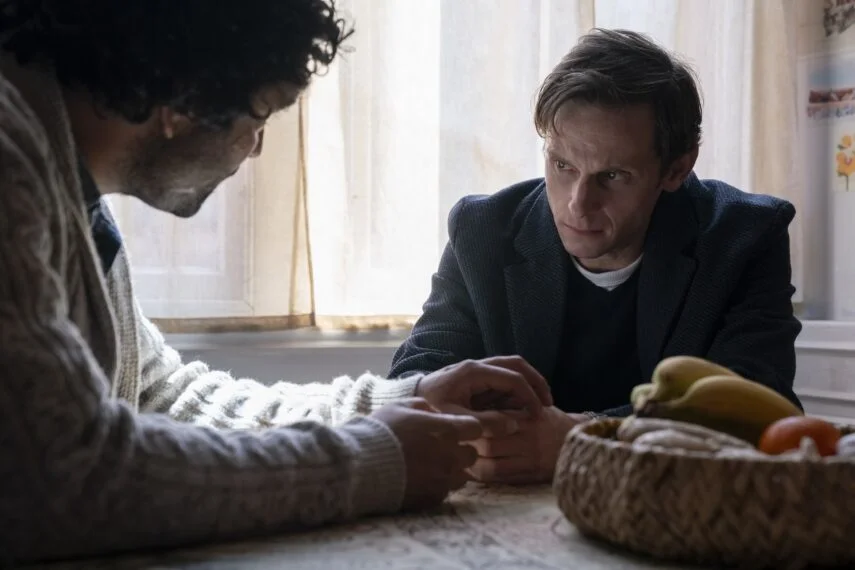
Gadd, who won three Emmys in 2024 for the Netflix hit “Baby Reindeer,” is now navigating a carefully calibrated awards campaign for his sophomore project. In an exclusive reveal to Variety, the show’s Emmy submissions were announced: Gadd and Stuart Campbell, who portray the older and younger versions of Ruben Pallister, will compete in the supporting actor category, while Jamie Bell and Mitchell Robertson, who play Niall Kennedy, will be submitted as lead actors.
The Finale’s Twist and Gadd’s Ambiguous Vision
The finale, titled “The Barn,” finally answered the central mystery that had been teased throughout the series: what happened between Niall and Ruben behind closed doors at Niall’s wedding. The answer, it turns out, involved a devastating secret Niall had kept for years—that he, not Ruben, was the biological father of Mona’s son Baird, born while Ruben was in prison.
When Ruben discovers the truth, the reaction is almost predictable in its violence. The series ends with a grim fight sequence that leaves Niall dead and Ruben standing over him, a knife in hand. In an interview with Variety, Gadd described the ending as deliberately ambiguous. “I like that the ending is a little ambiguous, and I like that you’re asking these questions,” he said. “But I sometimes think, it’s almost my duty as an artist—or a writer, or whatever—to not over-explain intention. Because I think whatever people take out of the scene is more important to me.”
Gadd told Men’s Health that the ending felt inevitable given the show’s themes. “It felt like the right way to end a show like this,” he said. “You take two broken men in the present and contextualize how they got to that point. Let’s go back to their childhood, let’s show the things they learn as kids, the repression, the prejudices, the violence, and see how that shaped their lives over the course of a few decades.”
Critics Respond to a ‘Punishingly Grim’ Series
Not everyone has embraced the show’s unrelenting darkness. TVLine’s Dave Nemetz called “Half Man” a “punishingly grim slog, dragging its characters through harsh violence and sexual trauma with almost no relief.” In his review of the finale, he noted that the final twist “ends a dour drama on a sour note.”
Aramide Tinubu, Variety’s chief TV critic, offered a more measured assessment, calling the series “an excellent but difficult watch.” She added, “A viciousness runs through the narrative, and countless acts of violence depicted. For those who stick it out, the final episode features one of the most emotionally shattering scenes on television.”
The show’s unflinching portrayal of toxic masculinity, repressed sexuality, and generational trauma has drawn comparisons to Gadd’s previous work on “Baby Reindeer,” which similarly mined deeply personal experiences of abuse and obsession. But where “Baby Reindeer” found moments of dark humor and even catharsis, “Half Man” offers little respite, as noted by multiple reviewers.
Emmys Strategy: Playing the Supporting Angle
The decision to submit Gadd in the supporting actor category rather than lead represents a calculated awards strategy. With Jamie Bell and Mitchell Robertson both competing as leads, Gadd avoids direct competition with his co-star and potentially frees up space in a crowded limited series lead actor field.
This approach mirrors strategies used by other high-profile limited series, where stars have shifted categories to improve their odds. The strategy could pay off: with six or seven slots available in supporting actor (limited), Gadd’s name recognition and recent Emmy pedigree could give him an edge. He and Campbell will compete for those slots, with several slots already filled by other contenders.
Gadd is also submitting as an executive producer and writer, meaning he could add to his three Emmys if the series performs well across categories.
The Making of a Physically Demanding Role
In interviews, Gadd has spoken about the physical transformation required to play Ruben, a character who embodies a hyper-masculine ideal that ultimately destroys him. For Men’s Health, he detailed the process of bulking up and the insights he gained about his own body and relationship to masculinity.
“I learned a lot about what it means to inhabit a body that is constantly performing strength,” Gadd said. “Ruben’s physique is a armor, but it’s also a cage. The show is about what happens when that armor cracks.”
The fight scene in the barn, which Gadd described as “grueling” to film, required extensive choreography and multiple takes. The sequence was shot over several days and involved both Gadd and Bell performing many of their own stunts.
Comparisons to ‘Baby Reindeer’ and Gadd’s Artistic Evolution
Gadd has acknowledged the inevitable comparisons between “Half Man” and “Baby Reindeer,” but insists the new series has been percolating for much longer than audiences might assume. He wrote the first episode of “Half Man” in 2019, before he even began adapting his stage show into the Netflix hit. He returned to the project in December 2023, immediately after finishing the sound mix for “Baby Reindeer’s” final episode.
“There was just a lot of conversation about male violence, male behavior, and an idea just sparked,” Gadd told Men’s Health. “I started thinking, you take two broken men in the present and contextualize how they got to that point.”
The series explores themes of masculinity, repressed homosexuality, and the cycle of violence, all set against the backdrop of a changing Scotland. Gadd has been open about his own experiences with sexual abuse and how they inform his work. “I use art as a means of self-exploration,” he said.
Broader Implications for HBO and Streaming Drama
The mixed critical reception of “Half Man” raises questions about HBO’s strategy for limited series in the post-“Succession” era. The network has been aggressive in acquiring projects from proven creators like Gadd, but the dark, uncompromising nature of “Half Man” may limit its broader appeal.
Yet the show has generated significant conversation, particularly around its portrayal of male violence and the expectations placed on men. As Pride Month 2026 kicks off across the U.S., the show’s exploration of repressed sexuality and its devastating consequences feels particularly resonant.
Gadd’s willingness to tackle uncomfortable subjects has made him one of the most talked-about voices in television. Whether “Half Man” will achieve the cultural impact of “Baby Reindeer” remains to be seen, but its provocative ending ensures it won’t be easily forgotten.
The series is now streaming on HBO Max, and its fate in the Emmy race will become clearer as the submission deadline approaches. For now, Gadd seems content with the ambiguity he has created. “I don’t like happy endings,” he told Variety. “They feel dishonest. Life doesn’t wrap up neatly, and I don’t think art should either.”
A Summer of Unflinching Drama
As audiences digest the finale, the conversation around “Half Man” is likely to persist. The show’s release coincides with a broader cultural moment in which discussions of masculinity and mental health are front and center. Meanwhile, the UK is experiencing a heatwave that has just ended, and in the U.S., Pride Month 2026 is underway, both providing contrasting backdrops to the show’s dark themes.
Whether the Emmys will embrace “Half Man” as enthusiastically as they did “Baby Reindeer” remains an open question. But Gadd has proven that he is not afraid to take risks, both in his storytelling and in his campaign strategy. The supporting actor submission may be the smartest move of the season—or a sign that even Gadd knows this show is a harder sell than his breakout hit.
Comments