
Green Party Confronts Defining Moment Over Zionism Motion
Delegates at the Green Party conference in Brighton are set to debate a motion declaring that "Zionism is racism," a resolution that has ignited fierce internal division and drawn national scrutiny. The motion, which topped a members' ballot, calls for the party to adopt an explicitly anti-Zionist stance, support a single democratic Palestinian state, and equate Zionism with other forms of racism.
The controversy comes just days before a critical byelection in Holborn and St Pancras on October 8, where Green leader Zack Polanski is campaigning to win the former seat of Keir Starmer. Polanski has publicly identified as an anti-Zionist but has faced pressure to clarify his position on the motion itself. The debate has overshadowed the party's campaign and raised questions about its electoral trajectory.
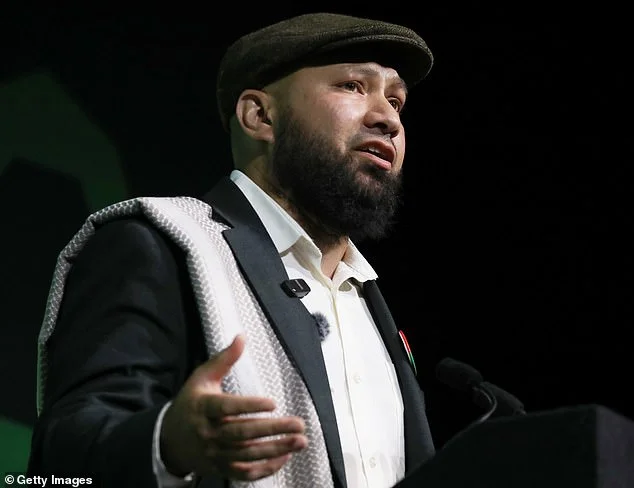
The motion, proposed by British-Palestinian activist Lubna Speitan, is not new—it was submitted to the spring conference but not debated due to time constraints. Its revival has been driven by grassroots organizing, particularly by the group Greens for Palestine, which has encouraged supporters to join the party specifically to advance the resolution.
What Is Zionism?
At its core, Zionism is the movement for Jewish self-determination and statehood in the historical homeland of the Jewish people. Modern political Zionism emerged in the late 19th century, largely associated with Theodor Herzl, as a response to rising European antisemitism. However, the term encompasses diverse and often contradictory strands, including early proposals for a binational Arab-Jewish state.
For many Jews, Zionism represents not just a political ideology but a connection to Jewish liberation, sovereignty, and a safe haven from persecution—particularly in the wake of the Holocaust. Critics, however, view Zionism as a colonial project that led to the violent displacement of Palestinians during the Nakba of 1948 and the establishment of what they describe as an apartheid system.
Why the Debate Matters
The Green Party motion has become a flashpoint in a broader national conversation about the boundaries of legitimate criticism of Israel and the definition of antisemitism. Supporters argue the motion is a necessary confrontation with a racist ideology, while opponents warn it conflates Zionism—a diverse and deeply held identity for many Jews—with racism itself.
Jonathan Freedland, writing in The Guardian, warns that the resolution shows little understanding of what Zionism is, who Jews are, or how antisemitism works. He suggests that if passed, the policy could lead to the expulsion of members affiliated with Zionist organizations, which include most synagogues in Britain. "If I were a member of the Green party, I would have reason to believe that that simple act could soon see me expelled as a racist," he wrote, referring to saying Kaddish, the mourner's prayer, for his late father.
Others, like Novara Media's Clare Hymer, frame the debate as a necessary challenge to establishment politics. "The whole point of this motion is for us to challenge and confront the establishment," Speitan said. "It doesn't matter what the leadership thinks… It's about us, the members… forcing their hand."
The controversy has also raised concerns about external manipulation. Some Green members fear the party is being influenced by extremist outsiders, with links between Greens for Palestine and activists who claim pro-Israel "infiltrators" must be rooted out of the UK.
Electoral Stakes
The timing is precarious. The Green Party has surged in recent months, winning a byelection in Gorton and Denton in February and surpassing 230,000 members. Polanski hopes to capitalize on this momentum in Holborn and St Pancras, but the Zionism row has cast a cloud over his campaign. If he loses, many will conclude the Green surge is over—relieving pressure on Labour and figures like Andy Burnham.
The debate also reflects a broader trend in Western politics, where debates over Israel and Palestine have become increasingly polarized. The Green Party's internal struggle mirrors similar tensions in other progressive movements, where anti-Zionist positions are gaining traction alongside concerns about antisemitism.
Broader Implications
Regardless of the vote's outcome, the debate signals a shift in how political parties navigate the fraught terrain of Middle East politics. For the Greens, the challenge is to balance grassroots demands for solidarity with Palestinians against fears of alienating Jewish members and the wider electorate.
The motion's potential passage would mark a significant departure for a mainstream UK party, equating Zionism with racism in official policy. It would also place the Greens at odds with the Labour Party, which has sought to distance itself from anti-Zionist positions.
As delegates gather in Brighton, the world will be watching. The outcome will not only shape the Green Party's identity but also contribute to a global conversation about the meaning of Zionism, the limits of political speech, and the fight against antisemitism.
Comments