
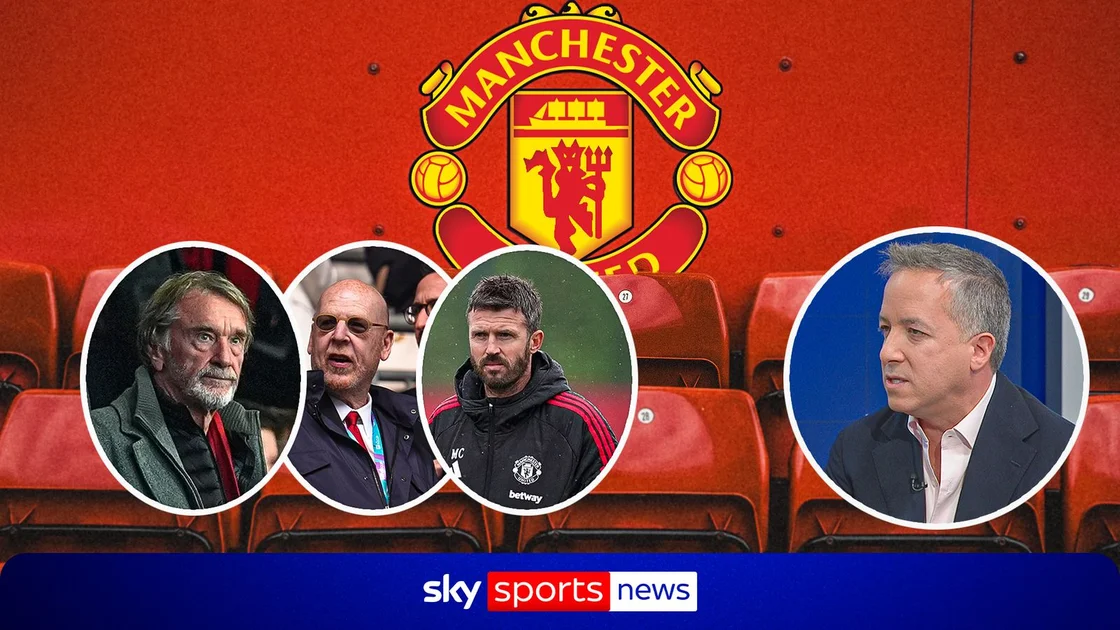
Manchester United in Crisis After Heaviest Champions League Defeat Since 1994
Manchester United's 4-1 defeat to Como in the Champions League this week has plunged the club into yet another crisis, prompting fresh scrutiny of the Glazer family's 21-year ownership and the broader power structure at Old Trafford. The loss, described by Sky Sports as "the latest chapter in their continued downward trajectory," marks United's worst start to a season in 40 years and their heaviest Champions League defeat since 1994.
The fallout has been immediate and widespread. Following the match, Bruno Fernandes publicly criticised manager Michael Carrick's tactics, while Lisandro Martinez suggested something is "wrong upstairs"—particularly regarding the transfer window. Carrick, in turn, criticised his players, creating a public blame game that has exposed deep fractures within the club. Sky Sports pundit Jamie Carragher labelled Fernandes' comments "a disgrace," but others, including Sky Sports chief correspondent Kaveh Solhekol, argued the players are simply trying to communicate with fans. "These players are just so frustrated with the way the club is being run," Solhekol wrote. "They want to communicate to the fans that there is something wrong here."
The result leaves United facing intense pressure on multiple fronts: a manager under scrutiny, a squad lacking confidence, and owners who have faced persistent criticism for two decades. As ESPN's Mark Ogden put it, "Manchester United are in crisis -- again."
The Glazer Legacy: A 21-Year Drain on Resources
At the heart of the latest unrest lies the Glazer family's controversial leveraged buyout of 2005. According to ESPN, the Glazers purchased United for £790 million but borrowed £600 million against the club itself, instantly plunging a previously debt-free institution into massive liabilities. Over the 21 years of Glazer ownership, more than £1 billion has left the club in debt repayments, interest, refinancing costs, and dividends—an average of £50 million per year on non-football costs.
That financial burden has had tangible consequences. Old Trafford has been allowed to decay into what ESPN describes as "a decaying stadium no longer fit for purpose," while the team has suffered from long-term under-investment. The nine-year period between Sir Alex Ferguson's retirement in 2013 and Sir Jim Ratcliffe's arrival in 2024 was marked by poor managerial appointments and a woeful player recruitment record. ESPN assigns 50% of the blame for United's current mess to the Glazers, citing the leveraged buyout as the root cause of the club's systemic decline.
Gulf News echoes this assessment, noting that fans have persistently criticised the Glazers over mounting debt, limited infrastructure investment, and millions taken out through dividends and ownership-related costs. "Everything that is going wrong at United can be traced back to the Glazers," ESPN concluded.
Ratcliffe's Reign: New Hope or More of the Same?
When Sir Jim Ratcliffe acquired a 27.7% stake in February 2024 for £1.25 billion and took control of football operations, many fans hoped for a new era. However, the early returns have been underwhelming at best. Football365 compiled a list of 23 mistakes attributed to Ratcliffe's tenure, ranging from minor missteps—such as replacing £100 Christmas bonuses with £40 M&S vouchers—to major decisions like the appointments of Ruben Amorim and Michael Carrick as managers.
Ratcliffe's hands-on approach has also created friction. A leaked staff email in which he described the academy dressing rooms as a "disgrace" and the club museum as "crap" reportedly "created a toxic feeling inside Carrington." His cost-cutting measures, including redundancies and a mandate for employees to return to the office despite insufficient desks, have further strained relations. "At least the Glazers prioritised families," one staffer told Football365, highlighting the discontent with the new regime.
On the pitch, Ratcliffe's stewardship has yet to deliver stability. Carrick, a club legend, was appointed with hopes of building on a third-place finish, but United's current form has raised questions about his tactical acumen and the squad's quality. ESPN's Ogden notes that blame extends to "the owners—the Glazer family and Sir Jim Ratcliffe—the senior executives, the manager or the players," with the bitter truth being that "their prolonged and deep-rooted decline can be attributed to all of the above."
The Managerial Merry-Go-Round and Player Accountability
Since Ferguson's retirement in 2013, United have cycled through multiple managers—David Moyes, Louis van Gaal, José Mourinho, Ole Gunnar Solskjær, Erik ten Hag, Ruben Amorim, and now Michael Carrick—without recapturing the consistency of the Ferguson era. Each appointment has been followed by heavy investment in players, yet the squad remains unbalanced and lacks the quality to compete at the highest level.
Carrick now faces the impossible task of steadying a ship that has been listing for years. His position is under increasing scrutiny, but as Gulf News notes, "focusing solely on the manager risks overlooking a much bigger problem at Old Trafford, one that has been building for years and goes beyond the man in the dugout." The players, too, must shoulder responsibility. Fernandes' public criticism of tactics may have been born of frustration, but it also undermines the manager's authority. As Solhekol observed, "How many of these players are good enough to play for Manchester United? How many would get into the starting XI's of Arsenal, Liverpool, or Manchester City?"
The answer, uncomfortably for United fans, is very few. The squad's shortcomings are a direct consequence of years of poor recruitment—a failure that ultimately traces back to the executive structure above the manager.
Financial Mismanagement and the Broader Implications
The Glazers' ownership model has not only burdened United with debt but has also limited the club's ability to invest in infrastructure and compete financially with state-backed rivals like Manchester City and Newcastle United. While United remain one of the world's richest clubs by revenue, the Glazers' preference for dividends and debt servicing over reinvestment has left the club lagging behind in areas such as stadium facilities and squad depth.
This financial strain is not unique to football. Across sports, ownership models that prioritise short-term returns over long-term sustainability often lead to decline. United's case is particularly stark given the club's global stature and the expectations that come with it. The Glazers' leveraged buyout, which loaded debt onto the club rather than the owners, has been a template for controversial acquisitions in other sectors, raising questions about regulatory oversight and fan engagement in club governance.
As the club's on-field fortunes worsen, the pressure on the Glazers and Ratcliffe to change course will only intensify. Fan protests, which have been a recurring feature of the Glazer era, are likely to escalate. The recent formation of the Fan Advisory Board and the club's commitment to supporter engagement may offer a channel for dialogue, but meaningful change requires more than consultation—it requires a fundamental shift in how the club is run.
What Comes Next for United?
The immediate future hinges on Carrick's ability to steady the ship and the board's willingness to back him in the transfer market. However, the deeper issue remains the ownership structure. The Glazers have shown little appetite to sell, and Ratcliffe's minority stake complicates any potential takeover. Unless there is a dramatic shift in strategy—whether through increased investment, a change in ownership, or a fundamental restructuring of football operations—United's decline is likely to continue.
For now, the club's fans are left to ponder a familiar question: how did one of the world's biggest football institutions fall so far, and who will take responsibility for fixing it? The answer, as ESPN and others have made clear, is that everyone from the boardroom to the dressing room shares the blame. But the root cause, according to the weight of evidence, remains the Glazers' ownership—a 21-year experiment that has drained the club's resources and eroded its competitive edge.
As United prepare for their next fixture, the spotlight will remain firmly on the owners. The coming weeks will determine whether the latest crisis is a wake-up call or merely another chapter in a long, painful decline.
Comments