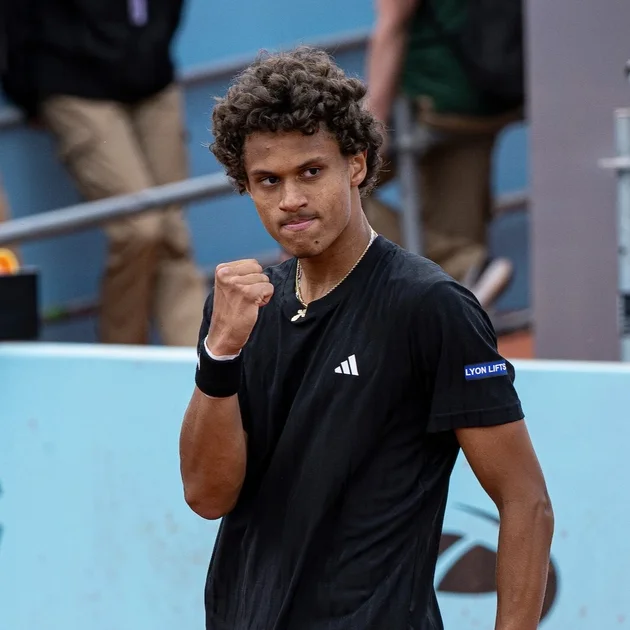
Diallo Delivers Another Statement Performance on the Tour
Gabriel Diallo, the 23-year-old Canadian tennis sensation, is making waves on the ATP Tour this April as he continues to build on a breakout stretch of results that have drawn comparisons to some of the sport's most physically imposing serve-and-volley players. Standing at 6 feet 6 inches, Diallo's combination of booming serve, aggressive baseline play, and rapidly improving consistency has placed him firmly in the conversation about the next generation of players set to dominate men's tennis.
In the latest clay-court swing leading into the Roland Garros preparation period, Diallo has posted results that suggest his progression is no longer a matter of potential but of tangible, measurable performance. His ability to compete deep into draws at ATP 250 and 500-level events has raised expectations significantly, with analysts pointing to a possible top-50 ranking within the calendar year as an increasingly realistic target.
A Serve That Demands Respect
At the core of Diallo's game is one of the most devastating serves currently operating on tour. His first-serve percentage, combined with the sheer pace and placement he generates, regularly puts opponents on the back foot from the very first point. This weapon becomes particularly lethal on faster surfaces, but the work he has invested in his clay-court movement and defensive positioning has begun to pay dividends as the spring season picks up pace. His development mirrors, in some ways, the trajectory of other young athletic players who needed time to convert raw tools into reliable results — a pattern increasingly common among the new wave of professional talent.
Why Gabriel Diallo Matters for Canadian Tennis
Canada has emerged as one of the most productive nations in professional tennis over the past decade, with Félix Auger-Aliassime and Denis Shapovalov having already established themselves as legitimate top-tier contenders. Diallo represents the next layer of that pipeline — a player who has come through the Canadian system with a different profile from his predecessors but no less ambition.
For Tennis Canada, the emergence of another genuine ATP-level talent is a validation of the infrastructure investments made in coaching, junior development, and competitive pathway programs over many years. Diallo's progress isn't an accident; it is the product of a system that has consistently produced world-class players and continues to do so with remarkable regularity.
The stakes are also personal for Diallo himself. Having competed at the collegiate level in the United States before fully committing to the professional circuit, his path has been somewhat unconventional by modern standards. That experience, however, appears to have given him a mental maturity that many players who turn professional as teenagers sometimes lack. He competes with a composure that belies his relatively limited years on tour, and that composure is increasingly catching the eye of coaches and commentators alike.
The Roland Garros Question
With the French Open approaching in late May, Diallo's clay-court form in April and early May will be crucial in determining whether he can make a deep run at one of tennis's grandest stages. His ranking trajectory suggests he could enter Roland Garros with direct acceptance into the main draw, potentially facing seeded opponents for the first time at a Grand Slam. How he handles that challenge will reveal much about his readiness to compete not just as a promising young player but as a genuine contender. Fans of clay-court tennis watching the current season might also note how other players are navigating the surface — Jelena Ostapenko's stunning 2026 clay form is another storyline capturing attention ahead of Paris.
What Diallo's Rise Signals for the Future of Men's Tennis
The broader implications of Gabriel Diallo's emergence extend beyond Canadian pride or individual ranking milestones. His ascent is part of a sweeping generational shift taking place across the ATP Tour, where a cohort of players born in the early 2000s is beginning to challenge and displace established names in the rankings. The era of a handful of dominant figures controlling the major titles is giving way to a wider distribution of talent, and players like Diallo are central to that democratization of the sport.
His physical profile — elite height, athletic build, powerful groundstrokes — reflects a trend in how top programs are now identifying and developing talent. The modern game increasingly rewards players who can overwhelm opponents with sheer power while also possessing the footwork and tactical intelligence to adapt across surfaces. Diallo checks a growing number of those boxes.
For fans who have followed the sport's evolution and the emergence of young stars across disciplines — much like watching a figure such as Lamine Yamal redefine youthful excellence in football — Diallo's journey offers a compelling narrative of what dedication and the right developmental environment can produce.
As April 2026 unfolds, Gabriel Diallo is no longer simply a name to watch in the future. He is a presence demanding attention right now, and the tennis world is beginning to take note in earnest.
Comments