
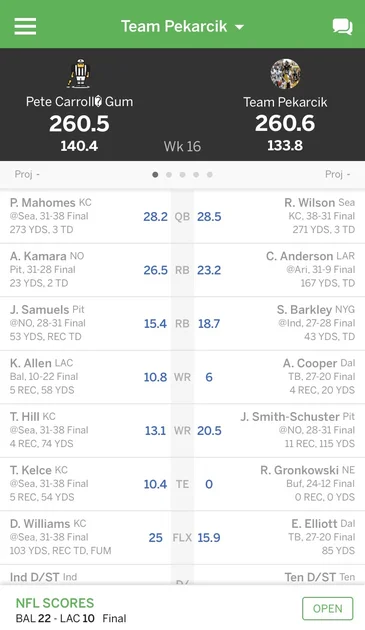
Fantasy football has grown from a niche hobby into one of the most widely played sports-based games in the world. With millions of participants across North America, Europe, and beyond, it combines statistical analysis, sports knowledge, and competitive strategy into a single engaging experience.
What Is Fantasy Football?
Fantasy football is a game in which participants act as virtual team managers, selecting real-life professional players to form a roster. Points are awarded based on those players' actual performance in real games. The goal is to accumulate more points than opponents over the course of a season.
The game exists in two primary formats depending on geography. In North America, it is based on the NFL (National Football League), while in the United Kingdom and Europe, it is most commonly associated with the Premier League through platforms such as the official Fantasy Premier League (FPL). Both formats share the same core concept but differ significantly in rules, scoring, and structure.
The Role of the Team Manager
Participants, often called managers, are responsible for drafting or selecting players before the season begins, making weekly transfers or substitutions, and setting their starting lineup based on upcoming fixtures. Decisions are influenced by player form, injuries, fixture difficulty, and statistical trends.
A Brief History of the Game
The origins of fantasy football in the United States trace back to 1962, when Wilfred "Bill" Winkenbach, a limited partner of the Oakland Raiders, co-created the first known fantasy football league with colleagues during a hotel stay in New York. The game remained largely underground for decades, spreading through office leagues and word of mouth.
The rise of the internet in the 1990s transformed fantasy football into a mainstream activity. Online platforms made it easier to manage rosters, track statistics in real time, and compete against players across the country. By the 2000s, major sports networks and dedicated websites were hosting millions of leagues annually.
Fantasy Premier League and Global Expansion
In the United Kingdom, Fantasy Premier League launched officially in 2002 and quickly became the dominant platform for football fans. By the 2020s, it had attracted over 10 million registered users per season. Its accessibility, free entry, and connection to one of the world's most-watched leagues helped establish it as a cultural phenomenon among football supporters.
How Scoring and Rules Work
Scoring systems vary by platform and league format, but most share common elements. In NFL-based fantasy football, quarterbacks earn points for passing touchdowns and yardage, while running backs and wide receivers score for rushing and receiving yards and touchdowns. Points are typically deducted for interceptions or fumbles.
In Fantasy Premier League, players earn points for goals, assists, clean sheets (for defenders and goalkeepers), bonus points, and minutes played. Yellow and red cards result in point deductions.
Draft vs. Waiver-Based Formats
NFL fantasy football typically begins with a draft, where managers select players in a structured order before the season starts. From that point, teams can make acquisitions from a pool of undrafted players through a waiver system.
FPL, by contrast, uses a transfer system. Each manager begins with a fixed budget (usually £100 million) and builds a squad of 15 players. A limited number of free transfers are allowed each week, with additional transfers incurring point penalties.
Season-Long vs. Daily Fantasy
Beyond traditional season-long leagues, daily fantasy sports (DFS) platforms such as DraftKings and FanDuel offer short-term contests where participants draft a new team for a single game week. These contests often involve cash prizes and operate under a salary cap structure rather than a traditional draft.
Strategy and Community
Successful fantasy football managers rely on a combination of statistical research, fixture analysis, and timely decision-making. Identifying undervalued players, anticipating injuries, and understanding team dynamics are key components of a winning approach.
The game has also fostered large online communities. Forums, podcasts, YouTube channels, and social media accounts dedicated to fantasy football advice have become a substantial part of sports media. Analysts, known as content creators in the space, build significant audiences by offering weekly tips, transfer recommendations, and data-driven insights.
The Impact on Sports Viewership
Research has consistently shown that fantasy football increases engagement with live sports. Participants are more likely to watch games involving their fantasy players, regardless of personal team allegiance. This cross-league interest has been recognized by broadcasters and sports organizations as a valuable driver of viewership and fan engagement.
Fantasy football continues to evolve with advances in data analytics, mobile technology, and artificial intelligence tools that assist managers in making informed decisions. Its blend of competition, community, and strategy ensures its place as a lasting fixture in global sports culture.
Comments