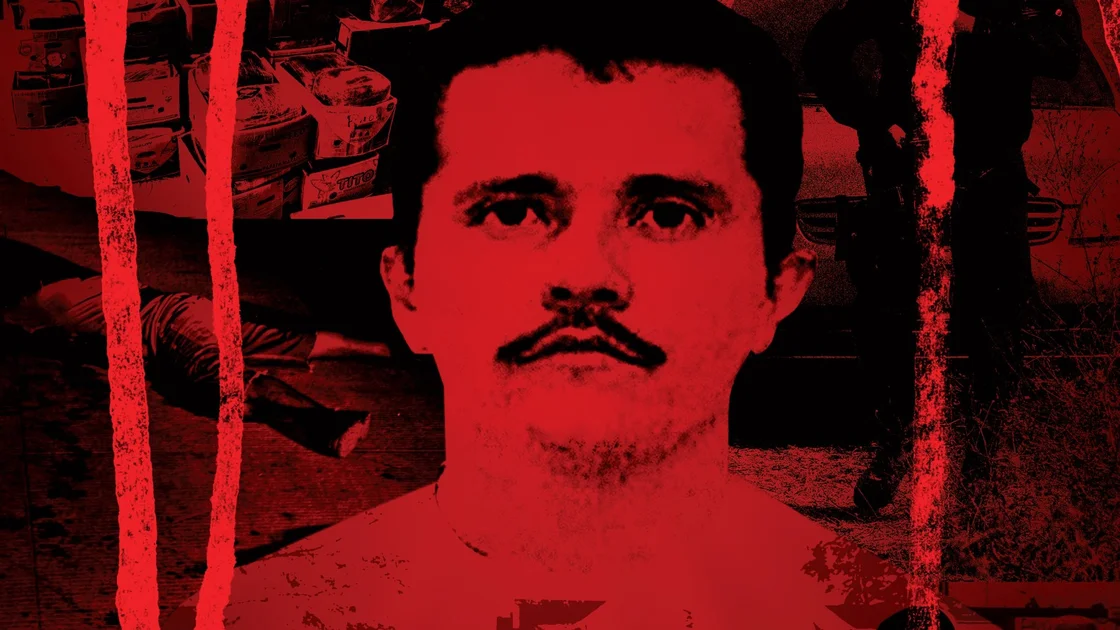
Who Is El Mencho? The Man Behind the Legend
Némesio Rubén Oseguera Cervantes, universally known by his alias El Mencho, is widely regarded as one of the most powerful and dangerous drug traffickers in the world. Born on July 17, 1966, in the rural municipality of Tierra Caliente in the state of Michoacán, Mexico, Oseguera Cervantes grew up in poverty, a backdrop that would later shape his ruthless ascent through the criminal underworld.
Before becoming a cartel boss, El Mencho reportedly worked briefly as a police officer in Jalisco — a detail that speaks volumes about the institutional vulnerabilities that allow organized crime to flourish in Mexico. He later moved to the United States, where he was arrested and convicted in California in the early 1990s on drug charges. After serving his sentence, he was deported back to Mexico, a country that would become the stage for his extraordinary criminal empire.
Early Criminal Career
Following his deportation, El Mencho aligned himself with the Milenio Cartel, a faction connected to the powerful Sinaloa Cartel. Over time, he rose through the ranks, accumulating resources, loyalty, and strategic knowledge of trafficking routes. When the Milenio Cartel fragmented, El Mencho seized the opportunity to forge his own criminal organization.
The Birth and Expansion of the CJNG
In 2010, El Mencho officially founded the Cártel Jalisco Nueva Generación (CJNG), headquartered in Guadalajara, the capital of Jalisco state. What distinguishes the CJNG from older cartels is its aggressive, military-style operations and its rapid territorial expansion. While groups like the Sinaloa Cartel relied on negotiation and corruption networks cultivated over decades, the CJNG employed extreme violence to intimidate rivals, authorities, and civilians alike.
Within just over a decade, the CJNG grew from a regional player into an organization with a presence in more than 27 of Mexico's 32 states. Its reach has extended internationally, with operations documented in the United States, Europe, Asia, and Latin America.
A Global Drug Empire
The CJNG under El Mencho specializes primarily in the trafficking of methamphetamine, fentanyl, cocaine, and heroin. The cartel has become a principal supplier of synthetic opioids — particularly fentanyl — to the United States, making it a central villain in the ongoing American fentanyl crisis that claims tens of thousands of lives each year.
The organization maintains sophisticated supply chains, often sourcing chemical precursors from Asia — particularly China — to manufacture methamphetamine and fentanyl in clandestine Mexican laboratories before distributing the products northward across the US border. This transnational model has made the CJNG extraordinarily profitable, with analysts estimating revenues in the billions of dollars annually.
Violence, Intimidation, and Military Capabilities
One of the most alarming characteristics of El Mencho's cartel is its near-military level of armament and organization. In April 2015, the CJNG shot down a Mexican military helicopter using a rocket launcher during a confrontation in Jalisco — a brazen act that shocked both Mexico and the international community. The attack signaled that the CJNG was willing and able to engage state forces in direct combat.
El Mencho's organization routinely employs narco-blockades, where cartel members simultaneously block roads across entire cities using stolen vehicles, paralyzing civilian life and preventing military or police response. These tactics have been deployed multiple times in Guadalajara and other Jalisco cities, demonstrating an operational sophistication rarely seen even among the world's most powerful criminal groups.
Propaganda and Social Media
Unlike many cartel leaders who operate in the shadows, the CJNG has strategically embraced social media as a tool for intimidation and recruitment. The organization releases professionally produced videos in which heavily armed soldiers parade in military-style uniforms, sending direct messages to rivals and authorities. This media strategy has amplified the cartel's fearsome reputation far beyond Mexico's borders.
The Hunt for El Mencho
El Mencho is the subject of an intense, multi-agency manhunt. The United States Department of Justice has indicted him on federal drug trafficking charges, and the Drug Enforcement Administration (DEA) has placed a reward of $10 million for information leading to his capture — one of the largest bounties ever offered for a drug trafficker, rivaling the reward once placed on Pablo Escobar.
Despite this enormous pressure, El Mencho has managed to evade capture for over a decade. His survival is attributed to a combination of deep corruption networks within Mexican law enforcement and political institutions, a loyal inner circle, and constant movement. Reports indicate he has suffered significant health problems, including kidney disease requiring dialysis, yet he continues to lead his organization effectively.
Mexican and US authorities have targeted his family members as leverage. His son Rubén Oseguera González, known as El Menchito, was extradited to the United States in 2020 and convicted on drug trafficking charges. His wife, Rosalinda González Valencia, was arrested in Mexico. These blows, while significant, have not dismantled the CJNG's operational capacity.
El Mencho's Legacy and the Broader Implications
El Mencho and the CJNG represent a new and particularly dangerous evolution in transnational organized crime. Unlike the Sinaloa Cartel, which built influence gradually and often preferred corruption to confrontation, the CJNG's model combines extreme violence with modern business practices and global logistics — a combination that security analysts describe as uniquely destabilizing.
The fentanyl crisis devastating American communities is inseparable from El Mencho's organization. As governments on both sides of the border grapple with how to address cartel power, El Mencho remains a symbol of the complex, deeply rooted challenges facing efforts to dismantle organized crime in the 21st century. His story is not just the biography of a criminal — it is a lens through which to understand the failures of policy, the power of poverty, and the terrifying adaptability of modern drug trafficking networks.
Comments