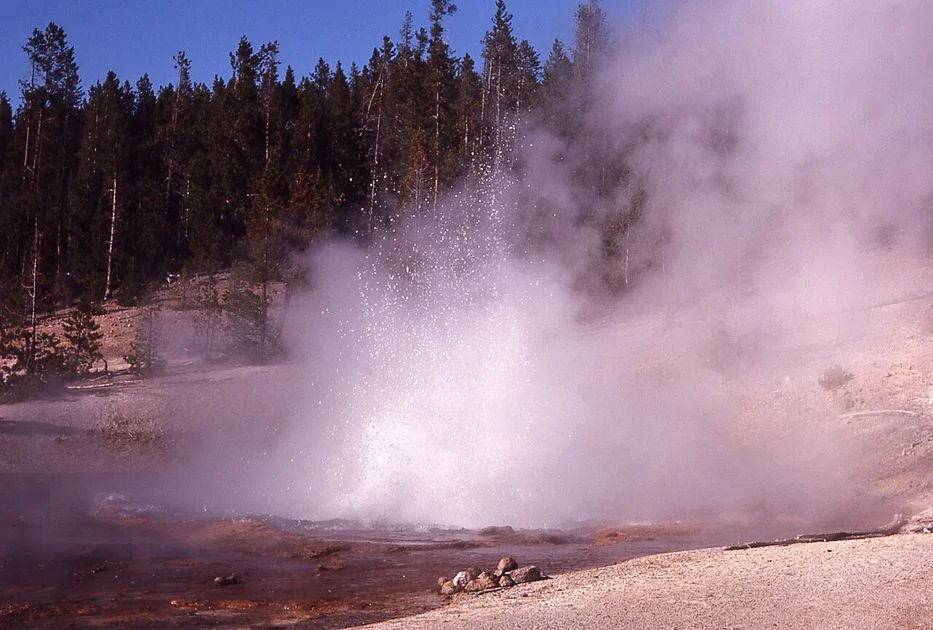
What Is Echinus Geyser?
Echinus Geyser is one of the most distinctive thermal features in Yellowstone National Park. Located in the Norris Geyser Basin, it holds the distinction of being the largest known acid geyser in the world. Unlike most geysers, which have near-neutral or slightly alkaline water, Echinus discharges water with a pH typically ranging between 3.3 and 3.6 — roughly as acidic as vinegar. This unusual chemistry sets it apart from virtually every other major geyser on Earth.
The geyser takes its name from the Greek word for sea urchin (echinos), a reference to the spiny geyserite nodules that surround its vent and crater. These formations are coated with a pinkish-orange crust created by acid-tolerant microorganisms and mineral deposits, giving the area a striking, otherworldly appearance.
Location Within Norris Geyser Basin
Norris Geyser Basin is the hottest and most dynamic thermal basin in Yellowstone. Echinus Geyser sits within the Porcelain Basin section, easily accessible via a well-maintained boardwalk loop. The Norris Geyser Basin Museum and Information Station is located nearby, providing educational resources about the area's geology and hydrothermal features. The geyser's accessible location makes it a popular stop for park visitors exploring the basin's many thermal attractions.
Eruption Behavior and History
Historical Activity Patterns
For much of the 20th century, Echinus Geyser was considered one of Yellowstone's most reliable and predictable geysers. From the 1980s through the mid-1990s, it erupted with remarkable regularity, typically every 35 to 75 minutes. Eruptions would send water and steam 40 to 60 feet into the air, lasting anywhere from 4 to 14 minutes. This consistency made it a favorite among visitors and geyser watchers who could reasonably anticipate its performance.
However, the geyser's behavior changed dramatically in the late 1990s. Beginning around 1998, eruptions became far less frequent and less vigorous. Scientists attribute this shift to changes in the subsurface hydrothermal system beneath Norris Basin, which is known for periodic "disturbances" — episodes of unusual thermal activity that can alter the behavior of geysers and hot springs across the basin.
Recent Activity
In more recent years, Echinus has shown sporadic eruptions, with intervals that can stretch from several hours to days. There have been brief periods of renewed activity followed by extended quiet phases. The unpredictability of modern eruptions means visitors may or may not witness an active eruption during their visit. The National Park Service and the Geyser Observation and Study Association (GOSA) continue to monitor Echinus closely, as its behavior provides valuable data about the evolving hydrothermal dynamics beneath Norris Geyser Basin.
The Science Behind the Acidity
Why Is Echinus Geyser So Acidic?
Most geysers derive their heat from magma deep underground, but the chemistry of geyser water depends heavily on what rocks and gases the water interacts with on its journey to the surface. At Echinus, the water is influenced by hydrogen sulfide gas rising from the magma chamber below. When hydrogen sulfide oxidizes in the presence of oxygen and water, it produces sulfuric acid. This process, combined with the relatively shallow circulation of Echinus's water supply, results in the geyser's distinctively low pH.
This acidic environment also supports unique thermophilic (heat-loving) microorganisms. The colorful microbial mats surrounding the geyser are composed of extremophile bacteria and archaea that thrive under conditions inhospitable to most life forms. Studying these organisms has contributed to broader scientific understanding of life in extreme environments, with potential implications for astrobiology and the search for life on other planets.
Geyserite and Mineral Deposits
The spiny, nodular geyserite formations surrounding the Echinus vent are a direct result of its acidic, silica-rich waters. As water evaporates and cools around the vent, dissolved silica precipitates and accumulates over time, forming the characteristic bumpy texture that inspired the geyser's name. These deposits build slowly — sometimes just millimeters per year — making the existing formations the result of thousands of years of hydrothermal activity.
Visiting Echinus Geyser
Planning Your Visit
Echinus Geyser is accessible year-round, though road and trail conditions vary by season. The Norris Geyser Basin boardwalk is generally open from late spring through early fall. Visitors should wear sturdy footwear and stay on designated boardwalks at all times, as the ground surrounding thermal features can be dangerously thin and unstable.
Given the geyser's current unpredictability, checking recent eruption reports from the Geyser Observation and Study Association or Yellowstone National Park's official resources before visiting is advisable. Even during quiet periods, the geyser's pool, surrounding geyserite formations, and vibrant microbial mats make the site well worth exploring.
Admission to Echinus Geyser is included with the standard Yellowstone National Park entrance fee. No special permits are required to view the geyser from the boardwalk.
Comments