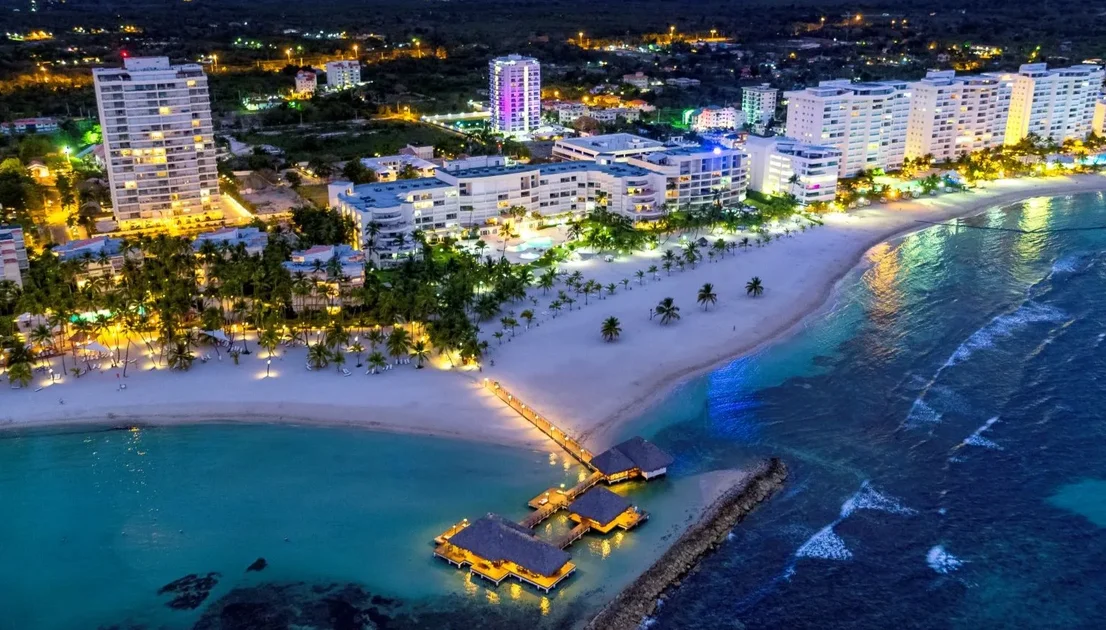
The Dominican Republic is a Caribbean nation occupying the eastern two-thirds of the island of Hispaniola, which it shares with Haiti. As one of the most visited destinations in the Caribbean, it attracts millions of tourists each year while maintaining a complex and vibrant national identity shaped by indigenous, African, and European influences.
Geography and Natural Environment
The Dominican Republic covers approximately 48,671 square kilometers, making it the second-largest country in the Caribbean by area. The country is characterized by diverse landscapes, ranging from white-sand beaches and turquoise coastlines to rugged mountain ranges.
Mountains and Climate
The Cordillera Central, the country's dominant mountain range, is home to Pico Duarte — the highest peak in the entire Caribbean, standing at 3,098 meters above sea level. The country experiences a tropical climate with regional variations: the northern coast tends to receive more rainfall, while the southwest is notably arid. Hurricane season runs from June through November, occasionally affecting the island.
Rivers and Coastline
The Yaque del Norte is the longest river in the country and serves as a vital freshwater resource. The coastline stretches for over 1,600 kilometers, encompassing famous beach destinations such as Punta Cana, Puerto Plata, and Las Terrenas.
History and Culture
The island of Hispaniola holds enormous historical significance. Christopher Columbus arrived on its shores in 1492, establishing the first permanent European settlement in the Americas at La Navidad. The city of Santo Domingo, founded in 1496, is considered the oldest continuously inhabited European city in the Western Hemisphere.
Colonial Heritage and Independence
The Dominican Republic declared independence from Haiti on February 27, 1844 — a date celebrated as Dominican Independence Day. The country's history includes periods of Haitian rule, Spanish reannexation, and U.S. occupation in the early 20th century, all of which have shaped its political and social fabric.
Language, Religion, and Traditions
Spanish is the official language of the Dominican Republic. The population is predominantly Roman Catholic, though Evangelical Christianity has grown significantly in recent decades. The country is widely known for its music and dance traditions, particularly merengue and bachata — both of which have been recognized by UNESCO as part of the Intangible Cultural Heritage of Humanity. Baseball is by far the most popular sport, and the country has produced a remarkable number of Major League Baseball players.
Economy
The Dominican Republic has one of the largest and fastest-growing economies in Latin America and the Caribbean. Its GDP has expanded consistently over the past two decades, driven by several key sectors.
Tourism and Free Trade Zones
Tourism is the single largest contributor to the economy, generating billions of dollars in revenue annually. The country welcomes approximately 8 to 10 million international visitors per year, with Punta Cana serving as the primary entry point. Free trade zones, concentrated around cities like Santiago and San Pedro de Macorís, attract foreign investment in manufacturing, textiles, and medical devices.
Agriculture and Remittances
Agriculture remains significant, with key exports including sugar, cacao, coffee, and tobacco. The Dominican Republic is one of the world's leading exporters of organic cacao. Remittances from the large Dominican diaspora — particularly in the United States — also represent a major source of national income, accounting for roughly 8 to 10 percent of GDP.
Travel and Key Destinations
For travelers, the Dominican Republic offers a wide variety of experiences, from all-inclusive beach resorts to eco-tourism adventures and historical city tours.
Santo Domingo
The capital city, Santo Domingo, is a UNESCO World Heritage Site. Its Zona Colonial (Colonial Zone) features well-preserved 16th-century architecture, including the Catedral Primada de América — the oldest cathedral in the New World. The city also offers a dynamic culinary scene, museums, and a vibrant nightlife.
Punta Cana and the Samaná Peninsula
Punta Cana is internationally renowned for its luxury resorts and pristine beaches along the eastern coast. The Samaná Peninsula, in contrast, offers a more nature-focused experience, including whale-watching tours from January to March, when humpback whales migrate to Samaná Bay to breed. The waterfall of El Limón, accessible by horseback, is another highlight of the region.
Entry Requirements and Practical Information
Most international visitors can enter the Dominican Republic with a valid passport. The country's currency is the Dominican peso (DOP), though U.S. dollars are widely accepted in tourist areas. Las Américas International Airport in Santo Domingo and Punta Cana International Airport are the two main international gateways.
The Dominican Republic continues to be a significant player in Caribbean affairs — culturally rich, economically dynamic, and geographically diverse, offering both residents and visitors a multifaceted experience.