
Pentagon Releases UFO Files as Spielberg’s ‘Disclosure Day’ Nears Theaters
On May 12, 2026, the Pentagon launched a new website — war.gov/ufo — releasing a tranche of declassified images and documents related to unidentified aerial phenomena. The move, described by officials as a "first step" in fulfilling a promise made by President Trump in a February social-media post to "begin the process of identifying and releasing Government files related to alien and extraterrestrial life," has reignited national debate over what the government knows about visitors from beyond Earth.
However, the release has left believers underwhelmed. The images offered little more than "black-and-white murk" with nothing resembling an alien spacecraft, according to a report in The Atlantic. Barstool Sports characterized the release as a "drop in the bucket" compared to the "holy crap" moment yet to come. The Pentagon insists more disclosures are planned, but the timing of this release — just one month before the June 12 premiere of Steven Spielberg’s new blockbuster 'Disclosure Day' — has raised eyebrows.
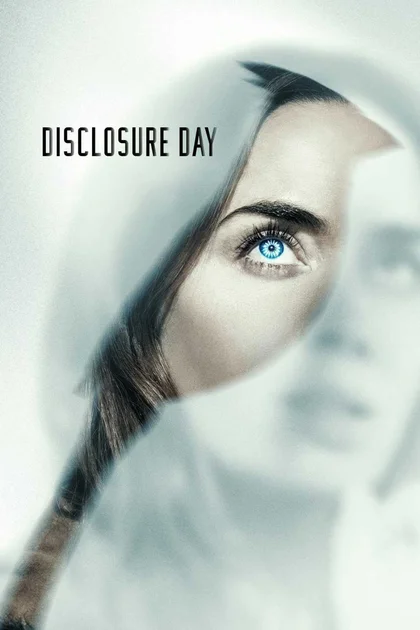
The coincidence is impossible to ignore. Spielberg's film, starring Emily Blunt, follows a woman thrust into a government conspiracy to hide evidence of extraterrestrial contact. Its Super Bowl trailer explicitly warned: "There has been a threat to publicly release government material long shrouded in secrecy." The symmetry between Hollywood fiction and real-world policy has created a unique cultural moment where the line between scripted drama and official disclosure is blurring.
What the Pentagon Actually Released
The initial batch of material on war.gov/ufo includes declassified naval training footage, radar data from known encounters, and internal memos from the All-domain Anomaly Resolution Office (AARO). Defense Department spokespeople emphasized that these files represent less than 1% of the total records identified for potential release. None contain clear images of nonhuman craft or biological evidence.
Advocates for transparency remain skeptical. Rep. Tim Burchett Advances UAP Disclosure and Veterans Fraud Protection has been a leading voice in Congress pushing for more aggressive declassification. In a statement, Burchett called the release "a bureaucratic tease" and warned that the public deserves more than decades-old grainy photographs.
Why Now? The Politics and Pop Culture Convergence
The Pentagon’s decision to begin releasing files in May — exactly one month before Spielberg’s film — has prompted speculation about deliberate timing. White House insiders have not commented on whether the schedule was coordinated, but cultural analysts note that the government has historically leveraged Hollywood to soften public reception to sensitive disclosures.
Dr. Sarah Jenkins, a media studies professor at Georgetown University, told reporters: "The UFO community has long believed that the government uses entertainment as a 'limited hangout' — releasing just enough truth through fiction to prepare the public for eventual confirmation. Whether or not that’s happening here, the coincidence creates a powerful narrative loop."
Spielberg’s own history deepens the resonance. In the 1977 film 'Close Encounters of the Third Kind', he dramatized the tension between ordinary citizens and secretive authorities. Now, nearly 50 years later, his new film revisits that theme just as the actual government — under a president who famously promised to "tell the truth" — opens its archives.
The Trump Factor
President Trump’s February social-media post was sweeping in ambition but vague in detail, calling for a process to "identify and release Government files related to alien and extraterrestrial life." The May 12 launch appears to be the first deliverable on that promise, though critics note the lack of substantive evidence. Supporters argue it’s a first step; skeptics call it a performance.
Given Trump’s close relationships with media figures and his instinct for spectacle, the proximity to a major Spielberg release seems more than coincidental. Whether this represents genuine transparency — or a masterfully timed distraction — remains unclear.
The Film That’s Making ‘Disclosure Day’ a Household Term
'Disclosure Day' is already being called Spielberg’s most explosive thriller since 'Minority Report'. Written by David Koepp, who also wrote 'Jurassic Park' and 'War of the Worlds', the film stars Emily Blunt as Margaret Fairchild, a journalist who stumbles upon a classified program hiding definitive proof of alien visitation. The supporting cast includes Josh O’Connor, Colin Firth, Colman Domingo, and Eve Hewson.
The film’s central question — "If someone proved we were not alone, could we survive the truth?" — echoes the real-world debate unfolding around the Pentagon release. Spielberg has said in interviews that he drew inspiration from the post-Watergate conspiracy films of the 1970s, when Hollywood reflected public distrust of institutions.
Box Office Buzz
Pre-sale tickets for the June 12 opening have already broken records, according to Universal Pictures. IMAX screenings are sold out in major cities through the first weekend. The convergence of real-world disclosure news has only amplified interest. Barstool Sports noted that the government’s release, while disappointing, has "whetted the appetite" for the fictional version.
For those looking for summer entertainment, Regal Summer Movie Express 2026: $1 Tickets, 11 Weeks of Family Films Return June 1 offers an alternative — though no dollar ticket can match the scale of a Spielberg alien epic.
The Culture of Belief: Why Disappointment Fuels Interest
Perhaps the most striking phenomenon is that the underwhelming nature of the Pentagon’s release has not dampened public enthusiasm. If anything, it has reinforced the narrative among UFO believers that the government is still hiding the real truth.
According to The Atlantic, "this disappointment won’t put an end to the belief that the government is hiding a spaceship or an alien corpse." The Roswell legend — that a 1947 crash in New Mexico yielded alien bodies and technology — remains the cornerstone of modern UFO faith. For believers, the absence of proof in today’s release is proof of a deeper cover-up.
This dynamic mirrors the plot of 'Disclosure Day', in which the protagonist faces gaslighting and stonewalling at every turn. Spielberg has always understood that the most compelling conspiracy narratives are those in which the evidence is just out of reach, forcing the audience to fill the gaps with imagination.
The Role of Social Media
Platforms like TikTok and X (formerly Twitter) are flooded with side-by-side comparisons of the Pentagon images and scenes from the 'Disclosure Day' trailer. Memes have proliferated: one popular image shows a blurry dot from the government file captioned "Spielberg could never." The irony is not lost on younger audiences, who are treating the real and fictional disclosures as interchangeable entertainment.
This blending of genres — news and movies, fact and fantasy — represents a new mode of cultural consumption. For a generation raised on the internet, the truth is negotiable, and 'disclosure' is a narrative event, not a government procedure.
What This Changes: The Long Game of Transparency
For all the cynicism, the Pentagon’s release marks a significant procedural shift. Never before has the U.S. government created a centralized public portal for UFO-related records. Even if the initial content is thin, the infrastructure now exists for future releases.
Legislative momentum may accelerate this process. Bipartisan interest in UAP transparency has grown in recent years, with provisions in the annual defense authorization act requiring the establishment of secure archives and reporting channels. Rep. Tim Burchett’s efforts are part of a broader movement that includes senators from both parties demanding more rigorous declassification.
The Parallel Universe of Science Fiction
Science fiction has always served as a rehearsal for reality. Spielberg’s 'Disclosure Day' premieres on June 12, exactly one month after the Pentagon’s first actual disclosure event. Whether by design or accident, the two are now intertwined. Future historians may look back on May and June 2026 as a time when the American public taught itself how to ask — and how to disbelieve — the answers to the oldest question of all: Are we alone?
The truth, this month at least, seems to be that the truth is still out there. And it’s on sale at a theater near you.
This article was reported and written on May 12, 2026, based on publicly available sources including The Atlantic, The Playlist, Barstool Sports, and Art Threat.
Comments