
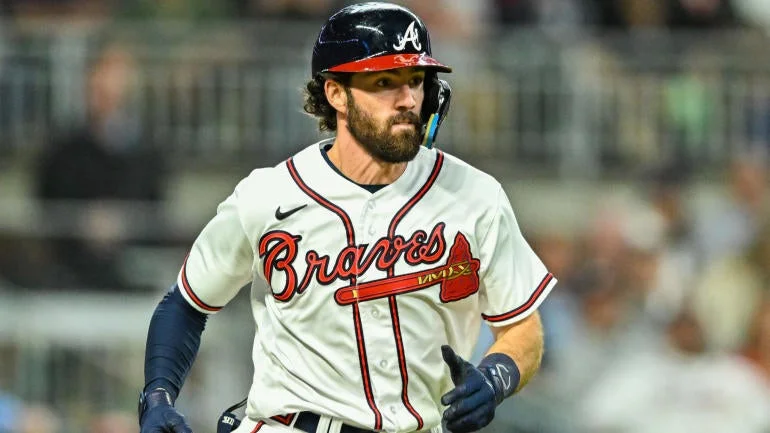
Cubs Reap Rewards as Dansby Swanson Shines Amid Correa's Latest Setback
Just days after the Chicago Cubs extended their winning streak to seven games—and 13 consecutive victories at Wrigley Field—the front office’s decision to sign shortstop Dansby Swanson to a seven-year, $177 million contract in the winter of 2022 continues to look like a masterstroke. The latest chapter in that narrative comes courtesy of an injury to one of Swanson’s former free-agent peers, Houston Astros shortstop Carlos Correa.
According to MLB.com, Correa suffered a “significant” ankle injury during batting practice on Tuesday, May 12, 2026. The 31-year-old former World Series champion and three-time All-Star has been plagued by lower-body issues in recent years, playing at least 140 games only once since 2019. The injury prompted the Minnesota Twins to trade him—and his high-dollar contract—back to the Astros after 3½ seasons. Now, with Correa sidelined again, the contrast between his injury-riddled career and Swanson’s steady durability has never been starker.
Swanson's Quiet Consistency Contrasts with Free Agent Class
The 2022 free-agent shortstop class was one of the deepest in recent memory, featuring Trea Turner (signed by the Phillies for $300 million), Xander Bogaerts (signed by the Padres for $280 million), and Correa (whose deal with the Giants fell through over medical concerns before he landed in Minnesota). The Cubs, seeking a franchise cornerstone up the middle, chose Swanson—and the deal has aged remarkably well.
While Turner has performed solidly in Philadelphia, Bogaerts has underwhelmed in San Diego, and Correa has struggled to stay on the field, Swanson has provided a high floor thanks to his elite defensive prowess. Paired with fellow Gold Glove winners Nico Hoerner and Pete Crow-Armstrong, Swanson gives the Cubs arguably the best defensive middle infield and center field combination in baseball.
On Friday, May 9, the Chicago Sun-Times profiled Swanson’s meticulous care for his glove, describing how the shortstop treats his equipment with “love.” The article noted that Swanson’s commitment to his craft extends to the smallest details, a trait that has helped him maintain a reputation as one of the game’s most reliable defenders.
Why This Matters for the Cubs’ Playoff Hopes
The Cubs enter mid-May with a 26-16 record, tied for second in the NL Central and just behind the Milwaukee Brewers. They are firing on all cylinders, riding a seven-game winning streak and a near-perfect stretch at home. After coming within one win of an NLCS appearance in 2025, the team is eyeing a return to the postseason—and Swanson is a key reason why.
His defensive consistency has stabilized the infield, allowing pitchers to pitch aggressively knowing that ground balls up the middle will likely be converted into outs. Offensively, Swanson has been steady, if not spectacular, contributing timely hits and solid on-base numbers. His presence in the clubhouse has also been credited with helping younger players develop.
The Cubs’ decision to invest in Swanson over Correa—who had multiple teams back out of deals with him due to medical concerns—now looks like a textbook example of risk management. Correa’s latest ankle injury underscores the volatility of signing a player with a history of lower-body problems. The Giants and Mets both walked away from agreed-upon contracts with Correa after physicals revealed issues with his right ankle. The Twins, after three seasons, decided to move on as well.
As the Athletic’s latest MLB Power Rankings (published May 12) noted, the Cubs are a team with real momentum. “Winners of seven straight—and 13 consecutive at Wrigley Field—Swanson’s Cubs are firing on all cylinders right now,” the rankings stated. The Athletic ranked the Cubs among the top 10 teams in baseball, highlighting their elite defense and balanced offense.
Correa’s Decline Adds Context to Cubs’ Foresight
When healthy, Correa is an elite shortstop. But his availability has become a lingering concern. Since 2019, he has missed significant time with plantar fasciitis, a back issue, and now a major ankle injury. With his contract running through—depending on vesting options—nearly a decade, the Astros are once again left wondering how much they can rely on him.
In contrast, Swanson has been remarkably durable. He has played at least 145 games in each of the last four full seasons, a rarity among modern shortstops. His combination of durability, defensive excellence, and leadership has made him the anchor the Cubs needed when they decided to rebuild around a strong up-the-middle core.
A Broader Trend: Defensive Value and Durability Win Out
The Swanson-versus-Correa comparison is more than just a what-if for Cubs fans. It reflects a broader shift in how teams evaluate star players. In an era where injury risks are weighed more heavily than ever, front offices are increasingly prioritizing durability and defensive reliability over raw offensive upside.
Swanson’s contract—the second-richest in Cubs history—might have seemed like a gamble at the time. But with Bogaerts struggling in San Diego and Correa unable to stay on the field, the deal has become a model of prudent spending. The Cubs locked in a Gold Glove-caliber shortstop for the long haul without the injury baggage that accompanied Correa.
Meanwhile, the Cubs’ success this season has also drawn attention to their defensive philosophy. The team’s three Gold Glovers up the middle—Swanson, Hoerner at second, and Crow-Armstrong in center—represent a commitment to preventing runs that has paid dividends. In an era of launch angles and exit velocities, the Cubs are proving that elite defense can still be a winning formula.
The team’s winning streak has coincided with a stretch of strong pitching and clutch hitting, but the foundation remains defense. As the trade deadline approaches, Chicago may look to add a power bat or a bullpen arm—but with Swanson anchoring the infield, the Cubs have a cornerstone they can build around for years to come.
As for Correa, the Astros will have to navigate his absence and hope for a speedy recovery. But the Cubs—and their fans—are no longer wondering what might have been. The evidence is on the field every day.
Comments