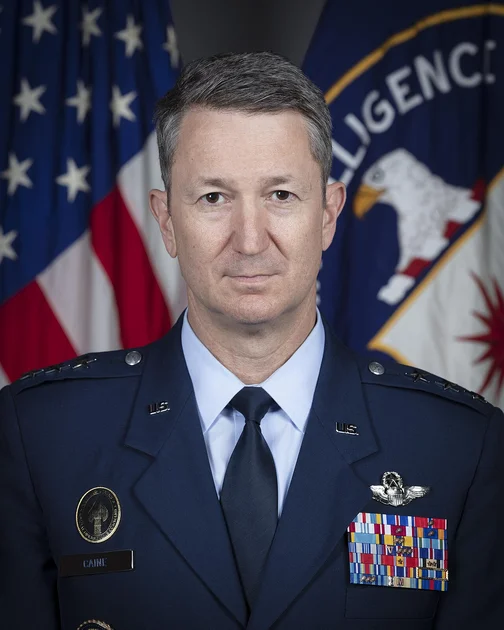
Former FBI Deputy Director Dan Caine Speaks Out on Intelligence Concerns
Dan Caine, a retired FBI deputy director and decorated intelligence veteran, has emerged as one of the most prominent voices publicly challenging the direction of the United States' national security apparatus. In recent days, Caine has drawn significant media attention after delivering pointed remarks regarding structural changes within federal law enforcement and intelligence agencies — changes he argues are undermining the country's capacity to confront domestic and foreign threats.
Caine, who served in senior counterterrorism roles throughout his career at the FBI, has been particularly outspoken about what he describes as the politicisation of intelligence operations and the erosion of institutional independence within agencies that have historically operated at arm's length from political influence. His comments, delivered across multiple media appearances and in written statements, have resonated deeply within national security circles.
Key Claims and Public Statements
Among his most notable assertions, Caine has argued that recent leadership decisions and reorganisation efforts at federal intelligence agencies risk leaving critical counterterrorism and counterintelligence functions dangerously underfunded and understaffed. He has called for bipartisan oversight reforms and urged Congress to act swiftly to protect institutional guardrails that he believes are being systematically dismantled.
His profile carries considerable weight. Caine served as the FBI's acting deputy director and has decades of experience handling some of the most sensitive national security cases in recent American history. That credibility is a significant reason why his current warnings are being taken seriously by lawmakers, former colleagues, and media commentators alike.
Why Dan Caine's Voice Matters Right Now
The timing of Caine's public emergence is far from coincidental. It comes amid an ongoing national debate about the independence of federal law enforcement institutions, the scope of executive authority over intelligence agencies, and the extent to which political considerations are shaping operational decisions at organisations like the FBI and the Department of Homeland Security.
Several former senior officials have spoken out in recent months, but Caine's specific background in counterterrorism operations gives his warnings a particular urgency. National security analysts note that the issues he is raising touch on some of the most fundamental questions about how democratic governments balance political accountability with the operational independence needed to effectively protect citizens.
Broader Institutional Context
The debate is not happening in a vacuum. Over the past several years, the FBI has faced unprecedented scrutiny from multiple directions — criticism from conservatives over its handling of certain high-profile investigations, and concerns from civil liberties advocates about surveillance overreach. This crossfire has placed the bureau in an extraordinarily difficult position, and it is precisely this environment that figures like Dan Caine are navigating when they choose to speak publicly.
His intervention also arrives at a moment when questions about media coverage of intelligence matters are under intense scrutiny — a dynamic that mirrors broader institutional pressures playing out across American public life, not unlike the soul-searching visible at major news organisations. CNN at a Crossroads: Leadership Shakeup, Streaming Pivot, and the Fight to Reclaim Relevance offers a parallel lens through which to understand how trusted institutions navigate periods of profound self-examination.
What Dan Caine's Emergence Signals for the National Security Debate
The broader implications of Caine's public campaign extend well beyond any single policy dispute. When senior officials of his rank and experience feel compelled to speak out after retirement, it typically signals a level of institutional concern that goes beyond ordinary professional disagreement. Historically, such moments have preceded significant congressional investigations, public inquiries, or policy reversals.
For the American public, the significance lies in what Caine represents: a non-partisan, career professional whose concerns about the state of national security institutions are grounded in decades of operational experience rather than political allegiance. That distinction matters enormously in an environment where trust in institutions is fragile and where accusations of partisan motivation are quick to surface.
Political observers are watching closely to see whether Caine's warnings translate into concrete legislative action, or whether they become absorbed into the wider, often inconclusive noise of Washington's perpetual institutional debates. What is clear is that his voice has already shifted the terms of the conversation — bringing a level of technical credibility and moral authority that is difficult to dismiss, and that is likely to keep his name at the centre of national security discussions in the weeks and months ahead.
As the debate continues to evolve, Dan Caine appears poised to remain one of its most consequential participants.
Comments