
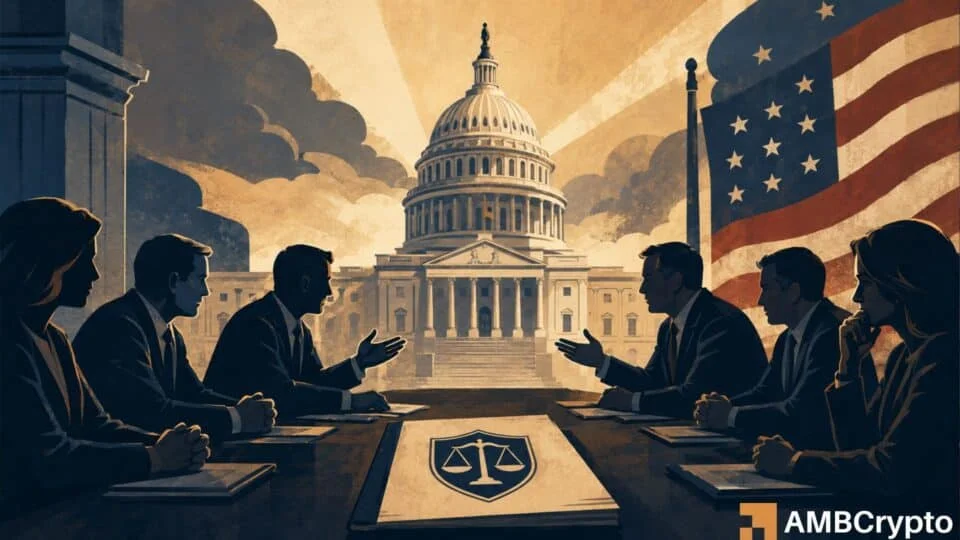
Senate Banking Committee Unveils Clarity Act Text Ahead of Critical Vote
The U.S. Senate Banking Committee released the full 309-page text of the Digital Asset Market Clarity Act — commonly known as the Clarity Act — just after midnight on Tuesday, May 12, 2026, ahead of a scheduled committee markup vote this Thursday, May 14, at 10:30 AM ET. The bill, which has been months in negotiation behind closed doors, represents the most ambitious attempt yet to bring the cryptocurrency industry under a comprehensive federal regulatory framework.
Chairman Tim Scott (R-SC) and Senator Cynthia Lummis (R-Wyo.) spearheaded the release, with Lummis calling the markup "the red zone" — a critical procedural gate that could determine whether the bill advances to a full Senate floor vote or stalls indefinitely. The committee makeup is split 13 Republicans to 11 Democrats, meaning all Republican votes are needed for passage. Senator John Kennedy (R-LA) remains uncommitted, though sources say his hesitation is unrelated to crypto policy.
What the Bill Contains
The Clarity Act distinguishes between digital assets functioning as securities and those behaving as commodities, explicitly exempting certain digital commodities from classification as securities. This would effectively codify into law the administrative stance that Bitcoin and Ethereum are commodities, preventing any future administration from reversing that classification via regulatory memo.
One of the most consequential provisions protects non-controlling software developers from registration requirements — meaning developers who write code for decentralized protocols but don't control user funds won't be forced to register as if they were running a brokerage. The bill also mandates anti-money laundering programs and blockchain tracing capabilities for criminal investigations.
On the contentious issue of stablecoin yield, the compromise text allows activity-based rewards paid in stablecoin assets for transactions such as gas fees or platform utility, while explicitly banning passive yield. This represents a middle ground between crypto advocates pushing for yield-bearing stablecoins and banking industry opponents warning of deposit flight.
Why This Vote Matters for Crypto Markets
The May 14 markup is not a final passage vote, but it is the gate that everything else depends on. If the committee clears the bill, it would then need 60 votes on the full Senate floor, followed by reconciliation with the House-passed version from July 2025. The White House is targeting a July 4 signing ceremony.
Senator Lummis has warned that missing the window before the Memorial Day recess on May 21 could effectively push the bill to 2030. The stakes are exceptionally high for the crypto market, which currently holds a total capitalization above $2 trillion.
Market Impact Projections
Analysts have tied significant price movements directly to the Clarity Act's fate. Citi analysts set a $143,000 base-case target for Bitcoin in 2026 contingent on passage, projecting an additional $15 billion in net ETF inflows once the bill clears Congress. Currently trading in a $74,000–$80,000 consolidation range, Bitcoin could break higher with committee approval.
For Ethereum, the bill's commodity confirmation provides the legal basis for staking ETF products that institutional allocators have been waiting to file. Standard Chartered holds a $7,500 ETH target for 2026, while Citi cut its estimate to $3,175 earlier this year, directly citing the slow pace of Clarity Act negotiations.
XRP stands to gain or lose the most from Thursday's outcome, given its ongoing regulatory uncertainty. The bill's passage would remove much of the legal ambiguity that has kept institutional capital on the sidelines for Ripple's native token. Analysts suggest the act's passage could drive up to $50 billion in new capital into digital assets as institutional players gain the legal certainty they've been waiting for.
Bipartisan Support Meets Banking Opposition
Senator Chuck Grassley (R-Iowa) has thrown his weight behind the Clarity Act, adding a significant bipartisan endorsement. "This bill reflects serious, good-faith work across the committee and delivers the certainty, safeguards, and accountability Americans deserve," Chairman Scott said in a statement.
However, the legislation faces stiff opposition from key banking stakeholders including the American Bankers Association and the Bank Policy Institute. Their concerns center on two main threats: deposit flight from banks to crypto platforms offering stablecoin rewards, and structural advantages they argue crypto-native firms would enjoy over traditional banks. The ABA argues that allowing stablecoin issuers to offer platform rewards creates a "loophole" that could drain billions from the U.S. banking system.
The Missing Ethics Provision
One notable absence from the current draft is an ethics provision addressing conflict-of-interest concerns — particularly relevant given President Donald Trump's extensive crypto interests. This provision falls outside the banking committee's jurisdiction and would need to be added later, a contentious issue that the White House has already flagged.
Broader Implications for the Crypto Industry
Senator Lummis has predicted a potential 15-20% price increase for crypto assets if the bill passes, but the implications extend far beyond market prices. The Clarity Act would fully insert the U.S. crypto industry into the regulated financial system, potentially reversing years of enforcement-heavy regulation under previous administrations.
The bill also includes anti-CBDC measures designed to prevent the federal government from issuing a centralized digital currency, addressing a key concern for libertarian-leaning crypto advocates. For context, Crypto Briefing notes that Senator Lummis previously championed the Lummis-Gillibrand Responsible Financial Innovation Act in 2022, which stalled out in committee amid political timing and regulatory turf wars.
For investors and developers alike, Thursday's markup represents the culmination of years of legislative effort. While committee approval would mark a historic step forward, the road to President Trump's desk remains long. Still, the release of the bill text — after months of private negotiations — signals that the political will for crypto regulation may finally be reaching a tipping point.
Comments