
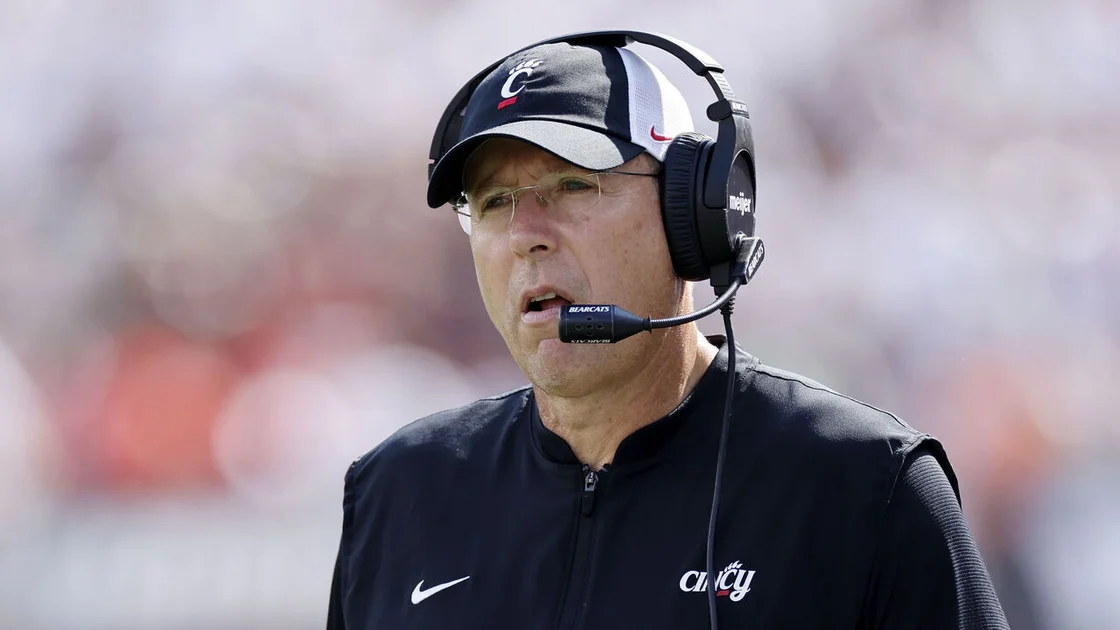
Cincinnati Parts Ways with Satterfield After 6-6 Season
Cincinnati fired head football coach Scott Satterfield on Sunday, November 29, 2026, after four seasons leading the Bearcats, multiple sources confirmed. The move comes one day after Cincinnati closed its regular season with a 42-10 loss at No. 10 BYU, dropping the team to 6-6 overall and 3-6 in Big 12 play.
Satterfield compiled a 21-28 record at Cincinnati, including a 12-24 mark in conference games. The Bearcats achieved bowl eligibility in each of the past two seasons but never won more than seven games under his leadership. According to contract terms examined by USA TODAY Sports, Satterfield is owed approximately $5.8 million in buyout money.
The loss to BYU capped a turbulent finish: Cincinnati started 4-0 and was 5-2 after a 24-14 upset of then-No. 8 Texas Tech on October 24, but then lost four straight before a November 21 win over Colorado. The Bearcats went 2-14 in November during Satterfield’s four seasons.
Official Announcement Expected
Cincinnati has not yet issued a formal statement, but the firing was widely reported Sunday by outlets including USA TODAY Sports and local station WKRC. Satterfield said after the BYU loss that he expected to meet with the team Monday and await a bowl invitation. Instead, he will be replaced as the program searches for its third head coach since 2022.
A Tenure That Never Gained Traction
Satterfield was hired in December 2022 after Luke Fickell left for Wisconsin. A former record-setting coach at Appalachian State and later head coach at Louisville, Satterfield was a late addition to Cincinnati’s search, which had trended toward other candidates before his selection. He inherited a program transitioning to the Big 12 and facing increased NIL demands.
Despite a signature win over Texas Tech this season, the Bearcats struggled to compete consistently against the conference’s upper tier. Satterfield noted after the BYU game that Cincinnati played five ranked Big 12 opponents—the most in the league—and that financial constraints in the NIL market hindered roster building.
“Financially in the NIL market, we’re not where we want to be,” Satterfield said Saturday. “We’re improving that. We’ve got to get better in that. That certainly will help.”
The Bearcats’ 2026 campaign mirrored previous patterns: fast starts followed by late-season fades. Satterfield’s teams never won more than seven games in a season, and his overall conference record of 12-24 underscored the difficulty of competing in a league that some consider the second-best in the country.
What Went Wrong
Recruiting battles, staff turnover, and an inability to close out tight games plagued the Satterfield era. Cincinnati’s November record of 2-14 became a symbol of the program’s inability to finish strong. The 42-10 loss to BYU, in which the Bearcats were outscored 28-0 in the second half, was a fitting end to a tenure marked by inconsistency.
Coaching Carousel Heats Up
Satterfield’s dismissal adds another high-profile vacancy to a busy 2026 coaching carousel. Baylor (Dave Aranda), NC State (Dave Doeren), and Maryland (Mike Locksley) have already made changes, and Cincinnati now joins the list of programs seeking a new leader. On3 has already published a hot board of candidates to replace Satterfield, indicating significant interest in the job.
Cincinnati athletic director John Cunningham will lead the search, which will be the program’s third football hire since 2022. The Bearcats moved from the American Athletic Conference to the Big 12 in 2023, and the transition has proven challenging. The next coach will inherit a roster with bowl eligibility but must address NIL deficiencies and rebuild fan confidence.
Satterfield’s buyout of approximately $5.8 million is manageable for a Power Four program, but the repeated turnover comes at a cost. The Bearcats also recently hired Jerrod Calhoun to lead the men’s basketball program after firing Wes Miller following the 2025-26 season, signaling broader institutional changes in the athletic department.
Broader Implications for the Big 12 and Group of Five Pipeline
Satterfield’s firing reflects the increasingly narrow margin for error in the Big 12, where programs like BYU, Texas Tech, and Utah have elevated expectations. His comments about BYU’s playoff snub last season—and his belief that the Cougars belong in the College Football Playoff this year—highlight the competitiveness of the conference. For Cincinnati, the challenge is clear: find a coach who can navigate the NIL landscape and deliver consistent results in a league that demands immediate success.
The move also underscores the pressure on coaches hired from the Group of Five ranks. Satterfield’s success at Appalachian State did not translate to the Power Four level, a cautionary tale for athletic directors seeking the next rising star. As the coaching carousel continues to spin, Cincinnati’s decision will be watched closely as a test of whether a program can rebuild quickly in the transfer portal era.
For now, the Bearcats are searching for stability—and a coach who can turn a 6-6 season into something more.
Comments