
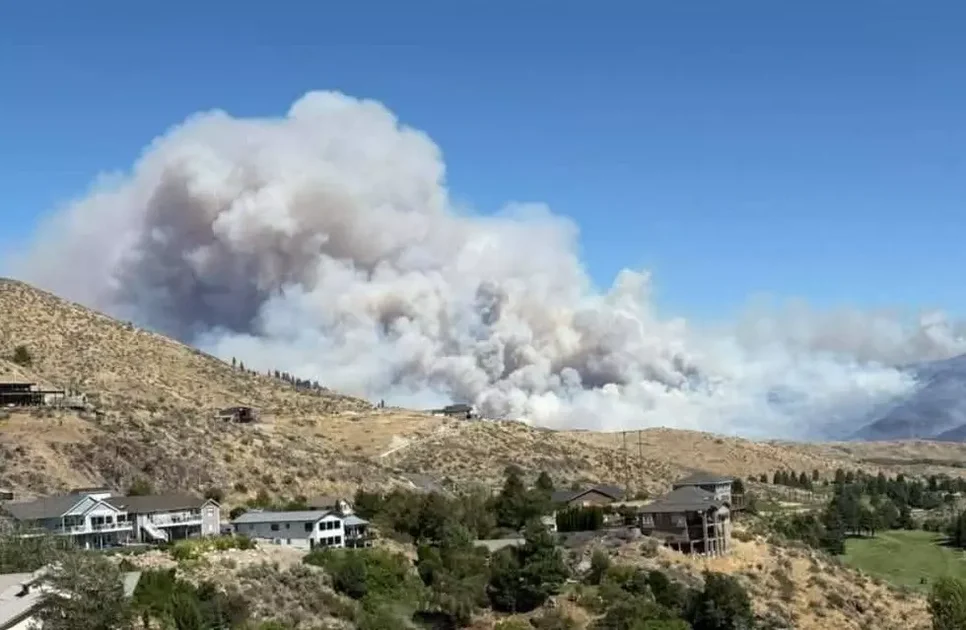
Chelan Hills Fire Surpasses 20,000 Acres, Destroying Dozens of Homes in Washington State
The Chelan Hills Fire, which ignited just after midnight on Saturday, July 4, 2026, near the intersection of U.S. 97 and Chelan Hills Acres Road east of Lake Chelan, has rapidly expanded into a major wildfire, consuming an estimated 20,000 acres by the evening of July 4. According to Douglas County Sheriff Tyler Caille, scores of homes and other structures have already been lost, with the true extent of the damage expected to take days to fully assess.
As of late Saturday, the fire had jumped McNeil Canyon Road and was spreading rapidly to the north and northeast, driven by gusty winds and dry conditions under a Red Flag Warning. Level 3 "Get Out Now" evacuation orders have been issued for all roads within McNeil Canyon, including dozens of named roadways such as Coyote Curve Lane, Eagles Nest Road, and Dancing Deer Drive, as well as areas in the Dyer Hill vicinity and along Roads 20 Northwest and D Northwest.
Evacuations and Road Closures Expand as Fire Continues to Grow
Level 3 Evacuations in Effect for Multiple Areas
Authorities have issued sweeping evacuation orders as the fire continues to threaten new communities. The Douglas County Sheriff's Office confirmed that Level 3 notices—meaning residents must leave immediately—are in effect for:
- All roads in McNeil Canyon (including all connected roads)
- Box Canyon Road, Heidi Lane, Combine Road, and Jerrys Lane
- Roads 20 Northwest and D Northwest
- The Dyer Hill area
Officials have warned that anyone refusing to evacuate could be at extreme risk, as firefighting resources are stretched thin. Emergency crews are focused on saving lives and protecting property, and residents are urged to take essential items—including medications, important documents, pets, and family members—when leaving.
Highway 97 Remains Closed
A three-mile stretch of U.S. Highway 97 remains closed from milepost 232 to milepost 235, including the Beebe Bridge. Washington State Patrol is directing drivers to use the 97 Alternate for detours. The closure has disrupted travel and commerce between Orondo and Chelan, with no estimated time for reopening as the fire continues to move unpredictably.
Smoke Impacts Spread East
Smoke from the Chelan Hills Fire has created hazardous air quality conditions across a wide area, particularly in northern Douglas County, the town of Mansfield, Leahy Junction, Grand Coulee, and locations further east. Health officials have advised residents in affected areas to limit outdoor activity and wear masks if necessary.
State Mobilization and Firefighting Efforts
State Resources Activated
Washington State Patrol authorized state fire assistance at 4:30 a.m. on July 4 under the Washington State Fire Services Resource Mobilization Plan. The State Emergency Operations Center at Camp Murray has been activated at Level 2, a partial activation, to coordinate state support. Fire Protection Bureau mobilization specialists have ordered three strike teams to assist local firefighters, while State Fire Marshal's Office personnel are coordinating additional resource dispatch.
The mobilization came at the request of Douglas County Fire District 4 Assistant Fire Chief Justin Dennis, who reported that the fire was burning in grass and brush, threatening homes, infrastructure, and public safety. The cause of the fire remains under investigation.
Firefighter Injury Reported
Sheriff Caille confirmed that one firefighter suffered heat exhaustion earlier in the day and was transported to a local hospital for treatment. No other civilian or firefighter injuries have been reported, but officials warn that conditions remain dangerous.
The Stakes: Homes Destroyed, Communities at Risk
A Rapidly Intensifying Event
The Chelan Hills Fire's growth from a small brush fire to a 20,000-acre inferno in less than 24 hours illustrates the extreme fire danger facing the Pacific Northwest this summer. The fire started at approximately 12:05 a.m. on July 4, shortly after crews had finished extinguishing another fire on Boyd Road. Fueled by dry vegetation, low humidity, and gusty winds, the fire quickly raced up a hillside and spread uncontrollably.
By dawn, the fire had reached an estimated 2,000 acres, but by late afternoon it had exploded to 15,000–20,000 acres, according to Sheriff Caille. “I’ve seen several homes on fire or already burned down just driving around in the McNeil Canyon area,” Caille said. “It’s going to be a number of days until we can get in there and really have a better idea of just how bad it is.”
Threat to Mansfield and Beyond
The fire is now approximately 10–12 miles west of the town of Mansfield, but officials say it is heading in that direction rapidly. The wind-whipped flames jumped McNeil Canyon Road around 4 p.m., forcing additional evacuations and road closures. The fire has also crested the ridge of the Waterville Plateau in some areas, raising concerns for communities further north.
Unauthorized Access Hinders Firefighting
Sheriff Caille has issued a strong warning to the public: stay out of the fire zone unless you are a resident or officially involved in firefighting or emergency operations. Dozens of people have been reported running roadblocks and barricades to take pictures and video, actions that are not only illegal but extremely dangerous. “These actions present a hindrance to those trying to save lives and property,” Caille said.
Broader Implications: Wildfire Season Intensifies Amid Climate Concerns
A Pattern of Extreme Wildfires
The Chelan Hills Fire is the latest in a series of major wildfires to strike the Pacific Northwest, a region increasingly plagued by larger, hotter, and more destructive blazes. The timing of this fire—on the Fourth of July weekend—adds an additional layer of complexity, as fireworks and other celebratory activities can spark new fires. Fire officials have repeatedly urged the public to exercise extreme caution, but the combination of drought conditions, high temperatures, and strong winds has created a volatile environment.
This fire also highlights the strain on local and state firefighting resources. Washington's mobilization plan, which brings in resources from across the state, has been activated multiple times in recent years as fire seasons have grown longer and more intense. Climate scientists have linked the increasing frequency and severity of wildfires to rising global temperatures and prolonged drought cycles.
Economic and Community Impact
The destruction of dozens of homes will have a lasting impact on the small communities of Douglas County. Many families have lost everything, and the process of recovery—insurance claims, rebuilding, and emotional healing—will take years. Firefighters face significant challenges in the coming days, including unpredictable wind shifts, difficult terrain, and the need to protect critical infrastructure such as power lines and roads.
Efforts in other sectors, such as sports and entertainment, have also been affected by natural disasters. For example, recent severe thunderstorms wreaked havoc on Chicago’s July 4th celebrations, demonstrating how extreme weather events are disrupting public life across the country.
What’s Next: Containment Efforts and Community Support
No Containment Yet
As of the evening of July 4, the Chelan Hills Fire remained at 0% containment. Firefighters are focusing on structure protection, creating fire breaks, and attempting to slow the fire's advance toward populated areas. The Red Flag Warning, which indicates conditions favorable for rapid fire growth, was scheduled to expire at 9 p.m., but gusty winds were expected to continue into the night.
Red Cross and Shelters
The American Red Cross has opened shelters for displaced residents. Locations and details are being shared through local emergency management channels. Residents are urged to check official sources for the latest information on evacuation orders, road closures, and shelter locations.
How to Help
Authorities ask the public to avoid the fire area entirely, not just for safety but to allow emergency crews unimpeded access. For those wishing to help, donations to the Red Cross or local fire relief funds are the most effective way to support victims of the Chelan Hills Fire.
The coming days will be critical as firefighters work to contain the blaze and assess the full extent of the damage. With the fire season still early, the Chelan Hills Fire serves as a stark reminder of the growing threat wildfires pose to communities across the western United States.
Comments