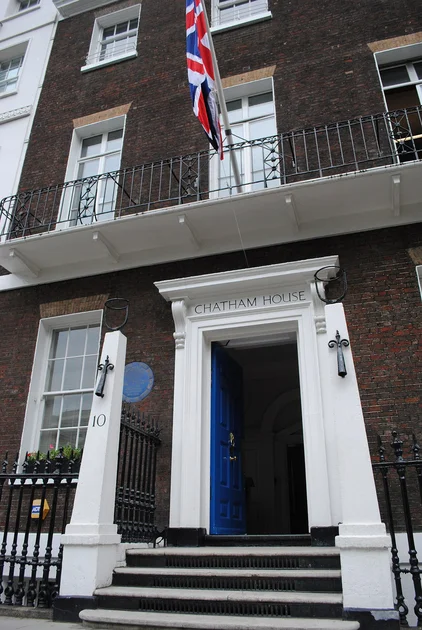
What Is Chatham House?
Chatham House, formally known as the Royal Institute of International Affairs, is one of the world's most respected independent policy institutes. Founded in 1920 and headquartered in the St James's area of London, the organisation has spent over a century analysing complex global challenges and informing policymakers, academics, business leaders, and civil society worldwide.
The institute operates as a non-profit organisation and maintains a commitment to political independence. It does not align itself with any government or political party, which allows it to produce impartial research across a wide spectrum of international issues, from geopolitics and security to climate change and economics.
History and Origins
Chatham House was established in the aftermath of the Paris Peace Conference of 1919, when British and American delegates recognised the need for a permanent institution dedicated to the study of international affairs. The institute was officially founded in 1920, with its American counterpart, the Council on Foreign Relations, established around the same time.
The organisation received its royal charter in 1926, cementing its reputation as a leading institution for international thought. Over the decades, it has attracted some of the most prominent figures in diplomacy, politics, and academia as members and contributors.
The Chatham House Rule
Perhaps the most widely recognised contribution of Chatham House to global discourse is the Chatham House Rule. First introduced in 1927 and updated in 1992 and 2002, the rule governs the confidentiality of meetings and discussions held within — and increasingly far beyond — the institute itself.
How the Rule Works
The rule states: "When a meeting, or part thereof, is held under the Chatham House Rule, participants are free to use the information received, but neither the identity nor the affiliation of the speaker(s), nor that of any other participant, may be revealed."
This principle allows speakers to share candid views and sensitive insights without fear of attribution. It has been widely adopted by organisations around the world, from boardrooms and government departments to academic conferences and international summits. The rule has become a cornerstone of open yet discreet intellectual exchange globally.
Research, Programmes, and Global Impact
Chatham House conducts research across a broad range of themes through its various programmes and research groups. These include areas such as international security, global health, energy and environment, international economics, and regional studies covering Africa, Asia-Pacific, the Americas, Europe, and the Middle East.
Key Research Areas
The institute publishes reports, briefing papers, and policy recommendations that are used by governments and international organisations worldwide. Among its flagship publications is The World Today, one of the longest-running international affairs magazines, as well as International Affairs, a leading academic journal.
Chatham House also regularly produces the Global Order Index and various risk assessments that track shifts in geopolitical stability, governance, and multilateral cooperation. These tools are widely referenced by analysts and decision-makers.
Events and Convenings
Beyond research, Chatham House is well known for its extensive programme of events. The institute hosts hundreds of meetings, conferences, and roundtables each year, bringing together heads of state, ministers, senior officials, business executives, and leading thinkers. Many of these events are held under the Chatham House Rule, encouraging frank dialogue on pressing international issues.
High-profile speakers have included world leaders, Nobel laureates, and senior figures from organisations such as the United Nations, World Bank, and European Union.
Membership, Funding, and Governance
Chatham House sustains its work through a membership model, alongside funding from governments, foundations, corporations, and individual donors. Membership is open to individuals and organisations and provides access to exclusive research, events, and a global network of international affairs professionals.
Independence and Accountability
The institute is governed by a council that ensures its independence and accountability. Chatham House is transparent about its funding sources and publishes an annual report detailing its finances and activities. This commitment to transparency reinforces its credibility as a neutral and authoritative voice in international policy discussions.
The organisation is headquartered in a historic building on St James's Square in London — itself named Chatham House after William Pitt the Elder, the Earl of Chatham, who once resided there.
Today, Chatham House remains a vital platform for understanding the forces shaping the modern world, contributing research and facilitating conversations that help governments, institutions, and organisations navigate an increasingly complex international landscape.
Comments