
'Yesteryear' Author Faces Backlash Over AI-Tinged Endorsement
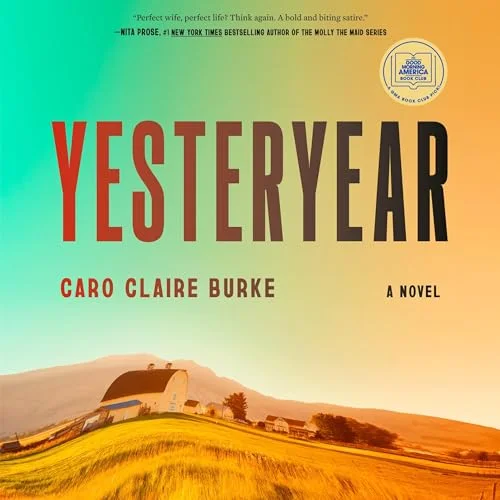
Caro Claire Burke's debut novel Yesteryear has become an undeniable literary phenomenon. The book, which follows a tradwife influencer transported to 1855 Idaho, has rocketed to the top of The New York Times bestseller list and topped the fiction hardcover charts at independent bookstores like Readers' Books in Sonoma. Anne Hathaway has already signed on to produce and star in the film adaptation. Yet beneath the surface of this runaway success, a controversy is brewing that threatens to overshadow the book's commercial achievements.
Last week, Burke shared a Substack essay written by a self-described ex-Mormon who saw herself in the novel's protagonist, Natalie Heller Mills. "This is who I wrote the book for," Burke posted to her 68,000 Instagram followers. However, Jerusalem Demsas of The Argument quickly raised suspicions about the essay's authenticity, noting that the writing bore the hallmarks of AI-generated text. Demsas ran the piece through Pangram, a leading AI-detection tool, which concluded the essay was 82% likely generated by artificial intelligence. The revelation has cast a shadow over Burke's judgment and reignited debates about authenticity in literary culture.
A Satire That Misses the Mark
Yesteryear arrives with a tantalizing premise: Natalie Heller Mills, a wealthy tradwife influencer whose Instagram-perfect life is a carefully curated lie, is suddenly transported to the harsh realities of 1855. The novel promises a biting critique of the "socially conservative boss babe" phenomenon embodied by figures like Hannah Neeleman of Ballerina Farm and Nara Smith. Yet according to multiple critics, the book fails to deliver on its ambitious goals.
Smart Bitches, Trashy Books awarded the novel a D- grade, calling it "a really interesting opportunity" that "took a turn that felt frankly kind of lazy." The review noted that the book's dual timeline—flashing between Natalie's influencer present and her 19th-century ordeal—offers compelling insights into the contradictions of tradwife ideology, particularly her struggle to reconcile her faith with her husband's refusal to work. But the execution ultimately falters.
More damning is The Argument's critique, which argues that Yesteryear suffers from a fundamental superficiality. Burke has stated in interviews that "whether it's Mormonism or evangelicalism or Jehovah's Witness, it's really all the same in terms of how women are treated," a generalization that critics say reveals a lack of serious engagement with the communities she purports to understand. The novel never specifies its protagonist's denomination, and Burke's claim to seek "the perspective and interiority of women who live in fundamentalist Christian communities" rings hollow when the book so clearly draws from specific, recognizable figures without naming them.
The Hollow Core of a Bestseller
Demsas's piece, titled "The Most Popular Book of the Year Has Nothing to Say," strikes at the heart of the controversy. Yesteryear has been celebrated by readers hungry for a takedown of the tradwife aesthetic, but the novel offers little substance beneath its glossy surface. By praising an AI-generated essay that mirrors the shallowness of her own work, Burke inadvertently exposed the very problem critics have identified: a fixation on aesthetics over authenticity.
The AI Factor: A Growing Literary Debate
The incident raises broader questions about the role of artificial intelligence in literary criticism and promotion. While Burke herself did not use AI to write Yesteryear, her public embrace of an AI-generated essay suggests a troubling disconnect. For a novel that positions itself as a critique of curated authenticity—tradwife influencers present a fiction of perfect domesticity while hiding their nannies and producers—the irony is almost too perfect to ignore.
This controversy arrives at a time when the publishing industry is grappling with AI's impact. Authors have raised alarms about AI-generated books flooding Amazon, and literary journals now routinely screen submissions for AI involvement. The Pangram tool, which flagged the ex-Mormon's essay, has become a standard part of many editors' workflows. But critics warn that AI detection remains imperfect, and false positives can damage careers. In this case, however, the 82% likelihood finding has not been seriously contested.
Implications for Influencer Culture and Literary Criticism
The Yesteryear saga mirrors a wider cultural reckoning. The tradwife movement itself is built on performance—women like Neeleman and Smith project idealized domesticity while leveraging Instagram algorithms and brand deals. Burke's novel attempts to skewer this hypocrisy, yet her own promotional tactics now face similar scrutiny. In an era where Meg Stalter's staged lookalike contest blurs the line between reality and performance, the Burke controversy feels like part of a larger pattern.
What the 'Yesteryear' Backlash Reveals
The debate surrounding Yesteryear is not merely about one book or one author. It underscores a growing impatience with superficial social commentary, particularly when it targets communities that are already marginalized. Burke's dismissal of distinctions between Mormonism, evangelicalism, and Jehovah's Witnesses as "all the same" ignores the lived realities of women in those traditions, reducing their faith to a monolithic oppressor.
Moreover, the controversy highlights the tension between commercial success and critical integrity. Yesteryear is a bestseller with a movie deal, yet its critical reception has been scathing. Readers' Books in Sonoma listed it as their top fiction hardcover, a reflection of public appetite rather than critical consensus. The book's popularity suggests that audiences are hungry for narratives that critique tradwife culture, even if those narratives are flawed.
The Road Ahead for Burke
Burke has not publicly addressed the AI essay controversy, and her silence is becoming conspicuous. For a debut author who positioned herself as a voice of cultural critique, the failure to engage with this criticism could prove costly. The film adaptation, now in development with Anne Hathaway, may proceed regardless, but the conversation around Yesteryear has shifted from its literary merits to its ethical ambiguities.
In a literary landscape where Popeyes makes chicken wraps permanent and audiences crave authenticity, the Yesteryear saga serves as a cautionary tale. It demonstrates that in an age of AI-generated content and curated personas, the line between satire and complicity is thinner than ever.
Comments