
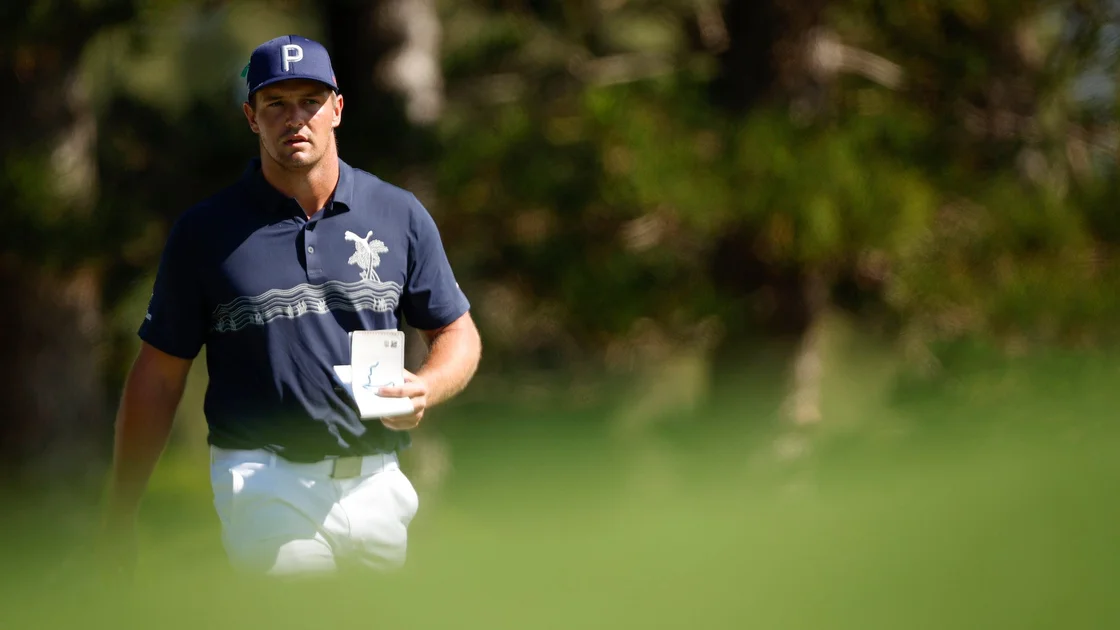
Bryson DeChambeau faces crossroads as LIV Golf era ends and YouTube beckons
Bryson DeChambeau has spent the week of the PGA Championship doing what he does best when not on the course: filming content for his two-million-subscriber YouTube channel. The two-time U.S. Open winner posted a video from Cedar Crest Golf Course, a public municipal layout near Dallas, attempting a course record instead of traditional major preparation at Aronimink. The move drew sharp criticism from golf fans online, with one calling him "an unserious player now" who "just plays for clicks and clout."
But the social media mockery masks a real and growing question about DeChambeau’s future. With his LIV Golf contract expiring at the end of this year, and the Saudi Public Investment Fund having confirmed it will withdraw its financial backing from the breakaway league after the 2026 season, DeChambeau is openly considering a radical career shift: leaving elite tournament golf behind to become a full-time YouTube creator.
"I think, from my perspective, I’d love to grow my YouTube channel three times, maybe even more," DeChambeau said recently. "I’d love to do a bunch of dubbing in different languages, giving the world more reason to watch YouTube. And then I’d love to play tournaments that want me."
PGA Tour veterans push back: 'He is not bigger than the game'
While DeChambeau’s content has drawn millions of views and earned him a loyal online following, the golf establishment is not ready to hand him a hero’s welcome back to the PGA Tour. Former PGA Championship winner Rich Beem, speaking on the Sky Sports Golf Podcast, dismissed the idea that the PGA Tour needs the 32-year-old California native.
"No, they don’t," Beem said bluntly. "He is not bigger than the game. You can’t make this up. As entertaining as he is on the golf course, what comes out of his mouth can be highly entertaining too. You are a self-proclaimed scientist but you are not a politician."
Beem added that if legends like Jack Nicklaus or Arnold Palmer had walked away in their prime, "the game would have gone on without them"—implying that DeChambeau’s leverage is far weaker than he believes.
DeChambeau reportedly made contact with PGA Tour officials during Masters week at Augusta National in April, hinting at a possible return. But the tour’s stance, as echoed by Beem, suggests that DeChambeau may have to earn his way back rather than negotiate from a position of strength.
Why DeChambeau’s YouTube threat is more than a negotiating tactic
DeChambeau made $45 million in on-course earnings over the past year, according to Sportico, but his YouTube channel offers something different: total creative control. As he put it, he wants to "control the narrative" and produce content on his own terms.
This is not the first time DeChambeau has floated the idea of a hybrid career. He has long spoken about wanting to play only the tournaments that "want him" while spending the rest of his time building his digital brand. But the current situation gives his words new weight. With LIV Golf’s future in doubt and no clear deal in place for a unified PGA Tour-LIV structure, DeChambeau is essentially auditioning for a new professional identity.
His approach before the Masters—playing a "Mini Augusta" course and then missing the cut at the real thing—raised eyebrows. Now, repeating the same strategy before the PGA Championship has led fans to question whether he is treating majors as content opportunities rather than competitive goals.
DeChambeau’s fans defend the content-first approach
Not everyone is critical. Many of DeChambeau’s subscribers praised the Cedar Crest video, writing comments such as: "Thank you Bryson! We love the content. Keep it coming!" and "I really like this series! The way you talk about the strategy, types of shots etc. Great insights!"
That split—between traditional golf purists and the digital-first audience—is at the heart of DeChambeau’s dilemma. He can chase Green Jackets and major trophies, or he can chase views and subscribers. The two paths increasingly seem to diverge.
The bigger picture: Is professional golf becoming a feeder for YouTube?
DeChambeau may be an extreme case, but his situation reflects a broader shift in the relationship between elite athleticism and celebrity. As traditional sports media fragments and streaming platforms grow, athletes in every sport are building direct-to-fan businesses that sometimes compete with their day jobs. Inside Scottie Scheffler's PGA Champions Dinner: Peers Get Rare Glimpse of His Greatness highlights how the game’s top players still value in-person competition above all—but that ethos is no longer universal.
DeChambeau has said his career objective is now "to give the world more reason to watch YouTube." That statement would have been unthinkable for a top golfer a decade ago. Today, it sounds like a business plan.
The Guardian recently asked whether DeChambeau is "a maverick determined to sacrifice it all for clicks, or a harbinger of a more meaningful shift in the relationship between athleticism and celebrity." The answer likely lies somewhere in between. Professional golf has already seen the rise of content-driven events, including the wildly popular "The Match" series and various made-for-TV exhibitions. DeChambeau could be positioning himself as the leading figure in that new landscape.
Yet the risks are real. If he fails to win majors while focusing on YouTube, his brand could diminish. If he returns to the PGA Tour on unfavorable terms, he may lose the independence that makes his content compelling. And if LIV Golf collapses entirely, he will have to navigate a crowded field of returning exiles, all competing for limited spots.
For now, DeChambeau is at the PGA Championship, reportedly the last player on the range Monday evening. Whether that dedication to practice or his YouTube channel will define the next phase of his career remains the most watched story in golf.
What comes next?
The PGA Tour and LIV Golf are still negotiating the terms of a potential reunification, with the Saudi PIF's withdrawal creating a power vacuum. DeChambeau’s next move will be closely watched by players on both sides. If he chooses YouTube over the tour, it could set a precedent for other athletes weighing similar decisions. If he returns to the PGA Tour, he will face the challenge of rebuilding relationships and proving his competitive commitment.
Either way, the narrative that professional sports are "just a platform" for personal branding has found its most vocal advocate. And golf—a sport built on tradition, etiquette, and the major championship grind—is being forced to adapt.
Comments