
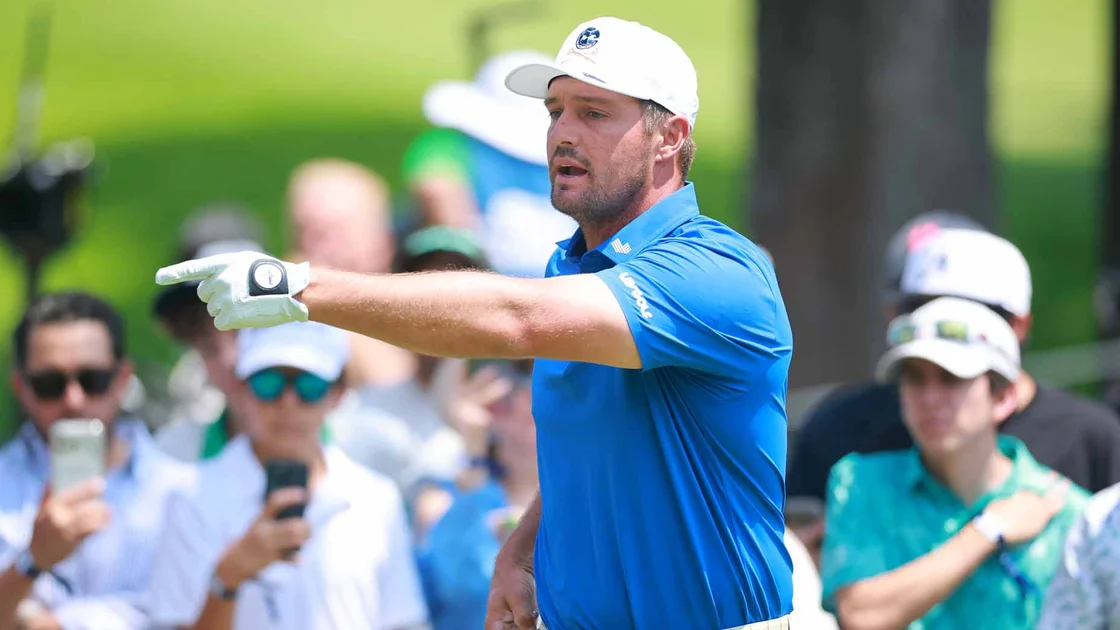
Bryson DeChambeau Sets Two Conditions for PGA Tour Return After LIV Golf Funding Collapses
Bryson DeChambeau has laid out two specific demands he would need met to consider a return to the PGA Tour, as the collapse of LIV Golf's Saudi funding pushes the two-time major champion toward an uncertain professional future. Speaking Wednesday at LIV Golf’s event at Trump National Golf Club in Virginia, DeChambeau told Skratch Golf that any comeback hinges on whether the current PGA Tour membership truly wants him back and whether the Tour will accommodate his growing YouTube ambitions.
“I think there’s a way to solve any problem. It’s really about if the membership wants me back and if they just want me back,” DeChambeau said. “I don’t even think it’s Brian Rolapp or anybody like one of the top executives, it’s really if the players want me back and if not, then I understand that.”
The 32-year-old golfer, who has 2.69 million subscribers on his YouTube channel, also emphasized that the PGA Tour’s current content-creation policies would need to evolve to allow him to continue producing videos at a high level. DeChambeau said he envisions growing his channel threefold and translating content into multiple languages — a pivot he is actively preparing for if LIV Golf folds.
LIV Golf’s Funding Crisis Triggers Reckoning
DeChambeau’s comments come just days after it was confirmed that the Saudi Arabian Public Investment Fund (PIF) will withdraw its financial backing from LIV Golf at the end of the 2026 season. The news stunned players and executives alike. DeChambeau admitted he was blindsided.
“There’s no way. That’s frickin’ impossible, considering what I’d heard a couple months earlier. I thought there was a plan through 2032. It was a flip of the switch,” he told GOLF’s Alan Bastable on Tuesday.
The Saudi-backed league, which lured top names like DeChambeau, Phil Mickelson, and Dustin Johnson with enormous guaranteed contracts, now faces an existential crisis. DeChambeau himself reportedly signed a $125 million deal with LIV in 2022, half paid upfront. His estimated net worth stands at $60 million, and he owns a custom-built $2 million mansion outside Dallas, Texas — a home he has proudly showcased on his YouTube channel.
For DeChambeau, the end of LIV Golf would mean a radical shift in career trajectory. He told reporters this week that he is ready to move to YouTube full time if necessary, saying, “I would love to do a bunch of dubbing in different languages, giving the world more reason to watch YouTube. And then I’d love to play tournaments that want me.”
The Stakes: PGA Tour Reintegration and Broken Relationships
DeChambeau’s insistence that PGA Tour players must “want him back” underscores the deep divisions that have fractured professional golf since LIV Golf launched in 2022. The schism pitted defectors like DeChambeau against loyalists such as Rory McIlroy and Tiger Woods, creating an acrimonious atmosphere that has yet to fully heal.
Even as the PGA Tour and LIV Golf have held on-and-off merger talks, DeChambeau remains one of the most polarizing figures in the sport. His unorthodox swing science, brash personality, and decision to join LIV made him a lightning rod for criticism. Now, he is asking his former peers to welcome him back.
“It’s really about if the membership wants me back and if they just want me back,” DeChambeau reiterated. “I don’t even think it’s the top executives, it’s really if the players want me back and if not, then I understand that.”
Beyond the personal dynamics, the PGA Tour would face a major logistical and diplomatic challenge in reintegrating LIV players. Sanctions, suspensions, and a lack of world ranking points for LIV events have left DeChambeau’s competitive standing in limbo. His 24th-place world ranking is largely a remnant of past success, and a return to the Tour would require negotiation over eligibility, exemptions, and discipline.
DeChambeau also wants assurances that his lucrative social media presence won’t be curtailed. The PGA Tour has strict policies governing player content during tournaments, restrictions that DeChambeau views as incompatible with his business model. He has hinted that a flexible arrangement would be a prerequisite for any deal.
A White House Pushup Contest and a Changing Spotlight
While DeChambeau navigates his professional crossroads, he remains a fixture in the broader sports and cultural conversation. Over the weekend, he took part in a lighthearted pushup contest at the White House with golf legend Gary Player, who at 90 years old accepted the challenge. President Donald Trump watched as the two golfers squared off, a moment that highlighted DeChambeau’s mainstream appeal and his ties to the former president, who has hosted multiple LIV events at his courses.
DeChambeau’s ability to stay in the headlines — whether through celebrity matchups, viral YouTube content, or high-stakes major wins — underscores his unique position in the sport. He won the U.S. Open in 2024 and remains one of the game’s most recognizable talents.
Broader Implications: Golf’s Fragmented Future and the Rise of YouTube Athletes
DeChambeau’s situation is a microcosm of larger trends shaking professional golf. The collapse of LIV Golf after a five-year, multi-billion-dollar experiment raises questions about the sustainability of sportswashing investments and the power of sovereign wealth funds. If LIV disbands, dozens of top players will need to find new competitive homes, potentially flooding the PGA Tour and DP World Tour with talent.
But DeChambeau’s pivot to YouTube also signals a broader shift in how elite athletes build careers. With 2.69 million subscribers and a rapidly growing channel, he is positioning himself as a content creator first and a golfer second. This model — popularized by athletes like Jake Paul and retired stars such as Shane Dawson — could become a blueprint for professional golfers who want more control over their income and brand.
“I’d love to grow my YouTube channel three times, maybe even more,” DeChambeau said. “I’d love to do a bunch of dubbing in different languages, giving the world more reason to watch YouTube.”
The PGA Tour is now confronted with a choice: adapt to the modern athlete’s desire for media autonomy, or risk losing its biggest stars to alternative platforms. DeChambeau has made clear that his return is not a given. “As long as LIV is here, I would figure out a way for it to make sense,” he told Flushing It Golf in April. But with LIV’s future in doubt, the ball is now in the PGA Tour’s court.
For DeChambeau, the path forward is finally clear. “It’s really about if the membership wants me back,” he said. “And if not, then I understand that.”
Comments