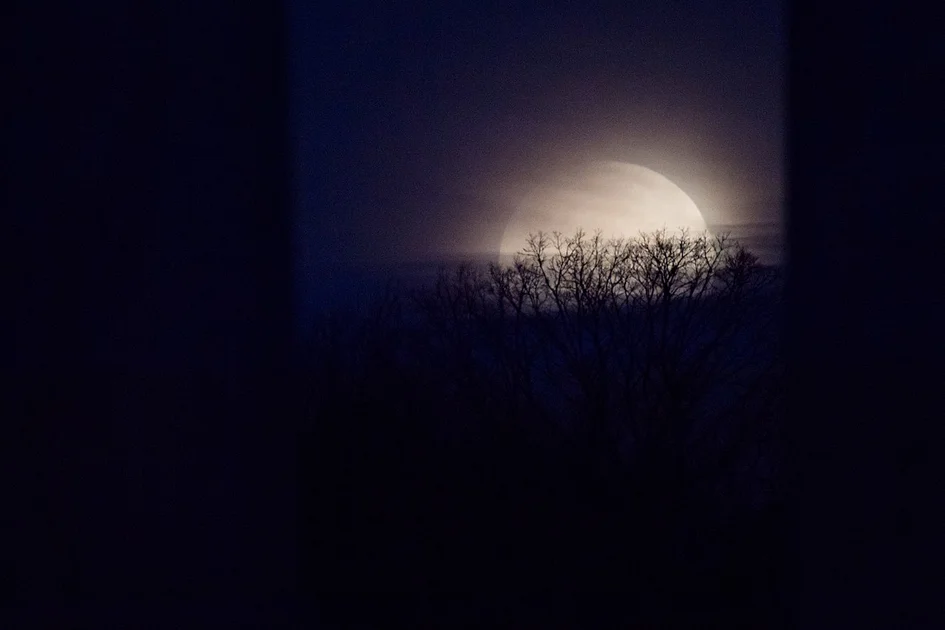
What Is a Blood Moon Total Lunar Eclipse?
A blood moon total lunar eclipse occurs when Earth passes directly between the Sun and the Moon, casting its full shadow — called the umbra — across the entire lunar surface. Unlike a solar eclipse, this phenomenon is safe to observe with the naked eye and can last for several hours.
Why the Moon Turns Red
The striking reddish-orange color that gives the blood moon its name is caused by a process called Rayleigh scattering. As sunlight passes through Earth's atmosphere, shorter blue wavelengths scatter away, while longer red and orange wavelengths bend around the planet and reach the Moon's surface. The result is a dramatic crimson glow visible from anywhere on Earth where the Moon is above the horizon during the event.
The exact shade of red can vary depending on atmospheric conditions. Volcanic eruptions, dust storms, or high levels of cloud cover can make the Moon appear darker or more vivid than usual.
Difference Between Partial and Total Lunar Eclipses
Not all lunar eclipses produce a blood moon. A partial lunar eclipse happens when only a portion of the Moon enters Earth's umbral shadow, leaving part of the lunar disk bright. A total lunar eclipse — today's event — means the entire Moon is submerged in shadow, triggering the full red transformation. There is also a penumbral eclipse, where the Moon passes through Earth's outer shadow, producing only a subtle dimming that is often difficult to detect.
When and Where to Watch Today's Event
Today's blood moon total lunar eclipse follows a predictable sequence of stages. The event begins with the penumbral phase, when the Moon enters the outer edge of Earth's shadow. This is followed by the partial eclipse phase, and finally totality — the period when the Moon is fully within the umbra and appears red. After totality, the sequence reverses.
Timing and Duration
Total lunar eclipses can last anywhere from a few minutes to over an hour depending on the geometry of the Earth-Sun-Moon alignment. The closer the Moon passes to the center of Earth's shadow, the longer totality lasts. Sky observers should check local astronomical sources or NASA's eclipse page for precise timing in their time zone, as start and end times differ significantly across regions.
Geographic Visibility
One of the advantages of a lunar eclipse over a solar eclipse is that it is visible from an entire hemisphere of Earth at once. Anyone on the night side of the planet during totality can witness the blood moon total lunar eclipse today, weather permitting. Observers in the Americas, Europe, Africa, or the Pacific — depending on the specific eclipse — may have optimal viewing windows. Clear skies away from artificial light pollution will offer the best experience.
How to Observe a Lunar Eclipse Safely
Because the Moon only reflects sunlight rather than emitting its own light, watching a lunar eclipse requires no special equipment and carries no risk to eyesight. This makes it one of the most accessible astronomical events for the general public.
Naked Eye vs. Telescope Observation
The blood moon is visible to the naked eye, making it ideal for casual observers. However, binoculars or a telescope can enhance the experience significantly, revealing surface details such as craters and maria as the shadow creeps across the lunar disk. Photographers can capture the event using a DSLR or mirrorless camera mounted on a tripod, using a telephoto lens and manual exposure settings to account for the Moon's reduced brightness during totality.
Tips for the Best Viewing Experience
To make the most of today's total lunar eclipse, find an open outdoor location with a clear view of the sky in the direction the Moon will be visible. Allow your eyes at least 20 minutes to adjust to darkness. Dress appropriately for outdoor temperatures, especially if totality falls late at night. Bringing a blanket, red-light flashlight, and a star chart can enhance the experience without disrupting night vision.
The Science and Cultural Significance of Blood Moons
Lunar eclipses have been documented by civilizations for thousands of years. Ancient astronomers in Babylon, China, and Greece used eclipse records to refine their understanding of celestial mechanics. Today, scientists continue to study lunar eclipses to analyze Earth's atmospheric properties by observing how light filters through it.
In many cultures, blood moons have carried symbolic meaning, from omens to sacred calendar markers. Modern science has demystified the phenomenon, but the visual spectacle continues to inspire wonder. Astronomers also note that total lunar eclipses occur multiple times per decade, allowing regular opportunities for both research and public engagement with astronomy.
Today's blood moon total lunar eclipse is a reminder of the precise and predictable mechanics governing our solar system — a rare visual event that requires nothing more than a clear sky and a few hours of patience to enjoy.
Comments