
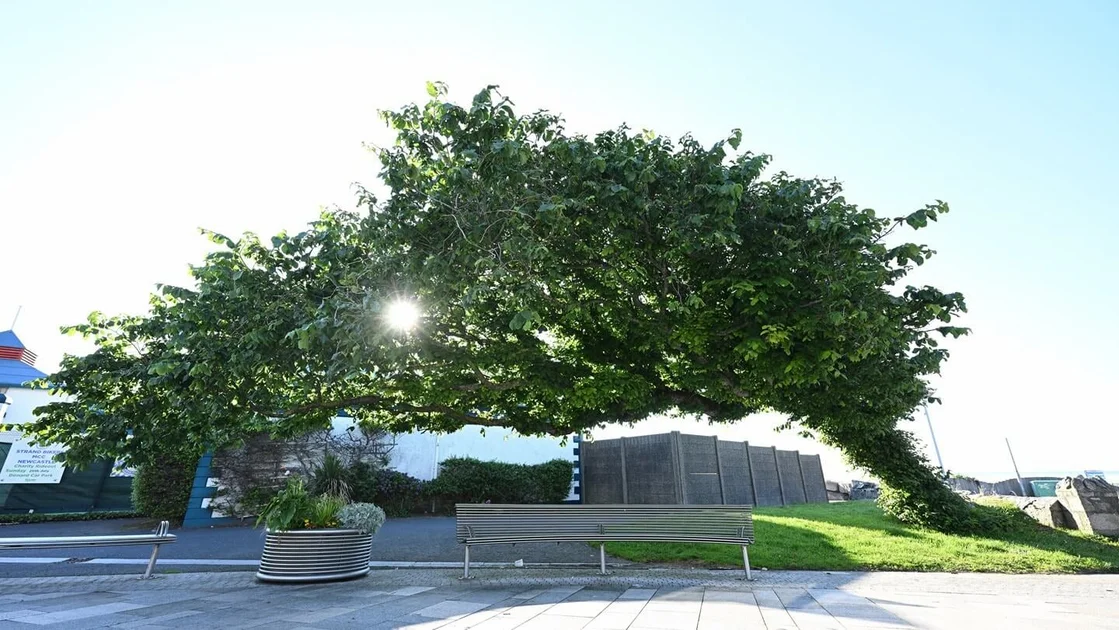
Bendy Elm Crowned UK Tree of the Year 2026
A 150-year-old wych elm on the promenade in Newcastle, County Down, has been named the UK's Tree of the Year 2026. The tree, known locally as the Bendy Tree, took more than 30% of the public vote in the Woodland Trust's annual competition, beating nine other finalists from across the UK. It is the first time a tree from Northern Ireland has won the title.
The tree owes its name to its near-horizontal trunk, which has grown sideways over decades due to strong seaside winds coming off the Irish Sea. Despite its unusual shape, the elm has become a beloved local landmark, providing shade for a bench beneath its branches and offering views of the Mourne Mountains and the sea.
"When you look at this astonishing and bizarre tree, there's no doubt about what it has endured," said May Chemais, ancient tree inventory lead for the Woodland Trust. "We've all been through changes and hardships that have shaped who we are: I think that's why the Bendy Tree has struck a chord with people."
Surviving Against All Odds
The theme of this year's competition was "Against All Odds," celebrating trees that have survived extreme growing conditions, disease, lightning strikes, and even cannonball fire. The Bendy Tree embodies that spirit. As a wych elm, it has resisted Dutch elm disease, a fungal infection that has destroyed most of the UK's 30 million elms since the 1960s. The tree is also the last remaining survivor of a row of elms planted in the mid-19th century to shelter Newcastle's main street from sea winds. Many of its companions were felled during redevelopment in the 1980s.
"The council has put a bench underneath it where people can come and sit in the shade and enjoy views of the Mournes and of the sea," said John Martin, director of the Woodland Trust Northern Ireland. "I guess it gives people a bit of a smile on their day."
The competition, run annually by the Woodland Trust, aims to highlight the importance of trees for landscapes, communities, and biodiversity. More than 20,000 people voted this year. The runner-up was the Crowhurst Yew in Surrey, a 4,000-year-old tree that survived a violent storm in 1845 and being hollowed out for use as a meeting place. It received 22% of the vote. Third place went to the Balloch Castle Ash in Scotland, which survived a lightning strike, a 1968 hurricane, and is now battling ash dieback.
A Symbol of Resilience and Community
The Bendy Tree's victory resonates beyond its unusual appearance. In a year that has seen increasing attention on climate change and biodiversity loss, the tree serves as a reminder of nature's resilience and the cultural value of ancient trees. "Older trees like this one are providing our communities with so much – from shade, wellbeing and health benefits, to stories, culture and pride of place," Chemais said.
The Woodland Trust hopes the competition will encourage the public to record more ancient and special trees on its Ancient Tree Inventory. Thousands of significant trees remain unrecorded, and the charity is calling on volunteers to help map them. "The UK's oldest and most special trees should be valued and protected," the trust said in a statement. "Many are recorded on the Ancient Tree Inventory, but thousands more are out there and we need your help to find them."
Broader Implications for Tree Conservation
The recognition of the Bendy Tree comes amid wider efforts to protect and restore the UK's tree cover. The government has pledged to plant half a million trees in England over the next three years, part of a broader strategy to combat climate change and enhance biodiversity. Yet the story of the Bendy Tree also highlights the threats that mature trees face – from disease and development to extreme weather.
Dutch elm disease remains a significant concern, having wiped out the majority of the UK's elm population. The survival of the Bendy Tree is a rare exception, and its genetic resistance could prove valuable for future elm restoration projects. Meanwhile, ash dieback continues to devastate ash trees across the country, with the Balloch Castle Ash serving as a symbol of hope.
As the UK grapples with environmental challenges, the Tree of the Year competition underscores the importance of preserving individual trees not only for their ecological role but also for their cultural and community significance. The Bendy Tree, with its whimsical shape and remarkable survival story, has captured the public imagination – a testament to the enduring bond between people and nature.
For those inspired by the Bendy Tree, the Woodland Trust encourages nominations for next year's competition. "Do you know a future Tree of the Year?" the charity asks. "Our Tree of the Year competition aims to highlight how vital trees are for our landscapes and our lives."
Comments