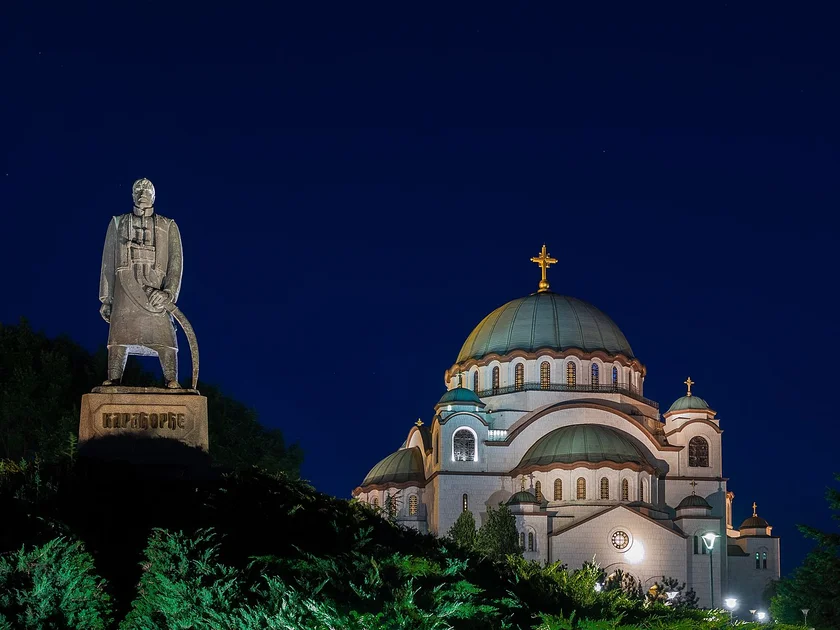
Belgrade, the capital and largest city of Serbia, stands at the confluence of the Sava and Danube rivers in southeastern Europe. With a population of nearly 1.7 million people, it serves as the country's political, economic, and cultural hub. Known for its turbulent history, resilient spirit, and increasingly modern outlook, Belgrade has emerged as one of Eastern Europe's most visited and talked-about cities.
Historical Background and Origins
Belgrade is one of the oldest continuously inhabited cities in Europe, with settlements dating back more than 7,000 years. Its strategic location at the meeting point of two major rivers made it a coveted prize throughout history.
From Ancient Settlements to Ottoman Rule
The area was originally inhabited by Celtic tribes before being incorporated into the Roman Empire as Singidunum. Over the following centuries, the city passed through the hands of Byzantines, Hungarians, and Serbian medieval rulers. The Ottoman Empire captured Belgrade in 1521 and held it for several periods, leaving a lasting architectural and cultural imprint on the city.
The 19th and 20th Centuries
Belgrade became the capital of an autonomous Serbian principality in 1830 and later of the Kingdom of Serbia. During World War I and World War II, the city suffered extensive destruction. It subsequently became the capital of socialist Yugoslavia under Josip Broz Tito, a period that shaped much of its urban planning and architectural identity. Following the dissolution of Yugoslavia in the 1990s and the NATO bombing of 1999, Belgrade underwent significant reconstruction and transformation.
Architecture and Urban Landscape
The city's built environment reflects its layered history, blending Ottoman remnants, Austro-Hungarian neoclassical buildings, socialist-era brutalist structures, and contemporary glass towers.
Belgrade Fortress and Kalemegdan
The Belgrade Fortress, known as Kalemegdan, is the city's most iconic landmark. Perched above the rivers, it encompasses Roman ruins, medieval walls, and Ottoman towers spread across a large park. The fortress is a popular gathering space for locals and a must-visit for tourists exploring the city's past.
Neighborhoods Worth Noting
The historic Skadarlija district, often called the Bohemian Quarter, is lined with cobblestone streets, traditional restaurants called kafanas, and 19th-century architecture. In contrast, Novi Beograd (New Belgrade), located across the Sava River, features wide boulevards and large-scale modernist housing blocks built during the Yugoslav era. Savamala, once an industrial riverfront area, has been transformed into a thriving creative hub with galleries, design studios, and nightlife venues.
Economy and Infrastructure
Belgrade generates a significant portion of Serbia's GDP, functioning as the nation's primary economic engine. The city hosts the headquarters of most major Serbian companies, international corporations, and financial institutions.
Key Economic Sectors
The dominant sectors include finance, telecommunications, trade, construction, and information technology. The IT sector has grown particularly rapidly over the past decade, attracting foreign investment and positioning Belgrade as a rising tech hub in the Western Balkans. Companies from across Europe and beyond have established regional offices in the city, drawn by a relatively low cost of operations and a skilled, educated workforce.
Transport and Connectivity
Nikola Tesla Airport, located approximately 18 kilometres west of the city centre, connects Belgrade to major European and intercontinental destinations. The city is also a key junction on the Pan-European transport corridors. Public transportation within Belgrade includes buses, trolleybuses, and trams, while infrastructure upgrades — including metro system planning — are underway to modernise urban mobility.
Culture, Education, and Tourism
Belgrade has a rich cultural life supported by numerous institutions, festivals, and a historically engaged population.
Arts, Museums, and Nightlife
The National Museum of Serbia, recently reopened after extensive renovation, houses one of the country's most important collections of art and artefacts. The Museum of Yugoslav History, which includes the mausoleum of Josip Broz Tito, draws visitors interested in 20th-century Balkan history. Belgrade is internationally recognised for its nightlife, particularly the floating river clubs known as splavovi, which operate along the Sava and Danube riverbanks.
Education and Academic Life
The University of Belgrade, founded in 1808, is the oldest and largest university in Serbia. It comprises dozens of faculties and attracts students from across the region and beyond, contributing to the city's youthful and intellectually active atmosphere.
Tourism Trends
Tourism in Belgrade has grown steadily, with visitors drawn to its affordability, historical depth, gastronomy, and cultural events. The EXIT Music Festival, though held in Novi Sad, frequently brings international attention to the broader Serbian capital region. Local cuisine — featuring dishes like ćevapi, pljeskavica, and a range of regional pastries — remains a central part of the visitor experience.
Belgrade continues to evolve as a city that balances its complex past with an increasingly forward-looking identity, making it a significant destination in contemporary European travel and investment.
Comments