
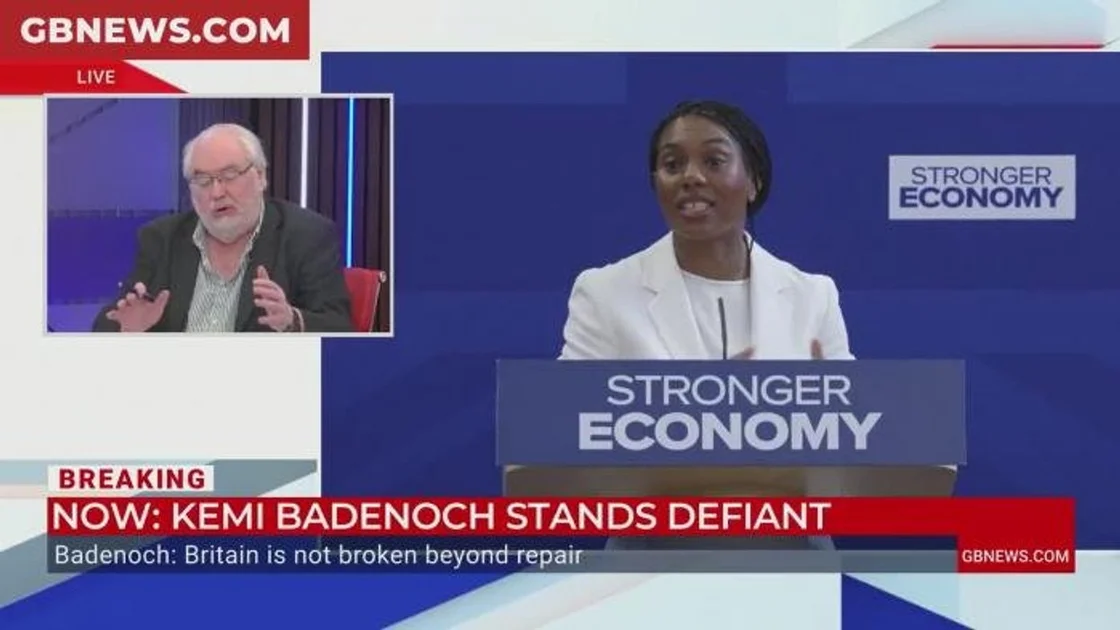
Badenoch Rules Out Reform Pact, Brands Defectors 'Dishonest'
Kemi Badenoch has delivered a blistering attack on Conservative defectors who have joined Reform UK, calling them "some of the most dishonest people I have ever met" and ruling out any future coalition or electoral pact with Nigel Farage's party. Speaking at the Edinburgh Festival Fringe on Saturday, the Conservative leader also confirmed that "drama queens" who left the party during its lowest ebb would not be welcomed back into the fold.
Badenoch's comments come amid a turbulent period for the Conservative Party, which currently trails third in the polls behind Labour and Reform. The latest Ipsos voting intention survey, conducted in early August, put Labour at 28%, Reform at 25%, and the Conservatives at just 18%. With the next general election due by August 2029, Badenoch is under pressure to chart a clear course for her party without alienating voters who have drifted to Reform.
A Direct Attack on Reform Defectors
Addressing a packed event hosted by broadcaster Iain Dale, Badenoch did not mince words when discussing those who had crossed the floor to Reform. "Reform has people who left the Conservative party, some of the most dishonest people I have ever met in my entire life," she said. The remarks were widely interpreted as targeting prominent defectors such as former home secretary Suella Braverman and former shadow justice secretary Robert Jenrick, who left the party earlier this year after being sacked for plotting against Badenoch.
Jenrick, who now serves as Reform's shadow chancellor, had previously branded the Conservative Party "rotten" and "failed". Badenoch hit back, saying: "These are people who left us when we were at our lowest, many of them the people who caused the problems in the first place and then ran away and pretended they had nothing to do with it. Why should we have them back?"
The Conservative leader also made it clear that any back-channel approaches from former colleagues would be rebuffed. "I'm not entertaining it," she said, referring to indirect communications she had heard about from parliamentarians who had defected and were now seeking a return. "I don't want drama queens in the party."
A 'Monstrous' Hybrid Rejected
Badenoch was unequivocal in ruling out any form of electoral alliance with Reform UK, describing the idea as a "monstrous Reform-Conservative hybrid". She insisted that her party would stand alone at the next general election, despite calls from some quarters for a centre-right alliance to stop Labour. "That is not an option," she said, dismissing the notion as both impractical and ideologically incoherent.
The Conservative leader also mocked Reform's policy discipline, suggesting the party was "all over the place" and prone to announcing a policy one day and forgetting it the next. Her comments reflect growing Conservative anxiety that Reform is siphoning off its traditional voter base, particularly in the north of England and the Midlands, where cultural and economic grievances have fuelled support for Farage's party.
Conservative strategists worry that a split on the right could hand Labour a second landslide at the next election, especially if Reform continues to poll in the mid-20s. However, Badenoch's combative stance signals that she sees no advantage in legitimising Reform or attempting to negotiate with a party she views as opportunistic and untrustworthy.
Labour Accused of Dithering Over North Sea Oil and Gas
In a separate intervention on Friday, Badenoch turned her attention to energy policy, accusing the Labour government of stalling on key North Sea projects. Speaking during a visit to a farm in East Lothian, she demanded an urgent decision on the Jackdaw and Rosebank oil and gas fields, whose consultations have recently closed. The future of these developments is seen as a major test of Prime Minister Andy Burnham's environmental credentials, with activists warning of climate damage and industry leaders calling for investment certainty.
"It's absolutely essential," Badenoch said, when asked if a decision should be made as soon as possible. "If this decision had been made earlier in the summer, we could have had gas from Jackdaw in people's homes by this winter, by Christmas." She claimed that the government's "heart's not really in it", adding: "They don't know how to actually make energy cheaper, they don't know how to get genuine tax revenue, and all they're doing is increasing taxes, destroying businesses."
The Stakes for Energy Security and the Climate
The Jackdaw field, operated by Shell, and the Rosebank field, led by Equinor, could together supply around 8% of the UK's gas needs at peak production, according to industry estimates. The projects are expected to create thousands of construction jobs and support long-term employment, but they have become a lightning rod for climate campaigners who argue that new fossil fuel extraction is incompatible with the UK's legally binding net-zero targets.
Badenoch framed the issue in terms of energy security and economic commonsense, arguing that domestic production would reduce reliance on imports from countries with weaker environmental standards. "All of the gas that's drilled in the North Sea is used in this country," she said. "A commonsense approach is to make sure that we drill our own oil and gas in the North Sea, get the tax revenue from that instead of importing oil and gas from countries that drill it in a very dirty way, which is actually increasing carbon emissions."
Her comments echo those of Conservative MPs in Scotland, who have been lobbying for the approval of both fields as a way to secure jobs and energy independence. However, the Labour government, which came to power in July 2024, has yet to signal its position. Prime Minister Burnham, who has promised to balance climate action with economic growth, chaired a "growth situation room" call on Thursday, but no decision on the oilfields has been announced.
A Test for the Burnham Government
Analysts suggest that the Jackdaw and Rosebank decisions will be politically fraught for Labour, which is under pressure from its left-wing base to take bold climate action, while business groups and unions urge caution over energy costs and employment. The delay has already drawn criticism from industry leaders, who warn that uncertainty is deterring investment in the North Sea and undermining the UK's supply chain.
Badenoch's attack is part of a broader Conservative effort to paint the Burnham government as indecisive and economically incompetent. In her Edinburgh speech, she also repeated her controversial assertion that "not all cultures are equal", a position she has promoted in recent days in response to new Home Office guidance for asylum seekers. The guidance, which tells arrivals that "men and women are equal" and that women can work, study, and travel independently, was condemned by Badenoch in a social media post on Tuesday.
"Anyone needing this leaflet does not belong in Britain," she wrote, adding: "I've been warning for a long time that not all cultures are equal. Britain can be proudly multi-ethnic, but we should not be multi-cultural." The remarks have reignited a debate about integration and national identity, with critics accusing Badenoch of dog-whistle politics and supporters praising her for articulating a clear cultural vision.
The Broader Picture: A Conservative Party in Search of an Identity
Badenoch's twin forays on the economy and migration illustrate the tightrope she must walk as she attempts to revive her party's fortunes. On one hand, she is seeking to solidify her base by taking a hard line on immigration and national culture, issues that play well with right-leaning voters who might otherwise be attracted to Reform. On the other, she is trying to project economic competence and a positive vision for Britain's future, which requires engaging with the complexities of energy policy and industrial strategy.
Her refusal to countenance any pact with Reform is a calculated bet that the Conservative Party can win back voters by appealing to their patriotic and pragmatic instincts, rather than by making common cause with a party she clearly despises. Whether that strategy will work remains to be seen. Polling suggests that Reform's support is soft, and some of its voters could return to the Conservatives if the party appears credible and united. However, Badenoch's hostile tone towards defectors may also alienate those who feel the party moved too far to the left under previous leaderships.
A Defining Moment for the Right
Political observers argue that the Conservative leader's performance over the coming months will shape the future of the right in British politics. If she can stabilise the party's poll ratings and present a coherent alternative to Labour, she may be able to squeeze Reform's vote share. If not, the risk of a permanent split on the right could lead to Labour dominance for a generation.
For now, Badenoch is giving no ground. Her rhetoric is combative, her policy positions are uncompromising, and she is willing to attack her critics from both the left and the right. Whether that will prove to be political genius or self-destructive stubbornness is one of the key questions of the current parliament.
In the meantime, Labour remains the clear frontrunner, and Prime Minister Burnham shows no sign of calling an early election. The next general election must be held by August 2029, but Burnham could decide to go to the polls at any time. The Conservative Party, under Badenoch, is preparing for a long haul — and she is determined to do it on her own terms.
Comments