
A Historic Bill Falls at the Final Hurdle
The Terminally Ill Adults (End of Life) Bill — the most significant attempt to legalise assisted dying in England and Wales in decades — officially ran out of time in the House of Lords on Friday, April 24, 2026, ending its parliamentary journey without ever facing a vote in the upper chamber. The bill had been making its way through Westminster for nearly 17 months, but was blocked from progressing by a small minority of peers who tabled more than 1,200 amendments, including one controversial requirement for pregnancy tests for both men and women.
Supporers of the legislation condemned the outcome as a "denial of democracy", pointing out that the bill had successfully passed two votes in the House of Commons. Lord Charlie Falconer, who had steered the bill through the Lords, expressed feeling "despondent", stressing that the bill had not failed on its merits but through what he described as "procedural wrangling" by peers unwilling to cooperate for proportionate debate. Tory former cabinet minister Lord Baker of Dorking went further, accusing opponents of a "prolonged filibuster".
Supporters React With Sadness and Defiance
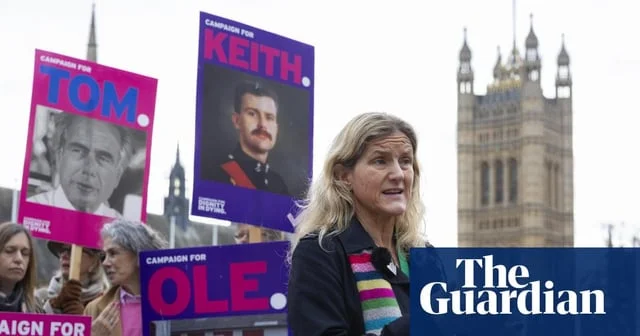
Labour MP Kim Leadbeater, who originally sponsored the bill, said she had been overwhelmed with messages of "rage and dismay" from the public and confirmed that a fresh attempt would be made to reintroduce it following the King's Speech on May 13. "I am confident. I'm trying to stay positive," she said, while acknowledging "a real sense of sadness and sorrow today."
Opponents, including Paralympian Baroness Tanni Grey-Thompson, maintained that the bill had failed because it contained "too many gaps" and that there remained significant misunderstanding about its scope. Baroness Campbell of Surbiton, a former commissioner at the Equality and Human Rights Commission, said disabled people had contacted her with deep concerns about the legislation.
Esther Rantzen: A Personal Battle Intertwined With a National Debate
No figure has come to symbolise the public campaign for assisted dying more vividly than Dame Esther Rantzen. The veteran broadcaster, who was diagnosed with stage 4 lung cancer in January 2023, has spent the final chapter of her public life as one of the most prominent and emotionally resonant voices in favour of the bill. Earlier this year, she disclosed that the medication she had been taking had stopped working and that she believed she would "not live long enough" to see the bill become law in the United Kingdom. She had previously registered with Dignitas, the Swiss assisted dying clinic.
In a pre-recorded segment broadcast on ITV's Good Morning Britain on Friday morning, Dame Esther delivered what many described as a heartbreaking but resolute message: "I will obviously keep battling, not on my own behalf but on behalf of all the future generations that deserve a proper, compassionate, humanitarian bill. Doctors used to ease people out of life; that's what we need, we need the opportunity to ask for assistance. Not to shorten our lives but to shorten our deaths."
A Daughter's Voice in the Crowd
Outside Parliament, as campaigners gathered in Westminster on the bill's final day, Dame Esther's daughter Rebecca Wilcox gave a deeply personal statement. She said the bill had been thwarted by a "petty few" and expressed profound sadness that the legislation would not be able to help her mother. "I hope this isn't the end for us. It is absolutely the end for Mum," she said, adding that she was "so annoyed" her mother had not been able to see the bill pass. Yet she remained defiant: "We've got the stamina, we've got the energy, we will do it. We're on the side of right. We're on the side of choice and compassion."
When asked whether Dame Esther might still be alive to witness a future law change, Rebecca acknowledged the painful uncertainty: "I think she's hopeful that brilliant minds who are behind the Bill will get it through again. It's an unknowable thing about whether she will be around to see it."
What Comes Next: The Road Ahead for Assisted Dying Legislation
The failure of the Terminally Ill Adults (End of Life) Bill is not necessarily the end of the road for assisted dying reform in the United Kingdom — but it represents a significant setback for campaigners who had hoped to see change enacted within this parliamentary term. The bill had proposed allowing adults in England and Wales with fewer than six months to live to apply for an assisted death, subject to approval from two doctors and an expert panel, a framework its supporters argued was among the most robustly safeguarded in the world.
With Kim Leadbeater pledging to bring back the legislation after the King's Speech in May, the political and public debate is set to continue with renewed intensity. The fact that the bill reached this advanced stage — passing twice in the Commons and generating unprecedented levels of public engagement — suggests the question of assisted dying has moved irreversibly into the mainstream of British political life.
For Dame Esther Rantzen, the personal stakes could not be higher. Her willingness to speak openly about her own terminal diagnosis and her registration with Dignitas has helped shift the national conversation from abstract principle to human reality, lending the debate a moral urgency that no amount of parliamentary manoeuvring can easily suppress. Whether she lives to see the outcome she has fought for remains uncertain — but her campaign has already altered the terms of the debate for the generations she says she is fighting on behalf of.
Comments