
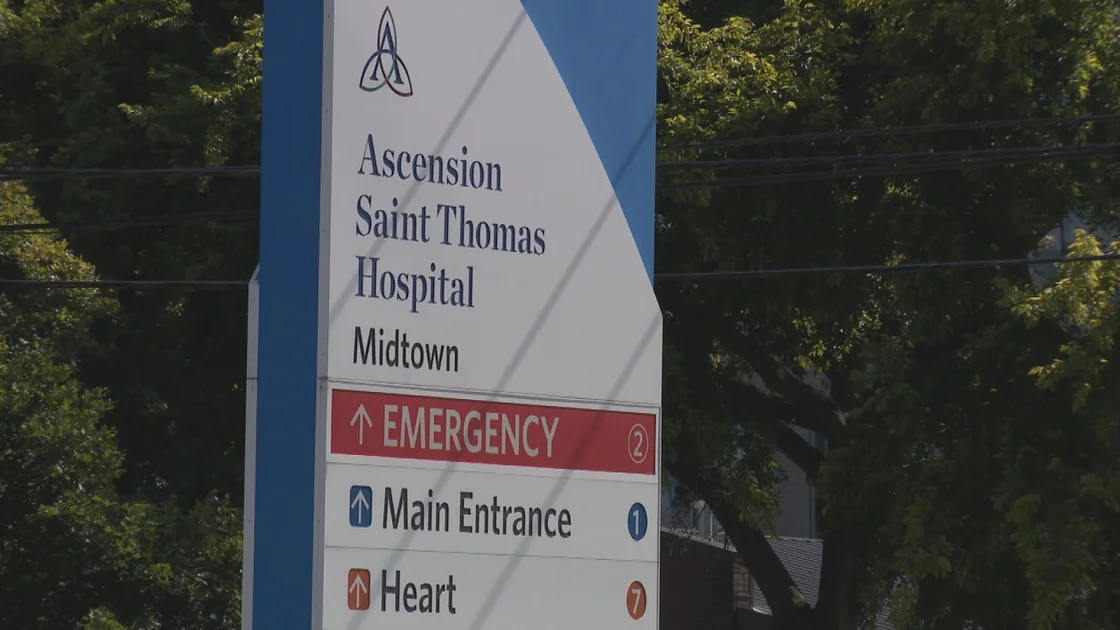
Drug Mix-Up at Ascension Saint Thomas Midtown Leaves Patient Paralyzed, Hospital Apologizes
NASHVILLE, Tenn. — A 72-year-old woman is permanently paralyzed from the chest down after a medication error during a routine knee replacement surgery at Ascension Saint Thomas Midtown Hospital last Friday, her family says. The hospital has confirmed that at least four patients were harmed in the same incident, which occurred when syringes intended to contain an anesthetic were instead filled with potassium chloride—a drug used in lethal injections.
The family of Glenda Dorton, a Centerville resident, told NewsChannel 5 Investigates that she went in for a knee replacement expecting an epidural for pain relief. Instead, she was injected with potassium chloride, a medication that can be lethal when administered incorrectly. Dorton remains in the intensive care unit at Ascension Saint Thomas West, where she was transferred after the hospital discovered the error. Her family has retained an attorney and is hoping doctors can determine whether any of the damage can be reversed.
The hospital’s president and CEO, Dr. Shubhada Jagasia, issued a statement Tuesday expressing deep regret. “Our hearts are with the four patients and their families impacted by this event,” she said. “On behalf of our leadership and care teams, I am deeply sorry for the harm caused to our patients. We have met directly with each of the families to express our deep support, connected them with spiritual care teams, and ensured they have access to all appropriate resources and ongoing care needed.”
Hospital Self-Reported Incident to State Regulators
Ascension Saint Thomas said it reported the incident to state regulators on the day it occurred and immediately launched an investigation. According to Jagasia, the hospital identified the cause quickly and “implemented corrective safeguards.” The hospital’s clinical teams are now using enhanced safety protocols to ensure the highest level of safety at Midtown, she said.
State regulators with the Tennessee Department of Health have confirmed they are investigating but declined to provide further details, citing the ongoing review. The hospital has not released specific information about the other three patients, citing patient privacy laws.
The Details of the Mix-Up: How Potassium Ended Up in Epidural Syringes
Investigators familiar with the case told NewsChannel 5 that the error originated in the hospital’s pharmacy. Instead of filling syringes with bupivacaine, a commonly used anesthetic for epidurals during joint replacement surgeries, the syringes were filled with potassium chloride. The mix-up reportedly affected at least four patients who underwent joint replacement procedures at the hospital last Friday.
Potassium chloride is a standard electrolyte used in hospitals to treat potassium deficiencies, but when given in concentrated form and by the wrong route—such as intrathecally (into the spinal fluid)—it can cause severe neurological damage, cardiac arrest, or death. In fact, potassium chloride is one of the drugs historically used in lethal injection protocols in Tennessee and several other states because it stops the heart.
The error has raised serious questions about pharmacy safety protocols, double-check procedures, and the labeling of medications in hospital settings. Medical experts point out that bupivacaine and potassium chloride are vastly different in appearance and packaging, yet errors can still occur when staff are rushed or when similar-looking vials are stored near each other.
What Happens Next: Legal and Regulatory Ramifications
The Dorton family’s attorney is expected to file a medical malpractice lawsuit against the hospital, though no lawsuit has been filed as of yet. Legal experts say that in cases of gross negligence—such as a medication error that causes permanent paralysis—the hospital can face substantial damages, including compensation for medical expenses, pain and suffering, and loss of quality of life.
Ascension Saint Thomas could also face penalties from state regulators. Hospitals that fail to report adverse events promptly can be fined or placed under increased oversight. The hospital maintains it complied with all reporting requirements on the day of the incident.
This incident echoes other high-profile medication errors across the country. In 2018, a Nashville hospital was the site of a similar mix-up involving a different drug, which led to the death of a patient. That case prompted a statewide review of pharmacy labeling practices.
Context: Why This Matters
This incident highlights the life-or-death consequences of medication errors in hospitals. According to the Institute of Medicine, medication errors harm at least 1.5 million people every year in the United States, costing billions of dollars in medical costs. While many errors are caught before harm occurs, this case shows what happens when they slip through.
For patients undergoing routine procedures, the trust that they will leave the operating room no worse than they entered is fundamental. The fact that a knee replacement—a common, low-risk surgery—resulted in permanent paralysis is a stark reminder that safety lapses can occur in any hospital, even one that is part of a major Catholic health system like Ascension.
The hospital’s response, including promptly meeting with families and implementing corrective measures, is a small comfort to the victims. But for Glenda Dorton and her family, the damage is irreversible. “She went in for a knee replacement, and now she can’t move her legs,” Kristina Dorton, her daughter-in-law, told WSMV. “We’re devastated. We need answers.”
A Pattern of Concerns? Ascension’s Recent History
Ascension Saint Thomas Midtown has faced scrutiny in recent years over patient safety issues. In 2022, the hospital was cited by the Centers for Medicare and Medicaid Services for violations related to nursing care and medication management. While the hospital corrected those deficiencies, the new incident raises questions about whether systemic issues remain.
Nationally, Ascension Health has also dealt with cybersecurity attacks and data breaches, but the current focus is squarely on the drug mix-up.
Perspective: What This Changes
The drug mix-up at Ascension Saint Thomas Midtown could have far-reaching implications for how hospitals manage medication safety, especially in the operating room and pharmacy. Experts say that this case should prompt a reassessment of labeling protocols, syringe preparation, and the use of barcoding or other verification systems to ensure that the right drug goes into the right syringe and ultimately into the right patient.
In recent years, many hospitals have adopted barcoding at the bedside, but that technology does not always extend to the sterile preparation of syringes in the pharmacy. High-alert medications like potassium chloride are supposed to be segregated and double-checked, but this case shows that those safeguards can fail.
The incident also underscores the importance of patient advocacy. The families of the victims are speaking publicly—not just to seek accountability, but to warn others. Their voices add to a growing movement for transparency in healthcare, where errors are acknowledged openly rather than hidden behind nondisclosure agreements.
For patients, this case is a reminder to ask questions about every medication they receive, including before surgery. While it’s not always possible to prevent errors, awareness can help catch mistakes early.
A Broader Trend: Medication Errors Under the Spotlight
This case is part of a broader trend of high-profile medication errors making headlines. In 2024, a hospital in Oregon accidentally administered a paralytic agent instead of a sedative to a patient during surgery, leading to a similar lawsuit. And in 2025, a mix-up between saline and a contrast dye during MRI procedures in a Texas hospital caused severe reactions in several patients.
Health policy experts argue that medication errors are underreported because of fear of litigation and reputational damage. However, the rise of state reporting systems and public transparency initiatives is beginning to change that. Tennessee currently requires hospitals to report “adverse events” to the Department of Health, and the department has the authority to investigate and issue corrective action plans.
Conclusion: A Community and a Family Seek Answers
As Glenda Dorton remains hospitalized, her family is trying to come to terms with her new reality. Her daughter-in-law said the family is “hoping for the best” but preparing for the worst. Meanwhile, the other three patients have not been identified publicly, and their conditions remain unknown.
The hospital has promised to cover all necessary ongoing care, but for permanent paralysis, money cannot restore what was lost. The community is left wondering how a simple knee replacement could go so wrong.
NewsChannel 5 Investigates will continue to follow this story. If you or someone you know was impacted by this medical mistake, please contact the newsroom.
For now, the families are waiting for answers—and for the hospital to ensure that such a mix-up never happens again.
Comments