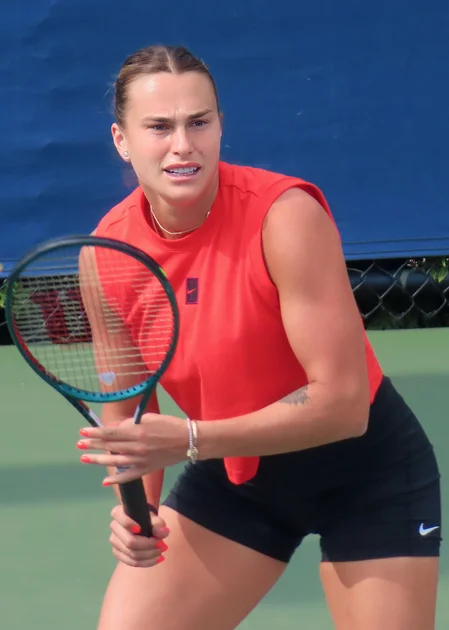
Sabalenka Surges Through the Draw at Roland Garros 2025
Aryna Sabalenka is making a powerful statement at Roland Garros 2025, advancing deep into the tournament with the kind of dominant, aggressive tennis that has defined her reign at the top of the women's game. The Belarusian world No. 1 has dropped minimal sets en route to the latter stages, dispatching opponents with her trademark thunderous serve and relentless groundstrokes from the baseline.
Sabalenka, 27, entered the Paris clay-court Grand Slam as the heavy favourite and has done little to disappoint. Her performances have drawn widespread attention, reinforcing her status as the most complete player on the WTA Tour right now. With each match, the conversation around her potential to complete a career Grand Slam — or at least add Roland Garros to her Australian Open titles — grows louder.
Key Numbers Driving the Narrative
Sabalenka's statistics at this year's tournament underline her dominance. She has consistently posted first-serve percentages above 65%, while her winners-to-unforced-errors ratio remains among the best in the draw. She has not faced a single tiebreak in her opening matches, a testament to the authority with which she is controlling her service games. If she lifts the Coupe Suzanne-Lenglen, she will become one of only a handful of active players to hold multiple Grand Slam singles titles.
Why This Moment Matters for Sabalenka and Women's Tennis
For Aryna Sabalenka, Roland Garros represents something of an unfinished chapter. While she has claimed back-to-back Australian Open titles in 2023 and 2024, the French Open has historically been the one major where her game has been tested most severely. Clay demands a different kind of endurance — longer rallies, higher physical output, and a willingness to grind — and critics have previously questioned whether her power-first game could consistently translate on the slower surface.
2025 appears to be answering those questions definitively. Sabalenka has adapted her movement and shown greater tactical variety, mixing heavy topspin with drop shots and changing pace more effectively than in previous years. Coaches and analysts have noted a visible evolution in her game, one that suggests she has done serious work to shore up the weaknesses that have historically undermined her on clay.
The Competition Around Her
The field at Roland Garros remains formidable. Coco Gauff is also making a serious bid for glory in Paris, and a potential Sabalenka-Gauff showdown in the latter rounds would be one of the most anticipated matches in recent Grand Slam memory. The American teenager has shown she can neutralise power players with her exceptional defense and court coverage, setting up what could be a thrilling clash of styles.
Beyond Gauff, rising stars like Mirra Andreeva have also demonstrated the capacity to cause upsets against elite opposition, meaning Sabalenka cannot afford complacency at any stage of the draw. Women's tennis in 2025 is genuinely deep, with no shortage of players capable of derailing a favourite on the right day.
What a French Open Title Would Mean for Sabalenka's Legacy
The broader implications of a Sabalenka triumph at Roland Garros stretch well beyond the immediate trophy. Should she claim the title, she would cement herself not merely as the best player in the world right now, but as one of the defining figures of this era of women's tennis — an era increasingly shaped by athletic power, mental resilience, and technical evolution.
Sabalenka has spoken publicly about the personal challenges she has navigated in recent years, including the death of her father. Her openness about mental health and grief has resonated with fans globally, adding a human dimension to her formidable on-court presence. A Roland Garros title in 2025 would represent more than a ranking milestone; it would signal the completion of a journey toward becoming a truly complete Grand Slam champion.
For women's tennis as a whole, the current moment reflects a sport in rude health. Attendances at Roland Garros remain strong, broadcast audiences are growing, and the rivalry structure — anchored by players like Sabalenka and Gauff — provides the kind of compelling narrative that sustains mainstream interest between majors. Whether Sabalenka ultimately claims the title or falls short, her campaign in Paris has already reinforced that the women's draw is one of sport's most compelling ongoing storylines in 2025.
Comments