
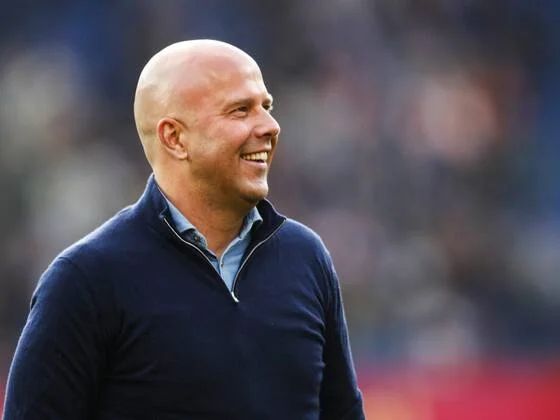
Arne Slot's Liverpool Revolution: Reijnen, Diomande and the Summer of Change
Liverpool are preparing for a transformative summer as head coach Arne Slot receives a significant vote of confidence from the club's hierarchy. Despite a trophyless second season that saw the reigning Premier League champions slip to fifth place, the Anfield board is backing the Dutchman with key additions to his coaching staff and a major transfer target to replace departing legends Mohamed Salah and Andy Robertson.
According to multiple reports, Slot is on the verge of finally adding Etienne Reijnen to his backroom team. The Dutch set-piece specialist, who was Slot's assistant at Feyenoord, was unable to secure a work permit when the coach first arrived in 2024. Now, with the necessary qualifications in place, Reijnen is expected to join Slot and current assistant Sipke Hulshoff at the AXA Training Centre.
On the transfer front, RB Leipzig's Yan Diomande has emerged as Liverpool's primary target to fill the void left by Salah on the right wing. The 22-year-old Ivorian winger, known for his explosive pace and direct running, is seen as a long-term successor rather than a like-for-like replacement for the Egyptian King.
Slot's Future Secured Amid Speculation
There had been intense speculation over Slot's position after a difficult campaign that yielded 20 defeats across all competitions. However, the club's decision to push ahead with Reijnen's appointment signals a clear commitment to the head coach. Former Netherlands international Jan Everse, who managed Slot at FC Zwolle, warned Liverpool it would be a "very stupid" decision to part ways with the manager.
"The worst thing that can happen to Arne is that they fire him. But they would be very stupid," Everse said. "Jurgen Klopp was at Liverpool for nine years. Slot came in and he became champion. Everybody was happy."
Transfer expert Fabrizio Romano has confirmed that while an end-of-season review will take place, nothing is expected to happen imminently regarding Slot's position. The club is instead focused on evolving the squad after spending around £440 million last summer.
Context: The End of an Era at Anfield
Sunday's final day clash with Brentford marks the end of an era at Anfield. Mohamed Salah and Andy Robertson, two of the most decorated players in the club's modern history, will play their last matches for Liverpool before departing on free transfers. Their exits, combined with the uncertainty surrounding Ibrahima Konate and Alisson Becker, have left fans anxious about the direction of the club.
Salah's departure, in particular, represents a monumental shift. The Egyptian has been Liverpool's talisman for nearly a decade, scoring over 200 goals and driving the club to Champions League and Premier League glory. Replacing his output—both in terms of goals and assists—is arguably the single most important task facing Slot this summer.
The Diomande Dilemma
Yan Diomande has been identified as the leading candidate to succeed Salah on the right flank. The RB Leipzig star enjoyed a breakout season in the Bundesliga, showcasing the kind of direct, goal-scoring threat that Liverpool crave. However, competition for his signature is fierce, with several top European clubs monitoring his situation.
Liverpool are taking a "composite approach" to replacing Salah, acknowledging that no single player can replicate his numbers. The club is also considering Jeremie Frimpong, who can operate further forward, and may look to youth product Rio Ngumoha, who has drawn comparisons to Salah for his ability to cut inside from the left and curl efforts into the far post.
The need for fresh legs is pressing. Slot's side has struggled for creativity and goals this season, often appearing predictable and one-dimensional in attack. The manager has spoken of the need for "evolution" rather than revolution, but the scale of the rebuild suggests significant changes are on the horizon.
Perspective: The Toughest Test Yet
Liverpool face arguably their toughest test since the post-Klopp transition. While last summer's aggressive spending—totalling around £440 million—brought in a host of new talent, many of those players have struggled to adapt. The club's failure to secure a trophy this season, coupled with the departure of two dressing-room leaders, raises questions about squad cohesion and identity.
Slot's first season was a resounding success, culminating in a Premier League title that exceeded all expectations. But the second season has exposed structural weaknesses: injuries to key players, a lack of tactical flexibility, and a failure to integrate new signings effectively. The manager has acknowledged these issues, pointing to the disruption caused by injuries and the challenge of integrating so many new faces.
"We will evolve as a team," Slot said recently. "We went through a transition last summer and now these players are now longer in the club... the ones who were there before are now already one year of experience playing with these players. So that will naturally mean that they will evolve."
Paul Joyce has written about how Liverpool face their toughest test yet as Salah and Robertson exit, noting that the club must navigate this transition without the safety net of Champions League qualification being guaranteed for next season.
The Reijnen Factor
Etienne Reijnen's arrival could be pivotal. Known as a set-piece specialist, the Dutchman was instrumental in Feyenoord's success under Slot, particularly in dead-ball situations. Liverpool have been effective from set pieces under the current regime, but Reijnen's expertise could add an extra dimension.
His appointment also strengthens Slot's support network. The head coach has been operating with a relatively small backroom team since arriving at Anfield, and the addition of a trusted ally will be welcome. Whether Giovanni van Bronckhorst remains at the club is uncertain, but the arrival of Reijnen suggests Slot is being given the tools to succeed.
The Sepp van den Berg Lesson
One of the more poignant stories emerging from Liverpool this week is that of Sepp van den Berg, the Brentford defender who will face his former club on Sunday. The Dutchman turned down Slot's plea to stay at Anfield last summer, revealing he had endured "dark days" during his time on Merseyside.
Van den Berg's candid account of his struggles—crying after training, feeling isolated as a 17-year-old foreigner—serves as a reminder of the human side of football's revolving door. While the transfer speculation focuses on high-profile stars, the club's handling of young players and their mental health remains an ongoing concern.
The defender eventually left for Brentford in a deal worth up to £25 million, and his success in west London may give Liverpool pause for thought about how they manage their academy prospects.
What This Changes: The New Liverpool Blueprint
The message from Anfield is clear: Arne Slot is here to stay, and the club is backing him to rebuild. The appointment of Reijnen, the pursuit of Diomande, and the likely departures of Salah and Robertson all point to a new chapter.
But the stakes are high. Liverpool's failure to qualify for the Champions League proper would have catastrophic financial consequences, hampering their ability to attract top talent. Fifth place, which they currently occupy, will be enough for a spot in Europe's premier competition, but the margin for error is slim.
Slot must also contend with the emotional void left by Salah and Robertson. Both players have been instrumental in creating the club's winning culture, and their absence will be felt in the dressing room as much as on the pitch. The manager will need to identify new leaders within the squad, with Virgil van Dijk and Alisson Becker—should they stay—likely to take on greater responsibility.
The Transfer Puzzle
Liverpool's transfer strategy this summer will need to be both aggressive and intelligent. The composite approach to replacing Salah suggests the club is looking for multiple additions rather than a single marquee signing. A wide attacker, a central midfielder, and potentially a centre-back are all on the shopping list.
The club has also been linked with moves for younger talents who can be developed over time, reflecting a longer-term vision. The challenge will be balancing immediate needs with future potential, particularly given the pressure to compete with Manchester City, Arsenal, and other top sides.
One potential bright spot is the emergence of academy graduates like Rio Ngumoha, who has impressed in limited first-team opportunities. The 18-year-old's ability to cut in from the left and finish with precision has drawn comparisons to a young Salah, though it is far too early to place such heavy expectations on his shoulders.
Conclusion: Evolution or Revolution?
Arne Slot has described the coming months as an "evolution" rather than a revolution, but the scale of change at Anfield suggests a more profound transformation is underway. The departure of two club legends, the arrival of a new coaching team, and the pursuit of fresh attacking talent all point to a club in flux.
The coming weeks will be critical. The end-of-season review will determine whether further changes are needed, and the transfer market will test Liverpool's ability to execute their plans. For Slot, the pressure is on to prove that his first-season success was not a fluke, and that he can build a team capable of challenging for major honours once again.
As the Reds prepare to bid farewell to Salah and Robertson, the focus turns to the future. The summer of 2026 will define Arne Slot's legacy at Liverpool—and perhaps the club's trajectory for the next decade.
Comments