
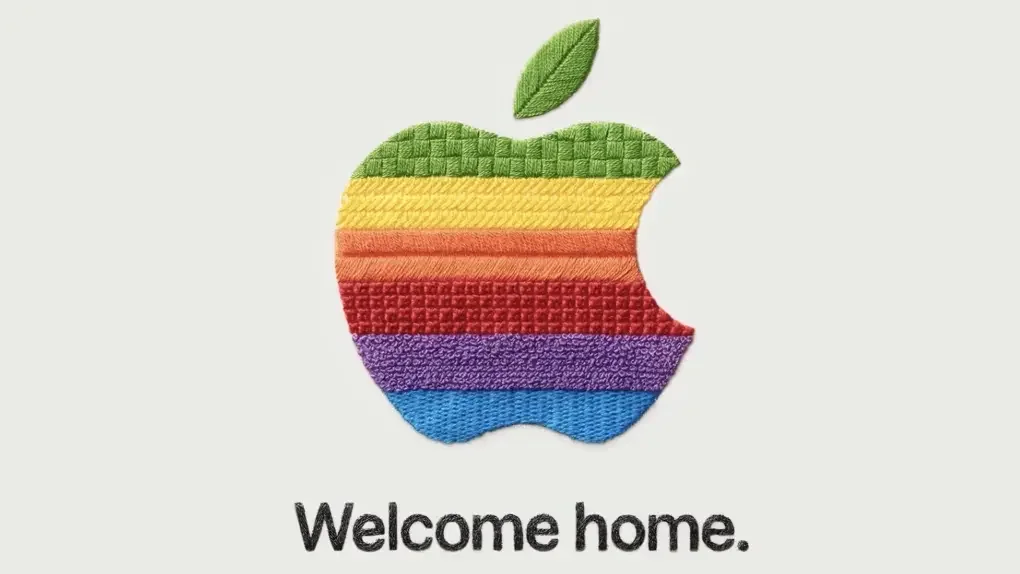
Apple Sets October 13 Event, Teases 'Welcome Home'
Apple has officially announced a special event for Tuesday, October 13, sending invitations to press under the tagline "Welcome home." The event will take place at 9:00 a.m. ET in Tribeca, New York, and will be an "Apple Experience" format similar to the one used earlier this year for the MacBook Neo launch, according to 9to5Mac. Greg Joswiak, Apple's Senior Vice President of Worldwide Marketing, teased the date with a video showing two people embroidering the classic rainbow Apple logo onto a canvas. The announcement comes just a month after Apple's September event, which introduced the iPhone 18 Pro, iPhone Duo, AirPods 5, and Apple Watch Series 12, among other products.
The invitation-only gathering is expected to focus on the home, with three major products rumored: a long-awaited smart home hub (often referred to as "HomePad"), a second-generation HomePod mini, and an updated Apple TV 4K. Bloomberg's Mark Gurman first reported in late September that Apple planned to unveil these devices on October 13, and later specified that the company would hold an event rather than issue press releases. The event will be held in New York rather than Apple's traditional campus in Cupertino, suggesting a more intimate, hands-on experience for media attendees.
What to Expect: Three New Home Products
According to Gurman, all three devices will have Siri AI at their core, marking a significant push into the smart home market. The smart home hub is said to feature a square 6-inch display with an iMac G4-style design, available in variants that can be placed on a countertop or mounted on a wall. It includes a single FaceTime camera on the front, with microphones and speakers in its connected base. The new HomePod mini and Apple TV are expected to retain their existing designs but sport faster chips to support advanced Siri AI capabilities. Additionally, Apple has reportedly co-developed a set of home accessories with LG that may be unveiled at the event, though details remain scarce.
Context: Why Apple's Smart Home Push Matters Now
Apple's smart home strategy has long been criticized as lagging behind competitors like Amazon and Google. The HomePod line, while praised for audio quality, has struggled to gain mass adoption due to high prices and limited functionality compared to Echo and Nest devices. The rumored smart home hub represents Apple's most ambitious attempt yet to create a central control center for the connected home, leveraging its ecosystem of devices and services. With Siri AI at the core, Apple aims to make its home products more intelligent and responsive, potentially integrating with the new Siri features introduced in recent OS updates.
The timing is crucial. The smart home market is projected to grow significantly over the next few years, and Apple needs a compelling story to convince users to choose its ecosystem. The event's "Welcome home" tagline not only hints at the product lineup but also suggests a broader emotional appeal—Apple wants users to feel that its devices belong in every room. The choice of Tribeca, New York, rather than a virtual keynote, indicates Apple wants press to experience the products firsthand, perhaps to demonstrate how they work together in a real home environment. This mirrors the approach taken with the MacBook Neo event earlier this year, which received positive coverage for its hands-on format.
The Road to October 13: From Rumors to Reality
Speculation about an October event has been building for weeks. On September 22, MacRumors noted that Apple still had many products in the pipeline for late 2026, including a new iPad mini, Apple TV, HomePod mini, and iMac. By September 30, Gurman had reported that three new smart home products were coming on October 13. The following week, on October 4, MacRumors cited Gurman's Power On newsletter stating that Apple was planning an event for that date. Just days later, on October 8, Apple made it official, sending invitations and posting the teaser video. The rapid confirmation from rumor to announcement highlights Apple's tight control over its launch narrative, even as leaks proliferate.
Perspective: A Defining Moment for Apple's Home Ambitions
This event could be a turning point for Apple's home strategy. If the smart home hub succeeds, it could become the centerpiece of a renewed push into the living room, kitchen, and beyond. The device's iMac G4-style design suggests Apple is aiming for a friendly, approachable aesthetic that fits seamlessly into home decor. The integration of Siri AI could finally make the smart home feel truly intelligent, with natural language processing and contextual awareness that surpasses current offerings. However, Apple faces stiff competition. Amazon's Alexa and Google's Assistant have a head start in terms of third-party integrations and market penetration. Apple will need to demonstrate that its hub offers unique advantages, such as privacy, seamless integration with iPhone and Apple Watch, and a superior user experience.
The new HomePod mini and Apple TV are also important updates. The HomePod mini, introduced in 2020, is due for a refresh with a faster chip that can handle more complex Siri queries. The Apple TV 4K, last updated in 2022, will likely gain a faster processor to support new gaming and streaming features. Together, these products form a cohesive home ecosystem that Apple hopes will drive hardware sales and increase engagement with services like Apple Music, Apple TV+, and HomeKit. The event's outcome will be closely watched by investors and industry analysts, as it could signal whether Apple can replicate its success in mobile and wearables in the smart home arena.
Broader Implications: Privacy, AI, and the Connected Home
Apple's emphasis on Siri AI and on-device processing could differentiate its home products in a market where privacy concerns are growing. By keeping data on-device and using end-to-end encryption, Apple can position itself as the privacy-friendly alternative to always-listening speakers from other companies. Moreover, the smart home hub could serve as a testbed for Apple's broader AI ambitions, including health monitoring, home automation, and even robotic assistants. If successful, it could pave the way for future products like augmented reality glasses or a home robot. The October 13 event is not just about three new gadgets; it's about Apple's vision for the future of the home, and whether it can execute on that vision in a way that resonates with consumers.
What to Watch For on October 13
As the event approaches, several questions remain. Will Apple stream the event online, or will it be a closed press event with embargoed hands-on reports? The "Apple Experience" format suggests the latter, with media receiving early access to products and the ability to test them in a staged home environment. Will the smart home hub be priced competitively? Some analysts expect a price around $299, which would undercut the Amazon Echo Show 10 but still be a premium offering. Will Apple announce any new services or software features? It's likely that new HomeKit capabilities and Siri improvements will be showcased. Finally, will there be any surprises, such as the rumored LG accessories or a new iPad mini? While the focus is on home products, Apple has been known to sneak in additional announcements.
The event will be held at 9:00 a.m. ET on Tuesday, October 13, in Tribeca, New York. Apple's last event, in September, was a virtual keynote, so the switch to an in-person experience signals the importance of these products. For those unable to attend, Apple typically posts press releases and product pages shortly after the event concludes. As always, 9to5Mac and other outlets will provide live coverage and analysis.
The Stakes for Apple's Home Ecosystem
Apple's home products have yet to achieve the cultural ubiquity of the iPhone or Apple Watch. The HomePod mini, while popular among Apple fans, has a small market share compared to Amazon's Echo Dot. The Apple TV 4K is a niche product for streaming enthusiasts. The smart home hub is Apple's chance to change that narrative. By creating a central device that controls the home, Apple can lock users into its ecosystem and upsell them on other products and services. The hub could also serve as a hub for Matter, the new smart home standard that Apple helped develop, ensuring compatibility with a wide range of third-party devices. If Apple plays its cards right, the October 13 event could be remembered as the moment Apple finally got serious about the smart home.
Conclusion: A Home Run or a Miss?
Apple's October 13 event is shaping up to be a pivotal moment for its home ambitions. With three new products and a focus on Siri AI, Apple is betting that it can differentiate itself through privacy, integration, and design. The "Welcome home" tagline invites users to imagine a seamless, intelligent home where Apple devices work together effortlessly. But the competition is fierce, and Apple's track record in the home has been mixed. The event will reveal whether Apple has learned from past missteps and is ready to deliver a compelling smart home experience. For now, all eyes are on Tribeca, where Apple will attempt to make the home its next big platform.
Comments