
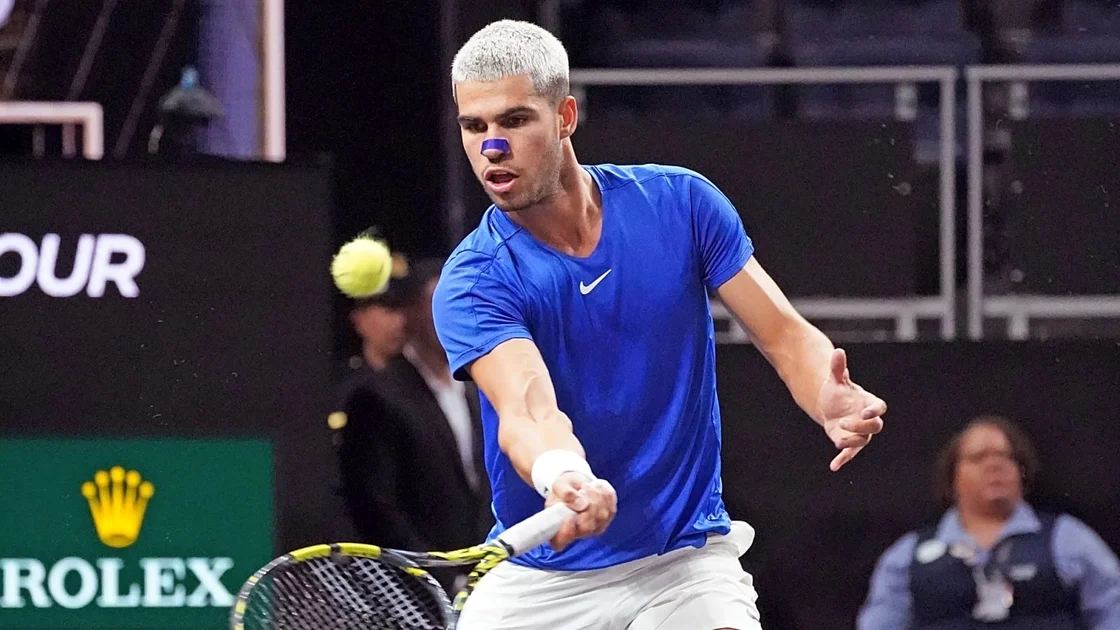
Alcaraz Advances in Tokyo as Schedule Debate Intensifies
Carlos Alcaraz is back on court and back in the headlines—not just for his tennis, but for his outspoken views on the sport's grueling calendar. The world No. 1 seed at the ATP Tokyo Open is set to face Matteo Arnaldi in the round of 16 on Day 4, fresh off a return from a wrist injury that sidelined him for nearly five months. While his form remains a work in progress, his opinions on the ATP schedule and Grand Slam format have been anything but tentative.
Speaking ahead of the Japan Open, Alcaraz firmly rejected any suggestion of shortening Grand Slam matches from best-of-five to best-of-three sets. "If we take away that and play the best-of-three, I think we're killing the legacy of the Grand Slams," he said. "We have been playing best-of-five matches at the Grand Slams since the very beginning, and I think that is what makes those tournaments different and special." Instead, he doubled down on his long-held belief that the ATP calendar must be reduced. "I would say the calendar. I've always said that it has to change," he added, advocating for fewer consecutive tournaments.
His comments come amid a broader debate sparked by Tennis Australia CEO Craig Tiley, who suggested majors could explore alternative formats. The Australian Open later clarified that five-set tennis would remain, but the discussion has exposed a growing divide among players and administrators.
The Wrist Injury That Changed Everything
Alcaraz's perspective is shaped by firsthand experience. After missing almost five months this season with a wrist injury, he returned at the US Open and reached the quarterfinals before losing to Ben Shelton in a match that ended at 3:33 a.m.—a glaring example of the late-night finishes plaguing the sport. The Spaniard has repeatedly warned that the current structure is unsustainable, pointing to a rising number of injured and exhausted players.
"The ATP itself reduced the number of countable ranking events from 19 to 18 this season partly to provide greater scheduling flexibility," but critics argue that change is insufficient. Seven of the nine Masters 1000 events now use expanded 12-day formats, and automatic-entry obligations make genuine breaks scarce. Alcaraz has said he intends to start taking breaks of one or two months, calling the mandatory schedule "impossible."
Yet his actions have drawn skepticism. Three weeks after his US Open quarterfinal run, Alcaraz turned up at the Laver Cup—a non-mandatory, no-ranking-points team event in London. When asked about the contradiction, he argued that team competitions "help me a lot to bring my joy back on the court." While understandable, the response has fueled criticism that his scheduling concerns apply selectively. As one Yahoo Sports columnist put it, "The body does not award recovery points for enjoying yourself."
Alcaraz's Stance Reflects Broader Player Welfare Debate
The tension between Alcaraz's words and choices mirrors a wider conversation about player welfare in professional tennis. The four Grand Slam tournaments recently created a Player Advisory Council to address welfare and remuneration issues, though media reports indicate Alcaraz and world No. 1 Jannik Sinner are not members. Meanwhile, players like Frances Tiafoe have echoed Alcaraz's defense of best-of-five Slam format, while Novak Djokovic has acknowledged that shorter matches would benefit him at 38 but has stopped short of proposing changes.
Alcaraz's call to reduce the number of tournaments—not the length of matches—is gaining traction. It shifts the focus from format to fundamental scheduling reform, a position that puts him at odds with administrators exploring quicker matches to ease player load. As the season stretches across 11 months and injuries mount, the pressure for change is building.
For now, Alcaraz remains focused on Tokyo, where he is favored to beat Arnaldi and continue his comeback. But his voice in the scheduling debate is likely to grow louder—especially if his body forces another extended break. The tennis world is watching, and the calendar may soon have to bend.
Comments