
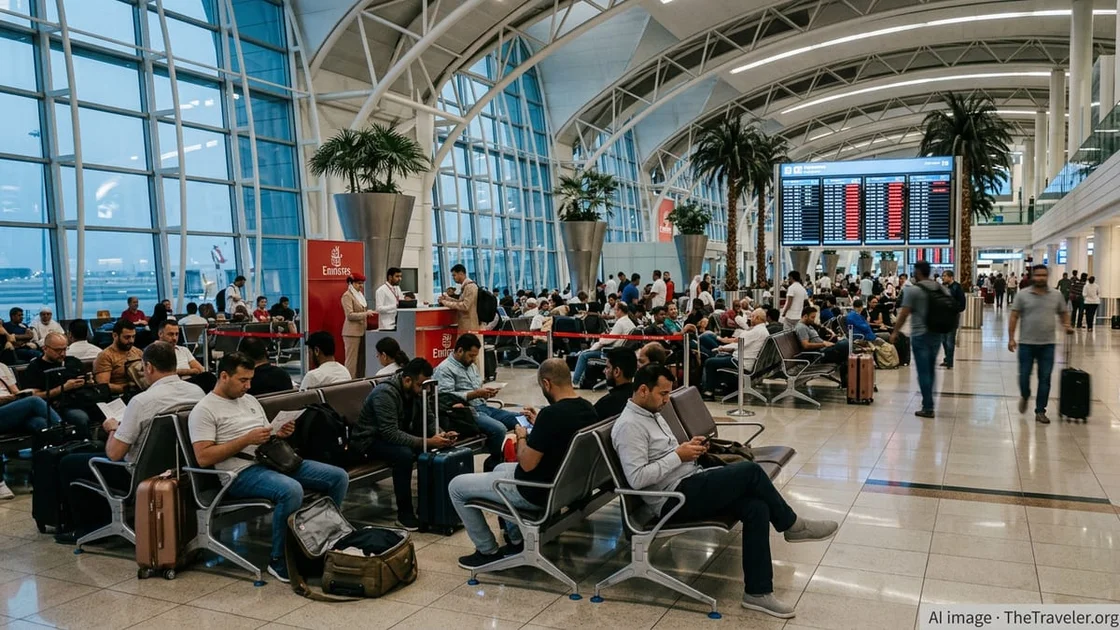
Major Airline Shutdown Triggers Global Travel Chaos as Thousands Stranded
A sudden and comprehensive airline shutdown at a major European carrier has stranded an estimated 52,000 passengers across 180 flights today, June 13, 2026, as air travel ground to a halt on one of the busiest travel weekends of the year. At 06:30 GMT, Aerovista Global Airlines, the continent’s third-largest carrier by passenger volume, announced the immediate suspension of all operations—grounding its entire fleet of 214 aircraft—after what it described as an “irrecoverable liquidity crisis” compounded by a last-minute failure in emergency financing negotiations.
The airline shutdown affects flights to and from 34 countries, including key routes in North America, Asia, and Africa. Passengers at major hubs from Heathrow to Frankfurt reported chaotic scenes as check-in counters closed abruptly and baggage systems were switched off. Aerovista’s CEO, Helena Kovács, said in a brief statement: “We deeply regret the disruption. Despite exhaustive efforts to secure bridge funding, we have been forced to cease operations effective immediately. We advise passengers not to travel to airports.”
In response, aviation authorities in the European Union and the United Kingdom have issued emergency travel waivers, allowing affected passengers to rebook on partner airlines at no additional cost. However, capacity constraints are expected to cause widespread delays for days, if not weeks. The International Air Transport Association (IATA) confirmed it is coordinating a multinational response to alleviate the crisis.
The Stakes: Why This Airline Shutdown Matters
This is the largest carrier collapse since the wave of insolvencies that followed the pandemic-era travel downturn, but its timing is particularly damaging. June 13 falls at the start of the summer holiday season, a period when airlines typically generate up to 30% of their annual revenue. Analysts at the aviation consultancy Skytrack estimate that for each day of the shutdown, Aerovista loses roughly €18 million, while the broader travel ecosystem—including hotels, car rental firms, and connecting carriers—faces cascading losses that could exceed €1 billion within a week.
The grounding comes amid a broader period of turbulence for the aviation sector. Fuel costs have risen 22% year-on-year, and labour shortages have forced several low-cost carriers to prune schedules. Regulators in the U.S. and Europe had already flagged Aerovista’s financial health earlier this year, warning that its debt-to-earnings ratio had crossed dangerous thresholds. For passengers, the immediate concern is whether they will see refunds—or any compensation at all. EU Regulation 261/2004 obligates airlines to provide care and rebooking, but in cases of insolvency, payouts often depend on national guarantee funds, which are frequently underfunded.
Contextually, this airline shutdown echoes the recent abrupt discontinuation of essential services in other sectors. For example, RadioLink Internet’s Abrupt Shutdown Leaves Hundreds in Rural Minnesota Without Service, which revealed how quickly infrastructure failures can ripple through communities. Meanwhile, the House recently passed a $70B immigration bill, ending a shutdown standoff that had paralysed government operations—a reminder that shutdowns, in any sector, produce immediate dislocation and protracted recovery periods.
Broader Perspective: A Vulnerable Industry at a Turning Point
The Aerovista airline shutdown is not an isolated event; it signals deeper structural fragility in an industry that emerged from the pandemic with record debt but has struggled to rebuild resilience. Over the past 18 months, at least four medium-sized carriers in Europe and Asia have either been bailed out or restructured. What sets this shutdown apart is its speed and scale. Passengers holding tickets for flights scheduled as far out as August have been advised to file claims, but insolvency proceedings—likely to begin in a Brussels court next week—could take years to settle.
This crisis also illuminates the precarious position of national travel guarantee schemes. In the UK, the Air Travel Organiser’s Licence (ATOL) scheme covers package holidays, but many Aerovista passengers booked flights directly, leaving them unprotected. Consumer advocacy groups are calling for an urgent overhaul of the legal framework to create a mandatory, pre-funded passenger protection fund—similar to deposit insurance in banking. Without it, every subsequent airline shutdown will leave travellers bearing the brunt.
Beyond the immediate disruption, this event could accelerate a trend toward consolidation and government intervention in aviation. IATA has already warned that without stabilisation measures—such as state-backed credit lines or strategic fuel reserves—the industry faces a “lost summer” of cancellations and distrust. Some analysts predict that the ripple effects may even nudge central banks to reconsider interest rate trajectories, given the potential drag on consumer spending and tourism-dependent economies.
In a separate but symbolic development, the same week saw other dramatic disruptions across travel and entertainment landscapes. Spielberg's 'Disclosure Day' Divides Critics debuted to polarized reviews, perhaps mirroring the schism between those who see aviation’s present turmoil as a temporary shock and those who view it as a systemic crisis. Meanwhile, sports events like the England Women vs Sri Lanka Women T20 World Cup 2026 Opener proceed as scheduled—but with many teams now scrambling for alternative travel arrangements due to the shutdown.
As the day unfolds, Aerovista’s hubs remain eerily quiet. Airline shutdowns of this magnitude leave behind not just stranded passengers but a lasting scar on the public’s trust in air travel—and a clear signal that the industry’s recovery has hit a serious air pocket.
Comments